Sitting down on a rainy Saturday afternoon, flipping through streaming options with nothing specific in mind — and suddenly there it is: a movie based on a game spent countless hours on years ago. Most gamers know that specific mix of excitement and dread. Will it be good this time, or just another disappointment? The hunt for the best video game movie adaptations has frustrated fans for decades, but the tide has genuinely turned. For anyone plugged into the video games world, these films have evolved from industry embarrassments to genuine reasons to buy a movie ticket.
For a long stretch of film history, "video game movie" was practically a punchline. Creatively hollow productions that ignored source material, made baffling casting decisions, and seemed designed by people who had never touched a controller flooded theaters through the 1990s and 2000s. The genre earned its bad reputation honestly. But something shifted. Directors started openly discussing how much they played the games before filming. Studios brought in developers as consultants. The audience that grew up gaming became the primary moviegoing demographic — and those audiences had expectations.
This guide breaks down the full picture: where video game films came from, which titles are genuinely worth watching, what separates good adaptations from bad ones, and practical tips for picking the right film for any occasion. Whether someone is a lifelong gamer or just curious about the genre, there's something useful here.
Contents
- A Brief History of Video Game Films
- Best Video Game Movie Adaptations Worth Watching
- A Closer Look at the Biggest Success Stories
- What Makes or Breaks a Video Game Adaptation
- How Good Adaptations Preserve the Source Material
- The Pros and Cons of Video Game Movie Adaptations
- How to Choose the Right Video Game Movie
A Brief History of Video Game Films
Early Attempts and Why They Failed
The genre's origins are rough by any honest measure. The 1993 Super Mario Bros. film is the most cited cautionary tale — a dark, dystopian live-action take on a cheerful Nintendo platformer starring Bob Hoskins and John Leguizamo. It bombed critically, confused casual audiences, and devastated fans who expected the colorful Mushroom Kingdom from the games. It set a punishing precedent for everything that followed.
Through the rest of the 1990s and deep into the 2000s, the pattern repeated without much variation:
- Street Fighter (1994) — campy, verging on parody, wildly disconnected from the tournament-fighter source
- Mortal Kombat (1995) — a relative commercial success, though more action cheese than honest adaptation
- Double Dragon (1994) — widely considered one of the worst films of its decade
- Alone in the Dark (2005) — built an argument for being one of the worst films ever made
- BloodRayne (2005) — director Uwe Boll became so synonymous with bad game films that he practically became a genre of his own
The common thread across all of them? Studios treated video game licenses as easy money. The brand name would sell tickets — or so the thinking went. Most productions had little genuine understanding of, or interest in, the source material. Many of those games, as discussed in What Makes a "Classic" Video Game?, contained rich world-building and beloved characters that films simply discarded in favor of generic action plots.
The Turning Point for the Genre
The shift was gradual but unmistakable. Several forces converged to change the calculus:
- Gaming grew into one of the world's largest entertainment industries, surpassing film in annual revenue
- Millennial and Gen Z audiences who grew up gaming became the dominant moviegoing demographic
- Franchise-minded studios recognized gaming IP (intellectual property) as a largely untapped storytelling resource
- The rise of streaming created new appetites for niche genre content and serialized storytelling
- Social media amplified fan feedback in ways that studios could no longer ignore — for better and for worse
By the late 2010s, a different kind of production was emerging. Directors were publicizing how much time they spent with the source games before cameras rolled. Studios were bringing game developers into creative conversations, not just licensing negotiations. The internal question shifted from "how do we monetize this brand?" to "what made this game so loved, and how do we protect that?"
That change in question produced a change in results.
Best Video Game Movie Adaptations Worth Watching
Critically Acclaimed Picks
The following films represent the strongest case that video game adaptations can function as genuine cinema. Each one found a way to honor its source material while working as a standalone viewing experience for audiences unfamiliar with the games:
- The Super Mario Bros. Movie (2023) — an affectionate love letter to Nintendo's entire legacy; earned $1.36 billion globally and became one of the highest-grossing animated films ever made
- Detective Pikachu (2019) — a surprisingly grounded mystery thriller that worked for Pokémon fans and total newcomers with equal effectiveness
- Sonic the Hedgehog (2020) — famously redesigned after intense fan backlash over the original CGI model; ultimately charming, commercially successful, and the start of a real franchise
- Sonic the Hedgehog 2 (2022) — expanded the world with the addition of Tails and Knuckles, widely considered an improvement over the original
- Arcane (2021, series) — technically a streaming series rather than a film, but so widely regarded as the gold standard for video game adaptation that it belongs in any honest conversation about the genre
These titles share visible affection for their source material. None of them tried to "gritty-up" family-friendly franchises or gut complex lore to the point of unrecognizability. And all of them understood that gamers in the audience would notice the details — and rewarded that attention.
Hidden Gems Worth Discovering
Not every quality video game film came with a billion-dollar marketing campaign. A few titles flew under the radar and deserve more attention than they received:
- Werewolves Within (2021) — based on Ubisoft's VR social deduction game, a clever small-town horror comedy that earned some of the best reviews any video game adaptation has ever received
- Mortal Kombat (2021) — a gory, fan-pleasing reboot that finally delivered the extreme violence the franchise always promised
- Rampage (2018) — doesn't pretend to be anything other than a giant monster movie; that honesty about its own ambitions actually works in its favor
- The Last of Us (2023, series) — HBO's adaptation features performances that would be award-worthy in any context; routinely cited alongside Arcane as proof the genre can produce genuine prestige work
A Closer Look at the Biggest Success Stories
Sonic and Mario: The Comeback Kids
Both Sonic and Mario had notorious histories with Hollywood before their recent successes. The 1993 Super Mario Bros. film became the genre's most prominent failure. Sonic's original 2020 character design sparked one of the internet's most unified negative reactions — the early CGI model was widely and brutally mocked the moment a trailer dropped.
What happened next became a case study in fan-studio relations. Paramount delayed the film's release and redesigned Sonic entirely based on fan feedback. The result earned $319 million worldwide and launched a franchise with genuine momentum. The Super Mario Bros. Movie, arriving three years later, demolished box office records and became a cultural event. Both comebacks shared one critical ingredient: the studios actually listened to their audience.
That's not a minor operational detail. It represents a fundamental shift in how studios approach gaming IP — from treating gamers as a captive market to treating them as essential creative partners.
Resident Evil and the Long Franchise Run
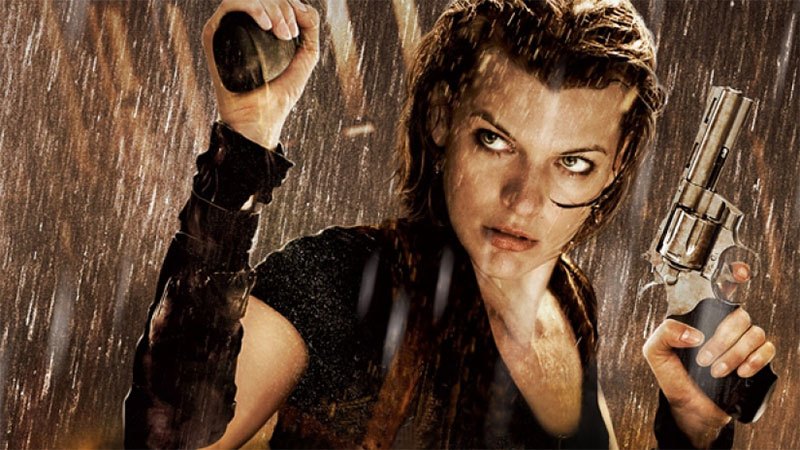
The Resident Evil series occupies a genuinely unique position in video game film history. By most critical standards, the Paul W.S. Anderson-directed run (2002–2016) wasn't particularly faithful to the games. The films introduced original protagonist Alice, diverged heavily from game storylines, and prioritized high-octane action over the claustrophobic survival horror atmosphere that defined the game series.
And yet the franchise ran for six films, grossed over $1.2 billion combined, and maintained a dedicated audience across its entire run. The lesson isn't that fidelity doesn't matter — it's that consistent tone and committed execution can sustain an audience even when the adaptation takes significant liberties. The 2021 reboot Resident Evil: Welcome to Raccoon City swung back toward game accuracy and received a more divided response, suggesting that for certain franchises, the adaptation itself has become its own entity with its own fan base.
Video Game Movies at a Glance
| Film | Source Game | Year | Critics Score (Rotten Tomatoes) | Box Office |
|---|---|---|---|---|
| The Super Mario Bros. Movie | Super Mario Bros. | 2023 | 59% | $1.36B |
| Detective Pikachu | Pokémon | 2019 | 68% | $433M |
| Sonic the Hedgehog 2 | Sonic the Hedgehog | 2022 | 67% | $405M |
| Sonic the Hedgehog | Sonic the Hedgehog | 2020 | 63% | $319M |
| Uncharted | Uncharted | 2022 | 40% | $401M |
| Mortal Kombat | Mortal Kombat | 2021 | 55% | $83M |
| Werewolves Within | Werewolves Within | 2021 | 89% | $1.5M |
| Resident Evil | Resident Evil | 2002 | 35% | $102M |
The data tells an interesting story. Critical scores and box office gross don't move together the way many assume — Mario earned middling reviews but dominated theaters, while Werewolves Within earned near-universal critical praise and barely made a dent commercially. As noted in Wikipedia's comprehensive list of films based on video games, the genre spans well over a hundred productions across decades — which makes identifying real patterns genuinely useful for managing expectations before a screening.
What Makes or Breaks a Video Game Adaptation
Signs an Adaptation Will Work
Not every game has a clear path to a successful film, but certain conditions consistently show up in the adaptations that land:
- Strong narrative DNA — games with clear story arcs, memorable characters, and defined worlds translate more cleanly to a linear viewing format
- Director familiarity with the source — filmmakers who openly discuss playing and loving the game before production consistently deliver better results
- Tone matching — a horror game adapted with horror sensibility; a charming platformer treated with charm; the mismatch between game tone and film tone is behind a staggering number of failures
- Casting that generates fan excitement rather than controversy at announcement
- Studio willingness to course-correct — Sonic's 2020 redesign remains the genre's definitive proof that studios can listen and recover
Pro tip: Before watching any video game adaptation, check whether the director publicly discussed playing the source game during pre-production. That single detail is often one of the most reliable predictors of quality.
Red Flags to Watch For
The flip side is equally consistent. Certain patterns reliably appear in adaptations that disappoint:
- A protagonist invented for the film who doesn't exist in the game — a strong signal the studio didn't trust the source material's own cast
- Genre swapping — a survival horror game becoming a standard action film, or a dense RPG condensed into a two-hour spectacle with no regard for lore
- Rushed production with no reported developer consultation
- Marketing campaigns that downplay or avoid mentioning the game prominently — a sign the studio is pre-emptively distancing itself from the IP
- No creative involvement from the original game's development team
None of these are automatic death sentences for a film. But they've appeared together in enough poor adaptations that they serve as a useful early warning system before committing to a theater trip.
How Good Adaptations Preserve the Source Material
Staying True to Game Lore
The best video game adaptations treat their source material's lore — the established history, rules, and world of a game — as an asset rather than an obstacle. Games with internally consistent, richly developed universes give filmmakers a foundation that's genuinely worth building on. The Last of Us, the Pokémon world, and Sonic's mythology all offered filmmakers coherent settings that rewarded rather than punished close attention.
Lore preservation doesn't require literal scene-for-scene translation. Film is a fundamentally different medium with different constraints. A 40-hour RPG (role-playing game — a genre defined by player choice and branching narrative) cannot become a 90-minute film without significant compression. The best adaptations find the emotional and thematic core of a game and construct outward from there, rather than discarding everything except the title and character names.
It's worth noting that many of the games that have made the jump to film or television contain narratives that rank among the most compelling ever created in an interactive medium. The connection between source story quality and adaptation potential is direct — as covered in Top 10 Video Game Stories of All Time, some games were practically constructed to become films from the moment their credits rolled.
Balancing Fan Service with New Audiences
This is one of the trickiest challenges any adaptation faces. Load a film with fan service (Easter eggs and references recognizable only to longtime players) and new viewers feel locked out. Scrub too much of the original's texture to appeal broadly, and longtime fans feel betrayed. Most failed adaptations err in one of these two directions.
The most successful films solve this by making fan service additive rather than essential to understanding the story. The Super Mario Bros. Movie is dense with Nintendo callbacks that devoted fans will spot and celebrate — but someone who's never touched a controller can follow the story, care about the characters, and enjoy the film completely. That balance is genuinely difficult to engineer. When it works, it's a central reason why a film succeeds across demographics rather than with a single audience slice.
Worth knowing: Studios that treat their gaming fan community as collaborators — as Paramount did with Sonic's redesign — consistently outperform those that treat fan feedback as noise to be managed after release.
The Pros and Cons of Video Game Movie Adaptations
Benefits for Fans and the Industry
High-quality video game adaptations create real value that extends well beyond the box office:
- Expanded audiences — a successful film can introduce millions of non-gaming viewers to franchises they would never have discovered otherwise
- Renewed interest in older titles — box office hits consistently drive measurable sales spikes for the original games, sometimes reviving franchises that had gone quiet
- Cultural legitimacy — mainstream critical and commercial success signals that games deserve the same storytelling respect as books, film, or prestige television
- Franchise development — successful adaptations can greenlight sequels, spin-offs, animated series, and merchandise ecosystems that benefit the entire gaming property
- Production investment — studios willing to spend on quality adaptations raise the floor for every film that follows by establishing what the audience will actually show up for
For gaming as an industry and as a culture, each high-quality adaptation makes a cumulative argument that the medium's stories are worth protecting and sharing — not just mining for brand recognition.
Common Criticisms and Ongoing Pitfalls
Even enthusiastic fans of the genre acknowledge real recurring problems:
- Tone mismatches — dark atmospheric games reframed as lighthearted spectacles, or family-friendly franchises subjected to unnecessary grim reboots
- Casting controversies — the gap between fan expectations and studio choices still generates genuine friction with certain productions
- Lore violations — retcons (retroactive story changes that contradict established game canon) and continuity errors alienate the most invested segment of any game's audience
- Sequel dependency — many films structured as franchise launchers fall flat when the sequels never materialize, leaving story arcs permanently unresolved
- The "good enough" trap — some studios still calculate that brand recognition will compensate for mediocre filmmaking, and a portion of those bets still pay off commercially, which reduces the incentive to do better
These issues haven't disappeared. But they appear less frequently in major productions than they did a decade ago, and when they do appear, audiences and critics are increasingly willing to call them out clearly rather than grading on the genre's historically low curve.
How to Choose the Right Video Game Movie
Matching Films to Different Audiences
Not every video game film is right for every viewer or every occasion. A practical breakdown by context:
- Family movie night — The Super Mario Bros. Movie, Detective Pikachu, and both Sonic films are safe, crowd-pleasing choices with broad age appeal
- Action seekers — Mortal Kombat (2021) and the original Resident Evil series deliver reliable combat and spectacle for audiences who want kinetic energy above all else
- Horror fans — Resident Evil: Welcome to Raccoon City leans harder into survival horror elements than any other entry in that franchise
- Drama and prestige viewers — The Last of Us (HBO series) offers the richest character work and the most emotionally demanding storytelling the genre has produced
- Comedy fans — Werewolves Within offers dry horror comedy that functions completely without any knowledge of the source game
- Genre newcomers — Sonic the Hedgehog or Detective Pikachu serve as the most accessible, lowest-stakes entry points into video game adaptations
Where to Find Them
Most major video game adaptations rotate through the standard streaming landscape, though availability changes frequently with licensing deals:
- Netflix — hosts several Resident Evil projects and original game-adjacent productions
- HBO/Max — The Last of Us series; also holds rotating theatrical releases
- Disney+, Peacock, and Prime Video — various animated and theatrical titles appear seasonally depending on distribution deals
- Physical media — for viewers who prioritize picture quality or want guaranteed permanent access, Blu-ray releases are widely available for most major titles
- Digital rental and purchase — platforms like Apple TV, Google Play, and Vudu carry most major releases for on-demand viewing without subscription requirements
Because licensing shifts happen regularly, checking an aggregator like JustWatch (a free service that shows where any title is currently streaming) saves time before settling in for a movie night and discovering the film moved platforms last week.
Frequently Asked Questions
What is the highest-grossing video game movie of all time?
The Super Mario Bros. Movie (2023) holds the record with over $1.36 billion worldwide at the box office. It surpassed Detective Pikachu (2019), which previously led the category with $433 million. The Mario film also ranks among the highest-grossing animated films in history across all genres, not just video game adaptations.
Why do so many video game movies fail with critics?
The most consistent reason is a fundamental mismatch between source material and adaptation approach. Studios have historically treated game licenses as brand assets rather than storytelling frameworks, resulting in tone-deaf casting decisions, genre swaps, and plots that share nothing meaningful with the games. When studios invest in understanding what actually made the game resonate with players, critical results improve noticeably.
Is The Last of Us considered a video game movie adaptation?
Technically, The Last of Us (2023) is an HBO television series rather than a theatrical film. However, it appears in virtually every serious discussion of video game adaptations because of its production quality and fidelity to the source material. When TV series are included alongside films, most observers consider it the strongest adaptation the genre has produced to date.
Are video game movie adaptations improving over time?
The evidence points strongly toward yes. Critical scores, box office performance, and audience reception have all trended upward over the past decade. The combination of gaming's cultural mainstreaming, studios hiring game-literate creative teams, and the commercial proof of concept provided by recent hits has created genuine momentum for higher-quality productions going forward.
Key Takeaways
- The best video game movie adaptations succeed by honoring the tone, characters, and lore of the source material rather than treating the game's name as a simple marketing vehicle.
- Box office success and critical acclaim don't reliably align in this genre — some of the most commercially dominant adaptations received middling reviews, while critically praised titles sometimes struggled to find an audience.
- Games with strong narrative DNA — defined worlds, clear story arcs, and memorable characters — consistently produce more successful adaptations than those without a compelling underlying story.
- The genre has measurably improved over the past decade, and studios that treat their gaming fan communities as creative partners rather than passive consumers are the ones leading that improvement.


About Mike Jones
Mike Jones grew up in the golden age of arcade and home gaming — a childhood shaped by Atari classics like Pitfall, Frogger, and Kaboom that gave him a lifelong appreciation for games of all kinds. These days he covers the full breadth of tabletop and family gaming: board games, card games, yard games, table games, and game room setup, with a particular focus on finding the games that bring different groups together. At GamingWeekender, he covers game reviews, buying guides, and recommendations for families, friends, and hobbyists who take their leisure seriously.
You can get FREE Gifts. Or latest Free phones here.
Disable Ad block to reveal all the info. Once done, hit a button below