
Table tennis is one of the fastest-growing recreational sports in the world, with over 875 million players worldwide — and the single biggest performance variable for most of them isn't their footwork or their serve. It's the paddle in their hand. A well-matched paddle can shave months off your development curve. A mismatched one will hold you back no matter how many hours you log at the table. In 2026, the market is flooded with options at every price point, which makes choosing the right one genuinely confusing.
The good news: you don't need to spend a fortune. The paddles on this list represent real value across every skill tier, from casual basement players to competitive club-level athletes. We've dug into the specs, tested the rubber compositions, and evaluated blade constructions so you can make a confident decision. Whether you're buying your first racket or upgrading from a cheap set that came with your table tennis table, this guide covers exactly what you need to know.
For context, the paddles below span a range from beginner-friendly control tools to carbon-fiber competition weapons. Each one earns its spot by delivering more performance per dollar than the competition in its tier. We've also included notes on which ping pong balls pair best with each paddle type — because rubber and ball compatibility matters more than most players realize. Let's get into it.
Best Choices for 2026
- #PreviewProductRating
- Bestseller No. 1
 Rating:

- Bestseller No. 2
 Rating:
 - Bestseller No. 3
 Rating:
 - Bestseller No. 4
 Rating:
 - Bestseller No. 5
 Rating:
 - Bestseller No. 6
 Rating:
 - Bestseller No. 7
 Rating:

Full Product Breakdowns
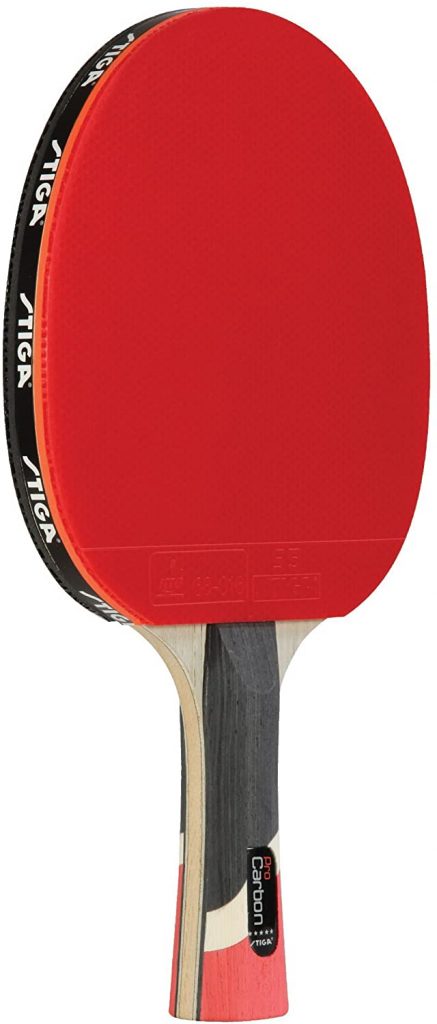
1. STIGA Pro Carbon Performance-Level Ping Pong Paddle — Best Overall
STIGA has been building competition-grade table tennis equipment since 1944, and the Pro Carbon is one of the clearest expressions of that legacy. The blade uses STIGA's Crystal and WRB (Weight, Rebound, Balance) technologies together, which produces a hardened yet lightweight construction that returns the ball with noticeably more pace than a standard all-wood blade. You feel the difference immediately — the blade has a lively, almost springy quality at contact that translates directly into faster rallies and more decisive attacking shots.
What sets the Pro Carbon apart at its price point is the rubber. The ITTF-approved smooth inverted S5 rubber incorporates Nano Composite and ACS (Absorption Control System) technologies, which essentially means the rubber bonds at a tighter molecular level, giving you more consistent spin generation and better energy return. Speed, spin, and control are all above average for a paddle in this tier, which is rare — most budget-to-mid paddles sacrifice one to boost another. The Pro Carbon genuinely doesn't make that compromise.
This is the paddle you reach for when you're past the beginner stage and ready to develop a real offensive game. It suits intermediate to advanced players who want tournament-legal equipment without spending professional-tier money. The flared handle gives a secure grip during fast exchanges, and the red/blue color scheme meets ITTF regulations for competitive play. If you only buy one paddle in 2026 and you have any competitive ambitions at all, this is the one to buy.
Pros:
- Carbon fiber blade delivers exceptional speed without sacrificing control
- ITTF-approved rubber — tournament legal right out of the box
- Crystal + WRB technology produces an excellent balance of power and touch
Cons:
- The extra speed can be unforgiving for players still developing consistency
- Rubber will eventually need replacing, adding long-term cost

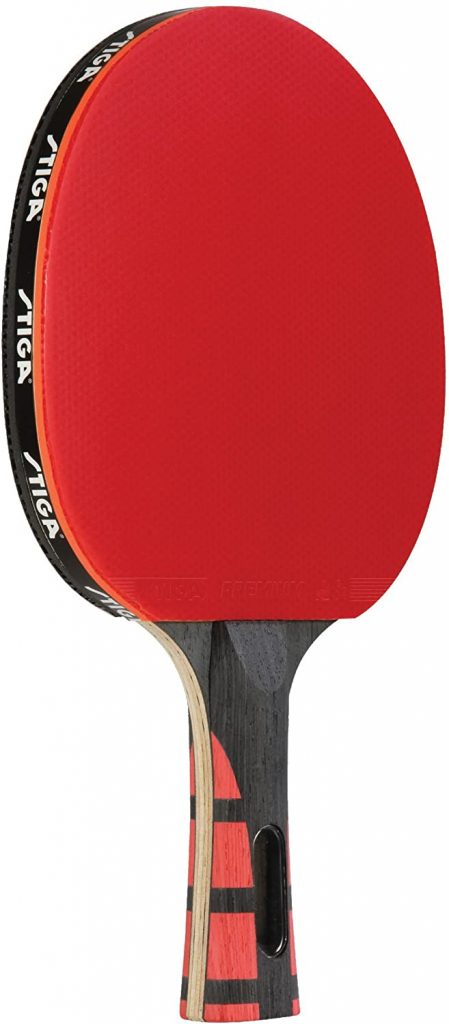
2. STIGA Evolution Performance Ping Pong Paddle — Best Mid-Range
The STIGA Evolution sits one rung below the Pro Carbon in STIGA's lineup, and that distinction is intentional. Where the Pro Carbon leans into aggressive speed, the Evolution prioritizes balance — it's designed for players who are improving rapidly and need a paddle that won't punish mistakes while still rewarding good technique. The 6-ply light blade uses STIGA's Shock Dispersion Tube (SDT) technology alongside Crystal and WRB, which damps vibration at contact and gives you a cleaner, more readable feel for every shot.
The 2mm tournament-approved sponge is a meaningful spec. Thicker sponge means more dwell time — the ball stays on the rubber a fraction longer, which translates into more spin potential and a softer, more controllable response on receives and pushes. The flared handle is one of the best-feeling grips in this price range, ergonomically shaped to prevent fatigue during longer sessions. If you're building a complete game rather than just trying to hit harder, the Evolution gives you the touch to develop loops, flicks, and controlled drives simultaneously.
This is the paddle that bridges recreational and competitive play most effectively. It's appropriate for late-beginner through intermediate players, and it will comfortably take you from basement games to local club competition without needing an upgrade for a long time. The ITTF approval means you can walk into any sanctioned tournament with it, and you won't be embarrassed by your equipment.
Pros:
- SDT technology reduces vibration for cleaner feedback on every shot
- 2mm ITTF-approved sponge provides excellent dwell time and spin
- Outstanding flared handle comfort for extended play sessions
Cons:
- Slightly less raw speed than the Pro Carbon for players who want pure offense
- Players who progress quickly may outgrow it within a year
3. Killerspin JET200 Ping Pong Paddle — Best for Beginners
Killerspin knows beginner paddles, and the JET200 is their clearest proof. This racket is built around one goal: helping new players develop real skills without fighting their equipment. The 5-ply wood blade provides the kind of solid, predictable response that lets you focus on stroke mechanics rather than compensating for unpredictable behavior. The Jet Basic rubbers are grippy enough to teach you what spin feels like while still being forgiving on off-center hits.
The ratings tell the story directly — Control: 8.5, Spin: 7, Power: 6. That's an intentionally control-heavy profile. When you're learning basic strokes, control is the most important variable, and the JET200 delivers it without compromise. The PVC edge tape gives the paddle proper protection, which matters because beginners tend to be less careful with equipment. This isn't a paddle that will embarrass you as you improve — it's a genuine learning tool built with real craft.
If you're buying your first serious paddle, or you're buying for a family member who's new to table tennis, the JET200 gives you the most structured development experience in this price range. It won't win you tournaments, but it will teach you how to play properly — which is exactly what a beginner paddle should do.
Pros:
- Control-first rating profile (8.5) is perfect for learning fundamentals
- 5-ply wood blade offers consistent, predictable response
- PVC edge tape provides solid durability for everyday use
Cons:
- Limited ceiling — competitive players will outgrow it quickly
- Low power rating (6) won't satisfy players who want to attack aggressively
4. DHS Sports 6 Star Table Tennis Racket H6002 — Best Advanced Value
Double Happiness — DHS — is the world's largest table tennis equipment manufacturer and the official supplier for the Chinese national team, one of the most dominant programs in the sport's history. The H6002 is their 6-star shakehand racket, built with a 5-ply wood blade featuring a thicker core than most comparable paddles. That thicker core produces a stiffer, more powerful blade response, which means your loops and drives carry significantly more pace without requiring more physical effort from you.
The rubber combination here is serious: Hurricane 8 on one side, Tin Arc on the other. Hurricane 8 is one of the most respected offensive rubbers in competitive table tennis, delivering sharp topsin generation and consistent speed. Tin Arc complements it with excellent all-round performance. Both are ITTF-approved, so tournament eligibility is guaranteed. The shakehand grip design is optimized for the most popular grip style in the Western game, providing excellent wrist mobility for forehand and backhand attacks.
If you're an advanced player looking for professional-caliber rubbers without the price tag of a custom assembly, the H6002 is exceptional value. DHS's manufacturing standards are world-class — this is the same brand that equips Olympic champions, just packaged at an accessible price point. You won't find a better rubber-to-dollar ratio in 2026.
Pros:
- Hurricane 8 rubber delivers competition-grade topspin and speed
- Thicker core blade produces more power with less effort
- ITTF-approved — fully tournament legal on both sides
Cons:
- The power-heavy setup is not appropriate for beginners or casual players
- Requires a player who can already generate consistent stroke mechanics
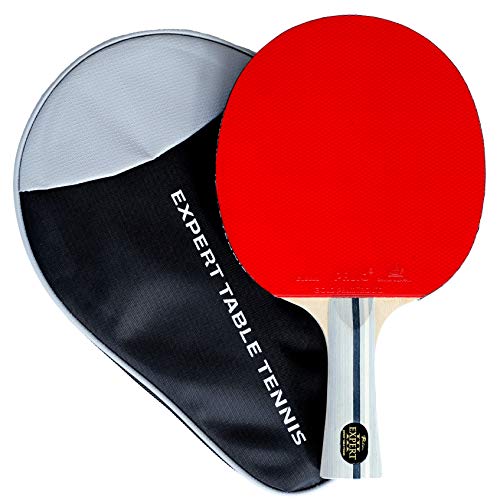
5. Palio Expert 3.0 Table Tennis Racket — Best for Spin Control
Palio built the Expert 3.0 specifically around spin — and not just generating it, but controlling it. The CJ8000 rubber is one of Palio's most celebrated sheets, known for producing exceptional topspin, backspin, and sidespin across a wide contact area. If you're working on developing a looping game or want to start adding variation to your serves with serious spin depth, this rubber gives you the grip and dwell time to do it properly. The ITTF approval means you can use it in any sanctioned competition without modifications.
The blade is an upgraded all-wood construction with a redesigned flared handle that fits comfortably in a wide range of hand sizes. The thicker edge tape is a standout detail — it protects the rubber edges from chipping during storage and transport, extending the usable life of your rubbers considerably. The included Expert Table Tennis case adds further protection, which is a practical addition that budget paddles rarely include.
The Expert 3.0 is ideally positioned for beginners moving into intermediate play who want to start mastering spin-based techniques without making a major investment. The free case makes it a particularly good gift option as well. It's a thoughtfully designed package that shows Palio understands what developing players actually need.
Pros:
- CJ8000 rubber is outstanding for learning and executing spin techniques
- Thicker edge tape extends rubber lifespan significantly
- Includes a protective carrying case — rare at this price point
Cons:
- Lower raw speed ceiling compared to carbon-enhanced blades
- May feel underpowered for players who prefer a flat-hitting, drive-heavy style
6. JOOLA Infinity Balance Advanced Performance Ping Pong Paddle — Best for Training
JOOLA has been an Olympic-level brand since the 1950s, sponsoring major championships including the World Championships and the US Open. The Infinity Balance is their answer to players who want competition-ready equipment optimized specifically for training and skill development. The smooth inverted surface provides the kind of consistent, readable feedback that lets you clearly identify what went wrong on every shot — which is exactly what you need when you're deliberately trying to improve.
The ergonomic flared grip handle is one of the most comfortable on this list, designed to reduce strain during extended training sessions. The flexible PVC edge tape protects the sides of the racket from the inevitable table contact that happens during competitive play. The Infinity Balance is engineered for the full spectrum of techniques — it performs well on blocks, counters, loops, and serves alike, making it ideal for a player who trains across all aspects of their game rather than just grinding one stroke type.
This is a strong choice for serious recreational players and club-level competitors who want ITTF-compliant equipment designed by one of the sport's most trusted brands. It excels in training environments where consistency and feedback quality matter as much as raw performance. If you practice with intention and want a paddle that tells you the truth about every shot, the Infinity Balance delivers that honestly.
Pros:
- JOOLA's 60+ years of Olympic-level design expertise in every detail
- Excellent feedback quality for deliberate skill development
- Well-balanced across speed, spin, and control — no major weaknesses
Cons:
- Doesn't specialize in any one area — pure attackers may want more raw speed
- Premium brand pricing means it costs slightly more than comparable alternatives
7. Killerspin Jet 800 Speed N2 Professional Ping Pong Paddle — Best for Aggressive Players
The Killerspin Jet 800 Speed N2 is the paddle for players who want to dictate rallies from the first shot. It's a professional-grade racket engineered specifically for competitive and advanced players who play an aggressive, attack-first style. The 7-ply composite wood and carbon fiber blade is built for explosive speed — the carbon layers add stiffness that transfers energy directly into the ball rather than absorbing it, which produces noticeably faster, flatter shots than all-wood constructions at comparable swing speeds.
The Nitrx-4Z professional-grade rubbers are what make this paddle genuinely elite. They provide exceptional grip for spin-loaded serves and aggressive loops while maintaining enough tack for precise placement on tight angles. The ratings back this up unambiguously — Speed: 9/10, Spin: 9/10, Control: 7.5/10. Those top two scores are elite-tier numbers, and the 7.5 control rating is respectable for a paddle this fast. This isn't a paddle for someone still building their game — it's a weapon for someone who already has one.
If your style involves heavy topspin loops, fast flat drives, and aggressive serve-attack sequences, the Jet 800 N2 gives you the equipment to execute that style at its full potential. It's the natural endpoint for competitive players who've outgrown balanced all-around paddles and are ready to invest in a paddle purpose-built for their game. Just be honest with yourself about your level — this paddle will expose technical weaknesses that a more forgiving racket might hide.
Pros:
- 7-ply carbon composite blade produces explosive speed for attack-first players
- Speed and spin ratings of 9/10 place it among the best in this price tier
- Nitrx-4Z rubbers provide excellent grip for spin-loaded serves and aggressive returns
Cons:
- 7.5 control rating means it demands consistent technique — errors are amplified
- Not appropriate for beginners or intermediate players still developing mechanics
What to Look For When Buying a Ping Pong Paddle
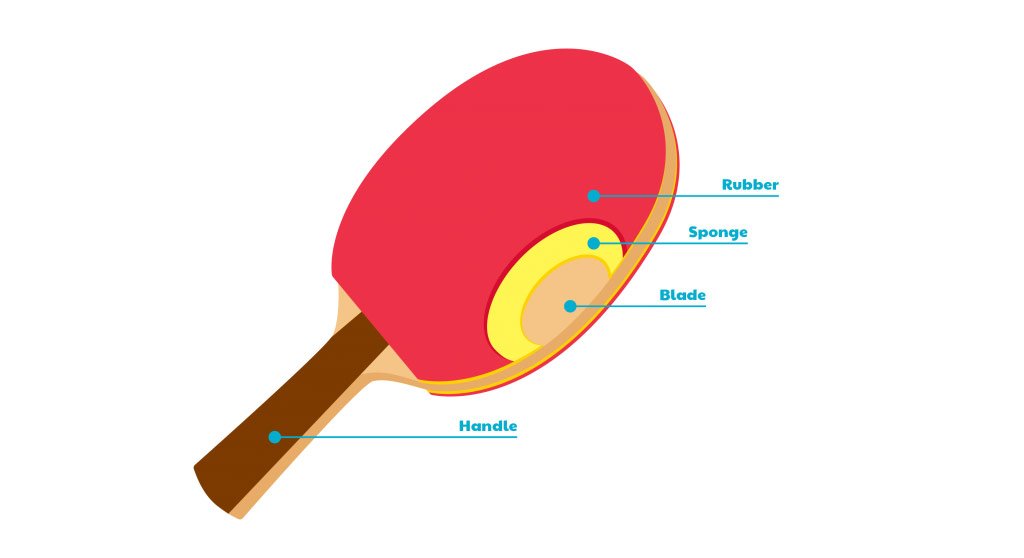
Understanding what goes into a ping pong paddle makes the difference between buying on instinct and buying intelligently. According to Wikipedia's overview of table tennis equipment regulations, the ITTF mandates that racket coverings be ITTF-approved and that one side be red while the other is black in competitive play. Beyond regulation compliance, there are four core factors that should drive your decision.
Blade Construction: Wood vs. Carbon
The blade is the foundation of the paddle. All-wood blades — typically 5 to 7 plies — provide a softer, more tactile response with better control, which is why they're recommended for beginners and intermediate players. Carbon fiber composite blades add stiffness and dramatically increase speed by transferring more energy into the ball at contact. The tradeoff is reduced dwell time and less feedback, which makes them demanding to control for players who haven't yet developed consistent technique. Match your blade construction to your current skill level, not your aspirational one. More ply count generally means more rigidity and speed.
Rubber Type and Sponge Thickness
Inverted (smooth) rubber is the standard for most players — the flat surface grips the ball for maximum spin generation. Thicker sponge (1.8mm–2.0mm) produces more speed and spin but demands precision. Thinner sponge (1.5mm and below) offers more control at the expense of power. For competitive use, always verify ITTF approval on both rubber sheets. The rubber is also where wear happens fastest — a quality paddle with degraded rubber performs worse than a budget paddle with fresh sheets. Factor in eventual rubber replacement when you budget for your purchase, especially if you play several times per week.
Grip Style: Shakehand vs. Penhold

The shakehand grip — holding the handle the way you'd shake someone's hand — is the dominant style in Western table tennis and most recreational play. It provides excellent wrist mobility for both forehand and backhand strokes, making it the most versatile option for all-round players. All seven paddles on this list use shakehand-compatible handles. The penhold grip, where you hold the blade between thumb and forefinger like a pen, is traditionally associated with East Asian playing styles and emphasizes aggressive forehand attacks with a distinctive wrist snap.
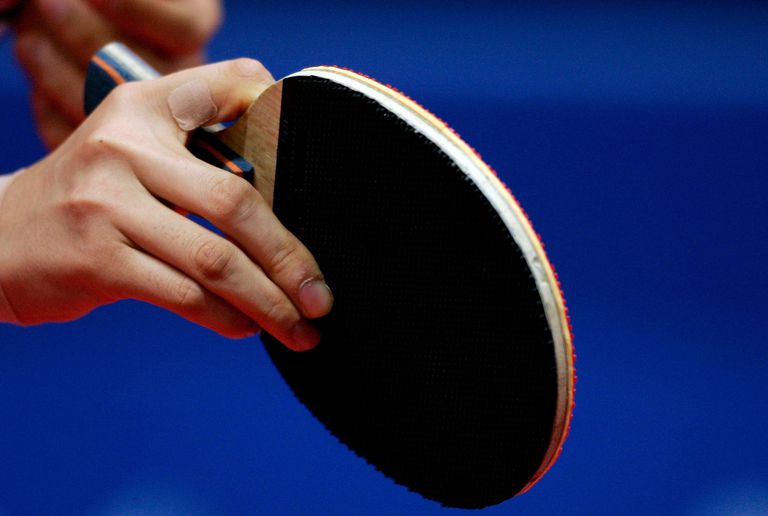
Most beginners default to shakehand naturally, and there's no reason to fight that instinct — it's the most flexible style for developing a complete game. If you decide to go with a penhold style, look for paddles specifically designed for that grip rather than trying to adapt a shakehand handle. The DHS H6002 on this list is explicitly a shakehand design optimized for that grip style's mechanics. For tips on what equipment works well alongside your paddle, check out our guide to the best ping pong balls — matching your ball to your rubber type makes a noticeable difference in feel and spin response.
Speed, Spin, and Control Ratings — What They Actually Mean
Manufacturers publish ratings for Speed, Spin, and Control, typically on a scale of 1–10. These numbers describe the paddle's tendencies, not your results — a 9/10 speed rating doesn't make you faster, it means the paddle amplifies the pace you already generate. High speed ratings are only useful if you have the consistency to keep fast shots on the table. For beginners, prioritize control (7+) over speed. For intermediate players, balanced ratings around 7–8 across all three categories usually produce the best development outcomes. Only advanced players with reliable technique should reach for paddles where speed and spin ratings approach 9+. If you enjoy other precision-based games and want to compare equipment investment levels, we've covered a similar buying framework in our electronic dart board reviews — the principle of matching equipment to your current skill level applies equally there. You can also explore more game room options across our mini foosball table guide if you're building out a full game room setup in 2026.
FAQs
What is the best ping pong paddle for beginners in 2026?
The Killerspin JET200 is the best beginner paddle on this list. Its control rating of 8.5 out of 10 means it's forgiving on off-center hits and helps new players build consistent stroke mechanics without fighting unpredictable equipment. The 5-ply wood blade gives honest feedback without amplifying errors the way carbon composite blades do. It's the right tool for learning the game properly.
What's the difference between a carbon fiber blade and an all-wood blade?
Carbon fiber blades are stiffer and faster — the carbon layers transfer more energy into the ball at contact, producing higher ball speed with the same swing effort. All-wood blades are softer, provide more tactile feedback, and give you more control over ball placement. For beginners and intermediate players, all-wood is the right choice. For advanced players who already have consistent technique and want to add pace, carbon is worth considering. The STIGA Pro Carbon and Killerspin Jet 800 N2 both use carbon construction on this list.
Are these paddles ITTF approved for tournament play?
Yes — the STIGA Pro Carbon, STIGA Evolution, DHS H6002, Palio Expert 3.0, and JOOLA Infinity Balance are all ITTF-approved and tournament legal. The Killerspin JET200 is designed for recreational and developmental play rather than sanctioned competition. Always verify current ITTF approval status before entering a registered tournament, as the approved equipment list is updated periodically.
How often should I replace my paddle's rubber?
For casual players who play once or twice a week, rubber typically lasts 6 to 12 months before noticeable performance degradation. Competitive players who practice daily may need to replace rubber every 2 to 3 months. The signs are clear: reduced grip on the ball surface, loss of spin response, or visible surface cracking. Higher-quality rubbers like Hurricane 8 on the DHS H6002 tend to have longer usable lifespans than cheaper sheet rubber.
What grip style should I use — shakehand or penhold?
For most players, shakehand is the right choice. It's the most versatile grip for developing a complete game with strong forehand and backhand strokes. Penhold offers advantages for players who build their game around an extremely aggressive forehand and are willing to accept a weaker backhand position in exchange. If you're just starting out, default to shakehand and only explore penhold once you understand why its tradeoffs might suit your developing style.
Does a more expensive paddle automatically make you a better player?
No. The relationship between paddle price and player performance is nonlinear. A beginner with a $150 carbon professional paddle will perform worse than an intermediate player with a $40 all-wood control paddle — because the expensive paddle amplifies every technical flaw. The best paddle for you is the one matched to your current skill level, not your aspirational one. Invest in a paddle one tier above where you are now, develop your technique, then upgrade when you've genuinely outgrown your equipment.
Buy on Walmart
- STIGA Pro Carbon Performance-Level Ping Pong Paddle with Car — Walmart Link
- STIGA Evolution Performance Ping Pong Paddle - 6-ply Light B — Walmart Link
- Killerspin JET200 Ping Pong Paddle, Table Tennis Racket, Tab — Walmart Link
- DHS Sports 6 Star Table Tennis Racket H6002 - Shakehand, ITT — Walmart Link
- Palio Expert 3.0 Table Tennis Racket & Case | ITTF Approved — Walmart Link
- JOOLA Infinity Balance - Advanced Performance Ping Pong Padd — Walmart Link
- Killerspin Jet 800 Speed N2 - A Professional Grade Ping Pong — Walmart Link
Buy on eBay
- STIGA Pro Carbon Performance-Level Ping Pong Paddle with Car — eBay Link
- STIGA Evolution Performance Ping Pong Paddle - 6-ply Light B — eBay Link
- Killerspin JET200 Ping Pong Paddle, Table Tennis Racket, Tab — eBay Link
- DHS Sports 6 Star Table Tennis Racket H6002 - Shakehand, ITT — eBay Link
- Palio Expert 3.0 Table Tennis Racket & Case | ITTF Approved — eBay Link
- JOOLA Infinity Balance - Advanced Performance Ping Pong Padd — eBay Link
- Killerspin Jet 800 Speed N2 - A Professional Grade Ping Pong — eBay Link
The right paddle isn't the fastest one or the most expensive one — it's the one that matches where you are right now and gives you room to grow.


About Mike Jones
Mike Jones grew up in the golden age of arcade and home gaming — a childhood shaped by Atari classics like Pitfall, Frogger, and Kaboom that gave him a lifelong appreciation for games of all kinds. These days he covers the full breadth of tabletop and family gaming: board games, card games, yard games, table games, and game room setup, with a particular focus on finding the games that bring different groups together. At GamingWeekender, he covers game reviews, buying guides, and recommendations for families, friends, and hobbyists who take their leisure seriously.
You can get FREE Gifts. Or latest Free phones here.
Disable Ad block to reveal all the info. Once done, hit a button below