The short answer to why did Nintendo Wii U fail is this: confusing branding killed its launch momentum, underpowered hardware drove away third-party developers, and without third-party support the game library was too thin to sustain mainstream interest. Everything else that went wrong flows from those three problems. Our team covers the full world of video games here at GamingWeekender, and the Wii U remains one of the most instructive cautionary tales in modern console history.
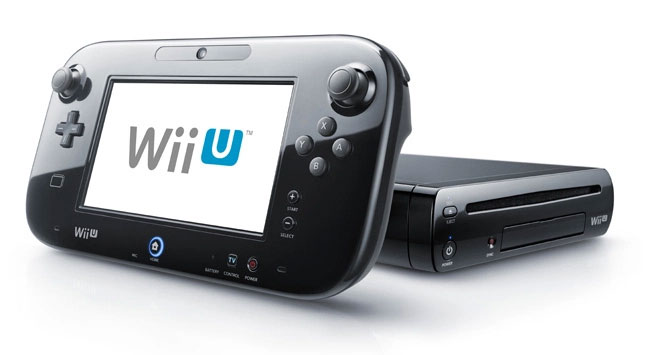
Nintendo shipped roughly 13.56 million Wii U units before discontinuing the console. The original Wii sold over 101 million. That gap did not happen by accident — it was the result of decisions that seemed defensible on paper but collapsed under real-world conditions. Launch sales were sluggish from day one, third-party publishers walked away within eighteen months, and price cuts and bundles were never enough to reverse the slide.
Still, the Wii U was not a creative failure. It produced some of the best first-party games Nintendo has ever made, introduced ideas that the Switch later used to become one of the best-selling consoles of all time, and demonstrated that Nintendo's internal studios were operating at a genuinely high level throughout the platform's troubled run. Our team thinks the full picture deserves more credit — and more scrutiny — than most retrospectives give it.
Contents
The Core Numbers: Why the Wii U Struggled From Day One
A Name That Confused Buyers at Every Level
The Wii U launched in November 2012 as the direct follow-up to the massively successful Wii. Nintendo kept the "Wii" brand, added a "U," and assumed the audience would understand the difference. Most people didn't.
- Many parents believed the Wii U was simply an add-on controller for the existing Wii they already owned
- Retail staff reported constant confusion at store counters throughout the launch window
- Nintendo's own advertising focused on the GamePad tablet controller, not on the new console itself — which made the confusion worse
- Casual buyers who had driven the Wii's massive success never clearly understood that an entirely new product existed
The naming problem was not a minor inconvenience — it directly suppressed sales from day one and kept the console's potential audience on the sidelines for its entire lifespan. A clear, distinct name would have been the obvious fix, and Nintendo simply did not make that call.
Pro Insight: Console naming is branding, and branding is everything at retail launch. A name that requires a verbal explanation to a store clerk has already lost a significant portion of its potential audience before a single unit ships.
Hardware That Couldn't Keep Up
The Wii U launched with specifications roughly comparable to the PlayStation 3 and Xbox 360 — consoles that were already six and seven years old at the time. When the PlayStation 4 and Xbox One arrived a year later, the hardware gap became commercially fatal.
| Console | Launch Year | CPU | RAM | Lifetime Units Sold |
|---|---|---|---|---|
| Wii U | 2012 | IBM PowerPC 750 (1.24 GHz tri-core) | 2 GB | ~13.56 million |
| PlayStation 4 | 2013 | AMD Jaguar (1.6 GHz, 8-core) | 8 GB GDDR5 | ~117 million |
| Xbox One | 2013 | AMD Jaguar (1.75 GHz, 8-core) | 8 GB DDR3 | ~51 million |
| Nintendo Switch | 2017 | NVIDIA Tegra X1 | 4 GB LPDDR4 | 140 million+ |
Third-party developers looked at those numbers and made a rational business decision. Building for the Wii U required downscaling assets, rebuilding engine integrations, and targeting an install base that never exceeded 13 million — while the PS4 was growing toward 50 million. Once EA, Ubisoft, and Activision walked away from the platform, its commercial fate was effectively sealed.
What the Wii U Launch Actually Looked Like
Understanding why did Nintendo Wii U fail requires looking at the launch window in concrete terms rather than just abstract strategy. The early signals were all pointing in the wrong direction.
Third-Party Abandonment in Real Time
The Wii U actually had decent third-party support at launch. Batman: Arkham City, Mass Effect 3, and Assassin's Creed III all shipped on the platform. The problem was that these were ports of games already available on other systems — and they arrived months or years late, sometimes missing downloadable content included in competing versions.
- Mass Effect 3 launched on Wii U after the trilogy collection had already shipped elsewhere
- Need for Speed: Most Wanted U arrived in better technical shape than competing versions but at full price, long after discounts had hit other platforms
- Call of Duty: Ghosts was the last major annual franchise entry to release on Wii U
- By the console's second year, the third-party retail shelf was nearly empty
Anyone who bought a Wii U was committing to a Nintendo-only machine. That is a defensible proposition for a dedicated Nintendo fan — but it limits the addressable market to a fraction of the buying public. The parallel to The Elder Scrolls Online's rough launch period is instructive: both products suffered from a lack of content depth that eroded early momentum. ESO had a live-service model to recover. The Wii U had no such mechanism.

The GamePad's Identity Crisis
The Wii U GamePad was a touchscreen tablet controller that functioned as both the primary input device and a secondary display. Nintendo positioned it as the console's defining innovation. In practice, it created more problems than it solved.
- The GamePad added significant cost to the system without a clear "must-have" use case at launch
- Most third-party games used it as a map screen or ignored it entirely
- Off-TV play — streaming the game directly to the GamePad screen — was genuinely useful but almost never marketed as a key selling point
- Battery life sat at roughly three to five hours, making extended sessions inconvenient
- The controller was large and heavier than traditional gamepads, which put off some users immediately
The GamePad was a solution searching for a problem, and the majority of developers never found a compelling reason to use it in ways that felt essential to the experience.
Warning: When a console's signature feature depends on third-party buy-in to demonstrate its value — and third parties are already skeptical of the platform — that feature becomes a liability rather than a differentiator at retail.
Where Nintendo Got It Right With the Wii U
Ask anyone who spent real time with the Wii U library what they think of the games, and the answer is consistently surprising. The creative output was exceptional. This is the part of the why did Nintendo Wii U fail conversation that almost always gets underplayed.
First-Party Games That Still Hold Up
Nintendo used the Wii U as a creative testing ground, and a number of the results were outstanding by any standard.
- Super Mario 3D World — a four-player co-op platformer our team ranks among the best Mario games ever released
- Bayonetta 2 — an exclusive action title with a devoted following that still holds up as one of the best in its genre
- Pikmin 3 — widely considered the strongest entry in that franchise, with tight mechanics and visuals that impressed at release
- Donkey Kong Country: Tropical Freeze — a precision platformer that belongs on any honest list of the most demanding video games ever made
- The Legend of Zelda: Wind Waker HD — a definitive restoration of a beloved classic, handled with obvious care
Nintendo also launched Splatoon on the Wii U — a brand-new intellectual property that became a franchise flagship. For a console with a small install base, generating that level of creative output is genuinely impressive and worth acknowledging.

These titles prove something important: Nintendo's internal studios were firing on all cylinders throughout the Wii U's commercial struggle. The console's failure was a business and marketing failure, not a creative one. Anyone who values strong video game storytelling and world-building and has never played Wind Waker HD or Xenoblade Chronicles X is genuinely missing something.
Features That Predicted the Future
Several Wii U innovations that flopped commercially later became the foundation of Nintendo's most successful hardware ever.
- Off-TV play on the GamePad became the Nintendo Switch's entire portable mode concept
- The Nintendo eShop digital storefront, though slow and limited on Wii U, established infrastructure the Switch would later refine into a proper marketplace
- Miiverse, a social network built around shared gaming moments, was conceptually ahead of its time — even if it never found mainstream traction
- The hybrid home/portable experience that defines the Switch traces its origins directly to GamePad off-TV functionality
Our team's read: the Wii U was essentially a proof-of-concept for the Nintendo Switch. Nintendo learned what resonated — portability, strong first-party exclusives, flexible play modes — and what didn't — underpowered hardware, tablet controller bulk, weak third-party relationships — and built the Switch accordingly. That willingness to absorb a commercial failure and apply its lessons is one of Nintendo's genuine strengths as a company. According to Wikipedia's overview of the Wii U, the console was officially discontinued in January 2017, just days after the Switch was revealed — a telling piece of timing.
How Nintendo Tried to Course-Correct
Price Cuts and Bundles
Nintendo did not simply accept the Wii U's poor performance without responding. Several interventions were attempted over the console's lifespan.
- The console launched at $299 (Basic) and $349 (Deluxe); Nintendo reduced pricing for the Deluxe model in 2014
- Bundles pairing hardware with Mario Kart 8 or Super Smash Bros. produced measurable short-term sales lifts
- A Nintendo Selects budget software line reduced prices on older titles to attract bargain hunters
- Nintendo Direct presentations kept the platform in the conversation among core gaming audiences
These moves helped at the margins but were never transformative. Price cuts attract undecided buyers — not buyers who are actively disinterested. By 2014, most casual consumers who might have bought a Wii U had moved on entirely.
Games That Arrived Too Late
Some of the Wii U's strongest software arrived in the console's final years, when the install base had stopped growing and retail partners were already reducing shelf space.
- Xenoblade Chronicles X — a massive open-world RPG — launched in late 2015, when many retailers were already deprioritizing the platform
- The Legend of Zelda: Breath of the Wild was originally a Wii U exclusive but shipped simultaneously with the Switch, effectively functioning as a farewell to the older hardware rather than a reason to buy it
- Tokyo Mirage Sessions #FE arrived so late in the lifecycle that it was largely invisible to the mainstream gaming press
Nintendo's internal development pipeline simply could not fill the gap left by absent third-party publishers fast enough. No first-party team, regardless of talent level, can produce enough content volume to sustain a platform on its own against competitors with 10 times the software output.
Tip: Price cuts can support a struggling platform, but they rarely rescue one. If the value proposition is unclear at launch, discounting typically just accelerates a decline that was already inevitable.
The Wii U Lessons Every Console Maker Should Internalize
The question of why did Nintendo Wii U fail has clear, actionable answers. Our team thinks every company launching a gaming platform — and frankly every product team launching anything with a brand attached — should have these lessons internalized before day one.
Naming and Brand Confusion Kills Momentum
- A product name must instantly communicate what something is, especially at retail and in advertising
- Leveraging an established brand (Wii) makes sense strategically — but not at the cost of clarity about what the new product actually is and does
- Nintendo's game brands (Mario, Zelda, Splatoon) outperformed the platform brand throughout the entire Wii U lifespan — the games were understood; the console was not
- Consumer confusion at the point of purchase is almost impossible to correct once it takes hold
This principle applies across gaming contexts. Whether launching a new console, building a gaming community or clan, or introducing a new game concept, the value has to be immediately legible. The Wii U never achieved that clarity.
Third-Party Relations Matter More Than Hardware
The games library determines a console's long-term commercial success more than raw technical specifications.
- The PlayStation 2 was technically inferior to the original Xbox and the Dreamcast in several measurable ways — but its third-party library was unmatched, and it became the best-selling console of all time
- The Wii U's hardware gap was a problem, but the real commercial damage came from developer abandonment. Once major publishers left, the platform lost its chance at mainstream recovery
- Nintendo's first-party output was exceptional but structurally insufficient to compete against platforms releasing hundreds of third-party titles per year
Hardware specs matter far less than content volume and developer confidence. A mid-tier machine with a deep, diverse library beats a technically superior machine with a thin lineup every time — and the Wii U proves it from both angles simultaneously. The games that existed were great. There just weren't enough of them. Research consistently shows that regular gaming delivers real cognitive and social benefits — but only when players have access to a library deep enough to sustain engagement over time.
Frequently Asked Questions
Why did Nintendo Wii U fail commercially?
The Wii U failed primarily because of three compounding problems: a confusing name that many buyers mistook for a Wii accessory, hardware specifications too weak to attract third-party developers, and a marketing strategy that never clearly communicated the console's value proposition to mainstream consumers. Each problem made the others worse, and Nintendo was never able to break the cycle.
How many Wii U units were sold total?
Nintendo sold approximately 13.56 million Wii U units worldwide across its entire production run. For comparison, the original Wii sold over 101 million units. The Wii U's sales total made it one of Nintendo's least commercially successful home consoles, sitting below even the GameCube's roughly 21 million units.
Did the Wii U have any good games?
The Wii U had an excellent first-party library. Super Mario 3D World, Bayonetta 2, Pikmin 3, Donkey Kong Country: Tropical Freeze, Splatoon, and The Legend of Zelda: Wind Waker HD are all widely regarded as outstanding games. The platform's failure was commercial and strategic — the quality of Nintendo's internal game development remained high throughout.
Why did third-party developers abandon the Wii U?
Third-party developers left the Wii U because the hardware was significantly weaker than competing platforms launching in 2013, and the install base never grew large enough to justify the extra development cost of downscaling games for less capable hardware. Once the PS4 and Xbox One launched, the math simply did not work in the Wii U's favor for major publishers.
What did Nintendo learn from the Wii U's failure?
Nintendo applied the Wii U's lessons directly to the Switch. They kept the hybrid portable/home play concept that the GamePad introduced but stripped away the bulk and battery problems. They invested heavily in third-party relationships before launch and ensured the Switch's hardware was modern enough to attract ports of current-generation games. The Switch went on to sell over 140 million units.
Was the GamePad controller a good idea?
The GamePad's concept was interesting but its execution had serious problems. Off-TV play — the ability to play games directly on the controller screen — was genuinely useful and became the foundation of the Switch's portable mode. But the GamePad was expensive to produce, had poor battery life, and most developers never found compelling ways to use the second screen, which made the hardware cost feel unjustified to consumers.
Could Nintendo have saved the Wii U?
Our team thinks the Wii U's fate was probably sealed within its first year. The naming confusion suppressed launch sales, and without a strong launch the install base never reached the threshold needed to attract major third-party publishers. Even with price cuts and strong first-party software, Nintendo was working against structural disadvantages that no single intervention could fully overcome. The smarter move — which Nintendo eventually made — was to plan the successor and execute it correctly.
Key Takeaways
- The Wii U failed because of a combination of brand confusion, underpowered hardware, and third-party abandonment — not because of weak game quality from Nintendo's own studios.
- The console's first-party library was genuinely excellent, and games like Super Mario 3D World, Splatoon, and Donkey Kong Country: Tropical Freeze remain among the best Nintendo has ever produced.
- Several Wii U innovations — particularly off-TV play and the hybrid console concept — became the foundation of the Nintendo Switch's record-breaking commercial success.
- The clearest lesson from the Wii U is that content volume and developer relationships matter more than hardware specifications when determining a platform's long-term viability.


About Mike Jones
Mike Jones grew up in the golden age of arcade and home gaming — a childhood shaped by Atari classics like Pitfall, Frogger, and Kaboom that gave him a lifelong appreciation for games of all kinds. These days he covers the full breadth of tabletop and family gaming: board games, card games, yard games, table games, and game room setup, with a particular focus on finding the games that bring different groups together. At GamingWeekender, he covers game reviews, buying guides, and recommendations for families, friends, and hobbyists who take their leisure seriously.
You can get FREE Gifts. Or latest Free phones here.
Disable Ad block to reveal all the info. Once done, hit a button below