Dominoes is one of the oldest tile-based games in recorded history — with origins tracing back to 13th-century China — yet most households in the West know only a single way to play it. That's a serious missed opportunity, because a standard double-six set supports well over a dozen distinct games to play with dominoes, covering every combination of players you can think of. Whether you're flying solo on a quiet evening, settling in for a competitive two-player match, or running a full group game night, this guide covers every format worth knowing. And when you're ready to branch out further, the other games category has plenty more to explore.
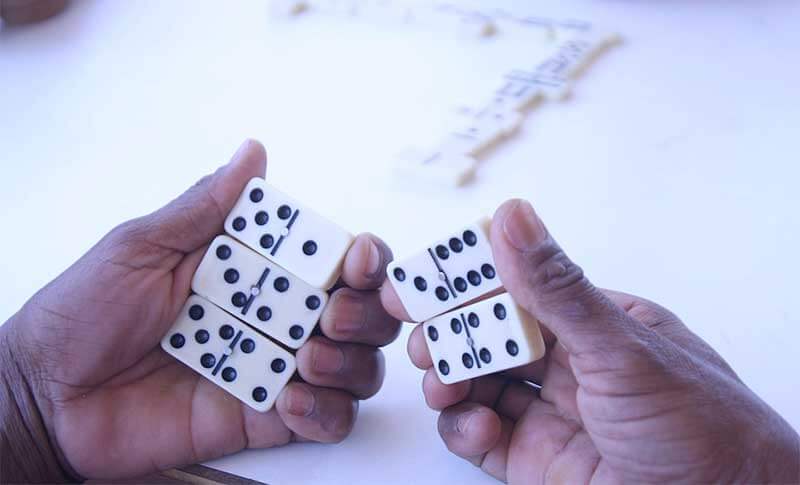
The beauty of dominoes is that the learning curve is genuinely shallow, but the game depth is real. Most variations take five minutes to understand and are still interesting an hour in. You don't need a special edition set, you don't need expensive accessories, and you don't need to be a math genius to keep score. You just need the tiles, a flat surface, and a willingness to move past the one game you already know.
Before we get into specific games, let's clear up a few things that hold people back — because some of the most common beliefs about dominoes are flat-out wrong, and those misconceptions are what's keeping most sets in a drawer.
Contents
- What Most People Get Wrong About Dominoes
- Quick Games to Play With Dominoes Tonight
- When Things Go Sideways: Fixing Common Domino Problems
- Picking the Right Set for Your Games
- Moves That Ruin the Game for Everyone
- From First Game to Confident Player
- Domino Games for Every Group Size
- Frequently Asked Questions
What Most People Get Wrong About Dominoes
The "One Game" Myth
If someone handed you a domino set right now and asked you to name every game you could play with it, most people come up with one — maybe two. That's the "one game" myth at work. The reality is that dominoes is a game family, not a single game, the same way "card games" describes hundreds of variations from Go Fish to Texas Hold'em. Block, Draw, Mexican Train, Chicken Foot, Muggins, All Fives, Domino Solitaire — these are all distinct games with different rules, different strategies, and different ideal player counts. The tiles are the same; the experience is completely different.
This matters because it changes how you think about owning a set. A deck of cards doesn't gather dust because it only does one thing. Your domino set shouldn't either. Once you start treating it as a platform rather than a single game, you open up an entire category of tabletop entertainment that most people walk right past.
The Complexity Myth
The other big misconception is that scoring-based domino games are too complicated for casual play. Muggins, for example, has a reputation for being "the math one" — but the scoring logic is simple once you understand it: you earn points when the open ends of the board add up to a multiple of five. That's the whole rule. You need about two rounds of practice and then it clicks completely.
If you've ever felt intimidated by strategic tile games, compare dominoes to something like backgammon, which requires memorizing positional theory and pip counting to play well. Dominoes is dramatically more accessible at every skill level, which is exactly what makes it such a versatile option for any gaming situation.
Quick Games to Play With Dominoes Tonight
Mexican Train
Mexican Train is the most popular domino game in North America for good reason. It scales beautifully from two to eight players, it's easy to explain in under two minutes, and it produces natural drama as trains grow longer and the pressure to play mounts. Each player builds their own train of tiles extending from a central hub. If you can't play on your own train, you draw from the boneyard — the pile of face-down unused tiles. If you still can't play after drawing, your train gets marked as "public," meaning other players can now add to it. That's where the real strategy lives.
Mexican Train rewards patience and timing more than raw tile luck. Holding your doubles back for the right moment can flip a losing position into a win surprisingly fast. It also rewards reading the board — knowing which trains are public and which tiles are likely still in the boneyard shapes every decision you make.
Chicken Foot
Chicken Foot is Mexican Train's rowdier cousin. When a double is played, the board branches out in multiple directions, requiring other players to "close the chicken foot" before normal play can resume. This creates bottlenecks that force interesting decisions and keep everyone engaged regardless of whose turn it is. It works best with four to eight players and runs longer than Mexican Train, making it a better fit for a dedicated game night than a quick session.
Here's a quick reference comparing the most useful games to play with dominoes across the factors that matter most when choosing what to play:
| Game | Players | Difficulty | Avg. Play Time | Best For |
|---|---|---|---|---|
| Block Dominoes | 2–4 | Beginner | 15–20 min | Learning the basics |
| Draw Dominoes | 2–4 | Beginner | 20–30 min | Casual relaxed play |
| Mexican Train | 2–8 | Intermediate | 30–60 min | Group game nights |
| Chicken Foot | 4–8 | Intermediate | 45–75 min | Larger, louder groups |
| Muggins (All Fives) | 2–4 | Intermediate | 30–45 min | Scoring strategy fans |
| Domino Solitaire | 1 | Beginner | 10–15 min | Solo play |
| Fortress | 1 | Advanced | 20–30 min | Solo puzzle challenge |
When Things Go Sideways: Fixing Common Domino Problems
The Blocked Board
The most common frustration in domino games is a blocked board — a situation where no player can legally make a move and the boneyard is empty. This happens more often with two-player games under standard block rules. The fix is to agree before the game starts on a "blocked game" rule. The most widely used version awards the win to the player with the lowest total pip count (the number of dots on remaining tiles) when the board locks up. Some groups count all remaining tiles across all players and award those points to whoever made the last legal play. Either approach works — you just have to decide upfront so there's no argument mid-game.
Rules Disputes
Domino rules vary wildly by region and family tradition. What your grandmother called "the right way" to play Mexican Train may be completely different from what a friend learned growing up three states away. The best approach is to appoint one person as the rule-setter before the first tile is drawn and commit to their version for the whole session. Write it down if the group is prone to arguments. Nothing kills a game night faster than a mid-round debate about whether you can play on another person's public train on the same turn you're starting your own. Settle it before the tiles come out, and the game runs smoothly every time.
Picking the Right Set for Your Games
Double-Six vs. Double-Twelve
Most beginners start with a double-six set, which contains 28 tiles and supports all the classic games. If you regularly play with more than four people, consider upgrading to a double-nine set (55 tiles) or a double-twelve set (91 tiles). Mexican Train and Chicken Foot both benefit from larger sets because they can accommodate more players without exhausting the boneyard before the game reaches a natural conclusion.
A double-twelve set also opens up games that simply aren't playable on a smaller set, including some genuinely satisfying solo puzzle formats. If you already enjoy solo board games, a double-twelve set adds new game modes to your rotation at no cost beyond the set itself. It's one of the best value upgrades in tabletop gaming.
Material and Build Quality
Entry-level sets use lightweight plastic tiles that work fine but feel insubstantial in the hand after a few sessions. Mid-range sets use thicker plastic, resin, or wood with colored pips, which makes them significantly easier to read and more enjoyable to handle during a long game. Spinner sets — which include a small rotating metal pin in each tile to keep doubles upright during Mexican Train — are a practical convenience upgrade for around ten extra dollars.
If you care about your game room setup, quality equipment matters. Game rooms that already feature dedicated gear like billiards games or a bumper pool table deserve an equally quality domino set sitting alongside them. It's a small thing that noticeably elevates the whole experience for everyone you invite over.
Moves That Ruin the Game for Everyone
Ignoring the Draw Rule
In Draw Dominoes — the version most new players encounter first — you must keep drawing tiles from the boneyard when you can't play, until you find a tile you can use. Many beginners misread this as "draw one tile and pass your turn if it doesn't help." That interpretation is wrong, and it fundamentally shortens the game while removing most of the strategic tension. You keep drawing until you find a playable tile or the boneyard runs out. This distinction becomes critical in longer games where tile distribution shapes every decision from the midpoint on.
Playing Out of Turn
This sounds obvious but happens constantly in casual play, especially when people are chatting or distracted by something else on the table. In Mexican Train, where the board has multiple active trains at once, it's easy to accidentally play when it isn't your turn. Set a clear clockwise or counterclockwise turn order before the first tile goes down, and consider using a small object — a coin, a bottle cap, anything — to mark whose turn it currently is. It takes thirty seconds to establish and prevents a surprising amount of confusion later in the game.
Not Shuffling Properly
Tiles placed face-down need to be mixed thoroughly before each hand is drawn. Many casual players do a quick swirl and call it done. For a genuinely fair game, everyone at the table should mix for at least 20 to 30 seconds before anyone draws. If you've ever had a game where one player drew nothing but doubles while another drew mostly blanks, poor shuffling is almost always the cause. Take the extra minute. It's worth it.
From First Game to Confident Player
Where Beginners Should Start
Start with Block Dominoes. There's no boneyard drawing, no mid-game scoring, and a simple win condition: the first player to empty their hand wins the round. Block teaches you how tiles connect, how the board extends, and how to think about which tiles to play versus which ones to hold for later. Two to four players, 15 minutes max. You'll understand the core logic of every other domino game after a few rounds of Block.
From there, Draw Dominoes adds the boneyard mechanic, which is the bridge to Mexican Train and Chicken Foot. Think of Block → Draw → Mexican Train as the natural progression for anyone new to domino games. Each step adds one meaningful layer without changing the core experience of matching tiles and extending the layout.
Moving Into Intermediate and Advanced Games
Muggins — also called All Fives — is the first game that introduces real scoring strategy. Instead of just racing to empty your hand, you score points throughout the game whenever the total of all open board ends adds up to a multiple of five. This shifts your thinking from "play any legal tile" to "play the tile that scores now or sets up a score on your next turn." It's a meaningful mental step up, but one that makes the game far more interesting for players who want more to think about.
Beyond Muggins, games like Bergen and Matador introduce positional constraints that rival the decision depth of cooperative board games where every move has to account for the group's overall position. If you enjoy that kind of layered thinking, domino games at this level will keep you engaged for a long time. Cuban dominoes and Puerto Rican-style partner play add a team dynamic on top of that — reading your partner's tile choices and communicating through play rather than words becomes the entire skill set. It's a fundamentally different experience from casual home play, and it rewards genuine practice.
Domino Games for Every Group Size
Solo Play
Yes, you can absolutely play dominoes alone, and it's more engaging than most people expect. Domino Solitaire is the most accessible solo format: all 28 tiles go face-down, you mix them, then draw and lay them one at a time, connecting ends to build a chain. The goal is to place every tile without getting stuck. The early moves are easy, but the late game creates genuine puzzles that require real forethought. Fortress is a harder solo variant that demands you build specific shapes and plan multiple moves ahead — it's the kind of quiet challenge that's perfect for a solo evening.
Solo tile games scratch a specific itch. They're meditative but mentally active, and they're deeply satisfying to complete. If you already enjoy solo board games as much as group sessions, domino solitaire fits naturally into that rotation without costing you anything extra if you already own a set.
Two Players
Two-player domino games are where strategic tension peaks. With only two of you, you accumulate more information about what's in the boneyard as the game progresses, and you can make stronger inferences about what your opponent is holding based on what they choose to play. Block, Draw, and Muggins all work beautifully head-to-head and play quickly — a typical two-player session runs 20 to 40 minutes. For couples looking for a game that's genuinely competitive without requiring a big setup or lots of components, dominoes is a consistently underrated choice.
Group Games
For three or more players, Mexican Train is the gold standard. It's easy to explain to newcomers, it naturally creates conversation and side commentary as trains grow longer, and it doesn't eliminate anyone mid-game — everyone plays until the round ends. Chicken Foot adds more chaos and energy for groups that want a louder, more social atmosphere. For family groups that already love things like the Family Feud board game or party formats like teen murder mystery games, Mexican Train fits right into that same high-energy everyone-is-involved style — without the elimination mechanics that frustrate younger or more casual players.
For groups of five or more, upgrade to a double-nine or double-twelve set before your first session. Running out of tiles before the game reaches a natural conclusion is the one thing most likely to frustrate a large group, and it's entirely preventable with the right set.
Frequently Asked Questions
How many tiles does a standard double-six domino set have?
A standard double-six set contains 28 tiles. Each tile shows two numbers from zero (blank) to six, covering every possible combination. This set size supports most classic games for two to four players. For larger groups or longer games, double-nine sets (55 tiles) and double-twelve sets (91 tiles) are widely available and support more players without running short.
What is the best domino game for beginners?
Block Dominoes is the best starting point. It has no mid-game scoring, no boneyard drawing, and a clear win condition: empty your hand first. It teaches you how tiles connect and how the board develops without adding extra rules. Once you're comfortable with Block, Draw Dominoes and Mexican Train both build naturally on that foundation.
Can you play dominoes with just two players?
Yes, and two-player domino games are excellent. Block, Draw, and Muggins all work very well head-to-head and tend to run 20 to 40 minutes per session. Two-player games actually create more strategic tension than larger groups because you gain more information about your opponent's tiles as the game progresses, and every decision carries more weight.
What happens when the boneyard runs out of tiles?
When the boneyard is empty and a player cannot make a legal move, the game is considered blocked. The standard rule awards the win to the player with the lowest total pip count on their remaining tiles. Some rule sets count all unplayed tiles across all players and award those points to the last person who played successfully. Agree on which version you're using before the game starts.
What is the difference between Mexican Train and Chicken Foot?
Both games use a central hub and branching trains, but Chicken Foot adds a rule requiring all players to "close" a branching chicken foot whenever a double is played before normal play can continue. This creates periodic bottlenecks and tends to make the game louder and longer than Mexican Train. Mexican Train is better for mixed groups and shorter sessions; Chicken Foot suits dedicated game nights with four or more enthusiastic players.
How do you score points in Muggins (All Fives)?
In Muggins, you score points whenever the sum of all open ends on the board equals a multiple of five — five, ten, fifteen, twenty, and so on. You score that exact total in points. The player who empties their hand first also scores the total pip count of all tiles remaining in opponents' hands. The first player to reach 100 or 150 points (agreed before the game) wins the match.
The best games to play with dominoes are the ones still in the box — dust them off, learn one new variation, and you'll wonder why you ever needed anything else.


About Mike Jones
Mike Jones grew up in the golden age of arcade and home gaming — a childhood shaped by Atari classics like Pitfall, Frogger, and Kaboom that gave him a lifelong appreciation for games of all kinds. These days he covers the full breadth of tabletop and family gaming: board games, card games, yard games, table games, and game room setup, with a particular focus on finding the games that bring different groups together. At GamingWeekender, he covers game reviews, buying guides, and recommendations for families, friends, and hobbyists who take their leisure seriously.
You can get FREE Gifts. Or latest Free phones here.
Disable Ad block to reveal all the info. Once done, hit a button below