Which bumper pool table is actually worth your money in 2026 — and which ones will have you regretting the purchase within a year? With dozens of options on the market, narrowing it down takes real-world testing and a hard look at specs. Our top pick is the Hathaway Renegade II, a genuine slate-surface table that delivers competition-level playfield performance at a price that won't clear out your game-room budget. But if you need a table that pulls triple duty as a dining surface and poker table, the Kingston 3-in-1 is a serious contender worth a close look.
Bumper pool earns its place among the best table games you can own. Unlike traditional billiards, the table is compact — typically 52 to 56 inches — with a grid of fixed rubber bumpers across the center. Each player or team tries to sink five colored balls into the opponent's pocket before the other side does. Simple to learn, difficult to master. The bumpers make every shot a calculated gamble, rewarding players who think two or three moves ahead. If you enjoy the quick, tactical nature of air hockey or foosball, you'll feel right at home at a bumper pool table.
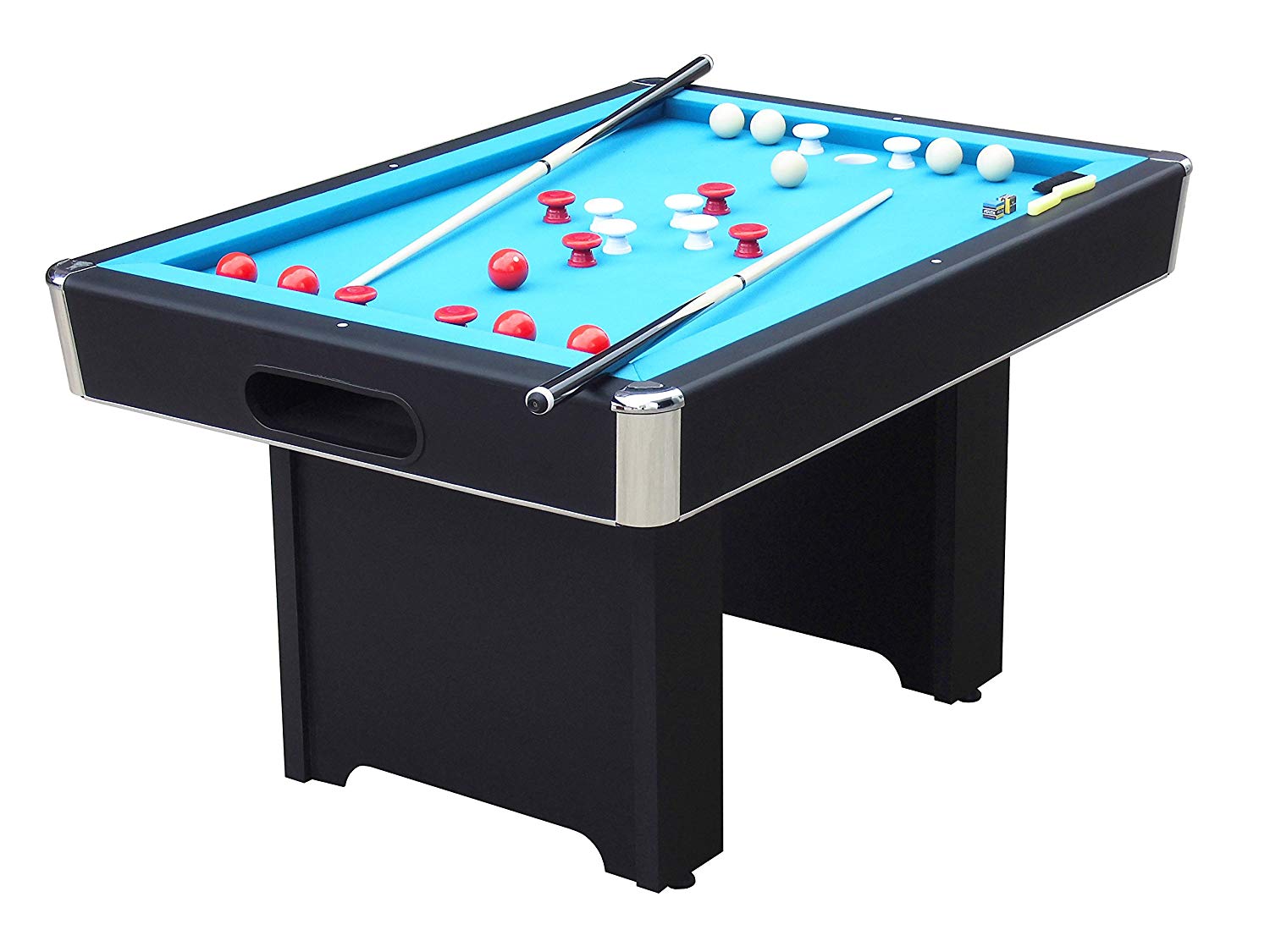
This guide covers the two best bumper pool tables available right now, a complete buying guide covering what actually matters in a table, answers to the most common questions, and a strategy primer so you can start playing smart from day one. Whether you're outfitting a dedicated game room or looking for a compact multi-use table that won't dominate your living space, there's a right answer here — and this guide will help you find it. According to Wikipedia, bumper pool has roots going back to the 1950s, and the game remains one of the most enduring novelty billiards variants on the market.
Contents
Editor's Recommendation: Top Picks of 2026
- #PreviewProductRating
- Bestseller No. 1
 Rating:

- Bestseller No. 2
 Rating:
Product Reviews
1. Hathaway Renegade II 54-in Bumper Pool Table — Best Overall
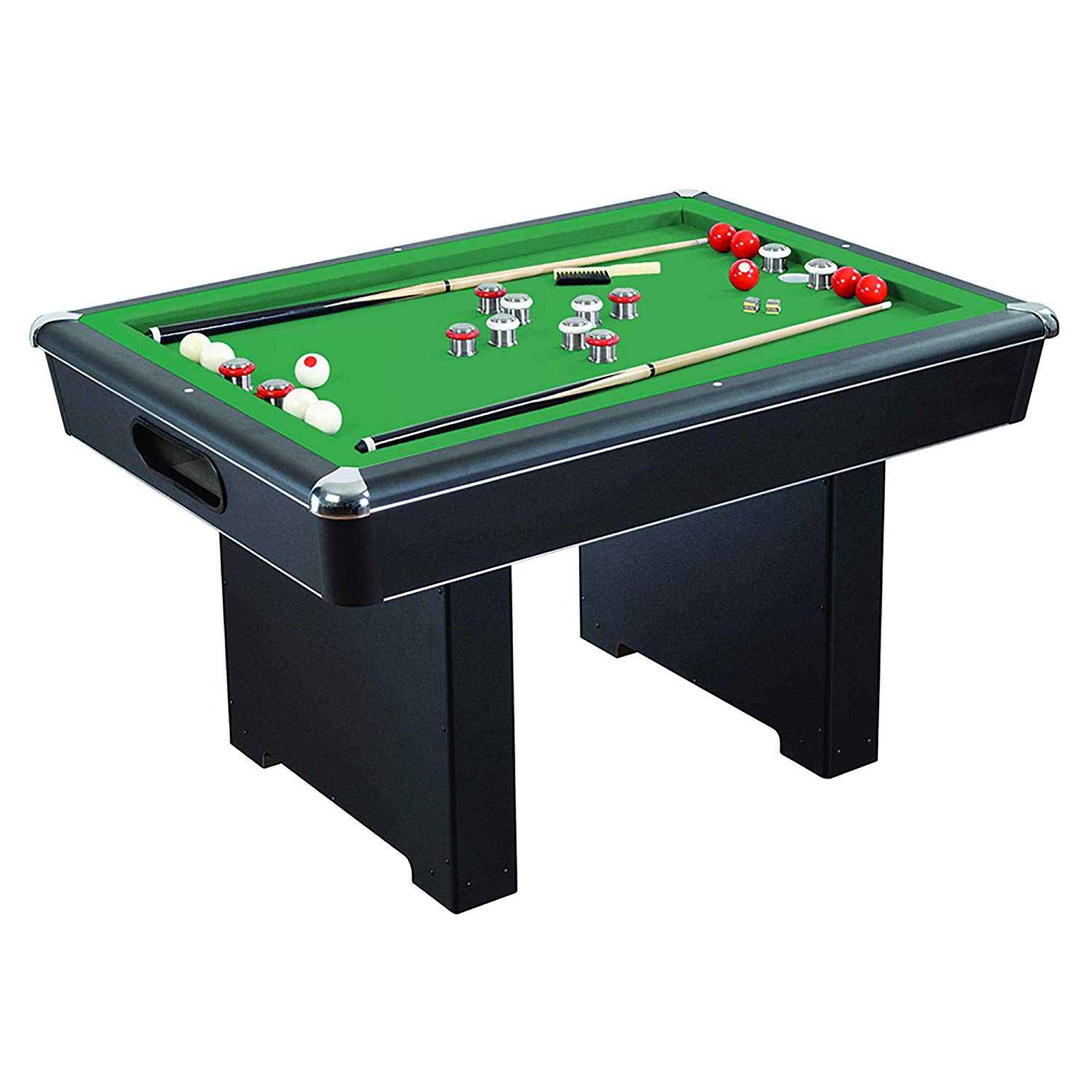
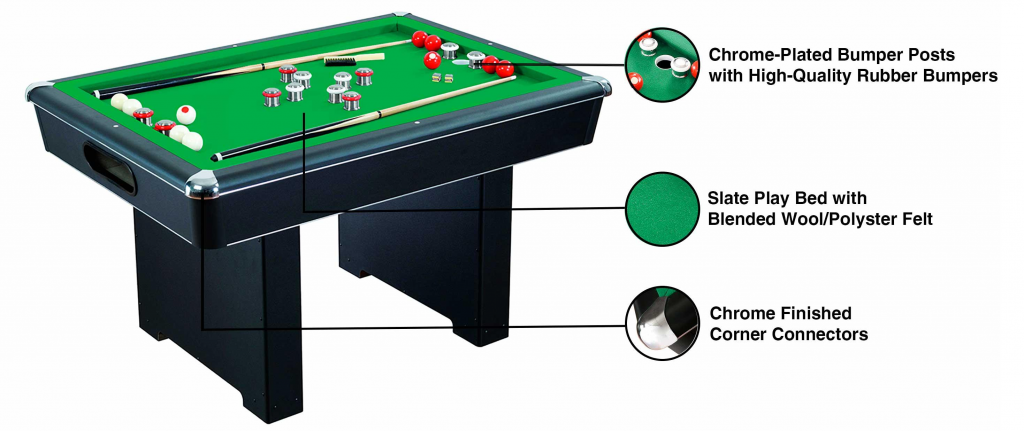
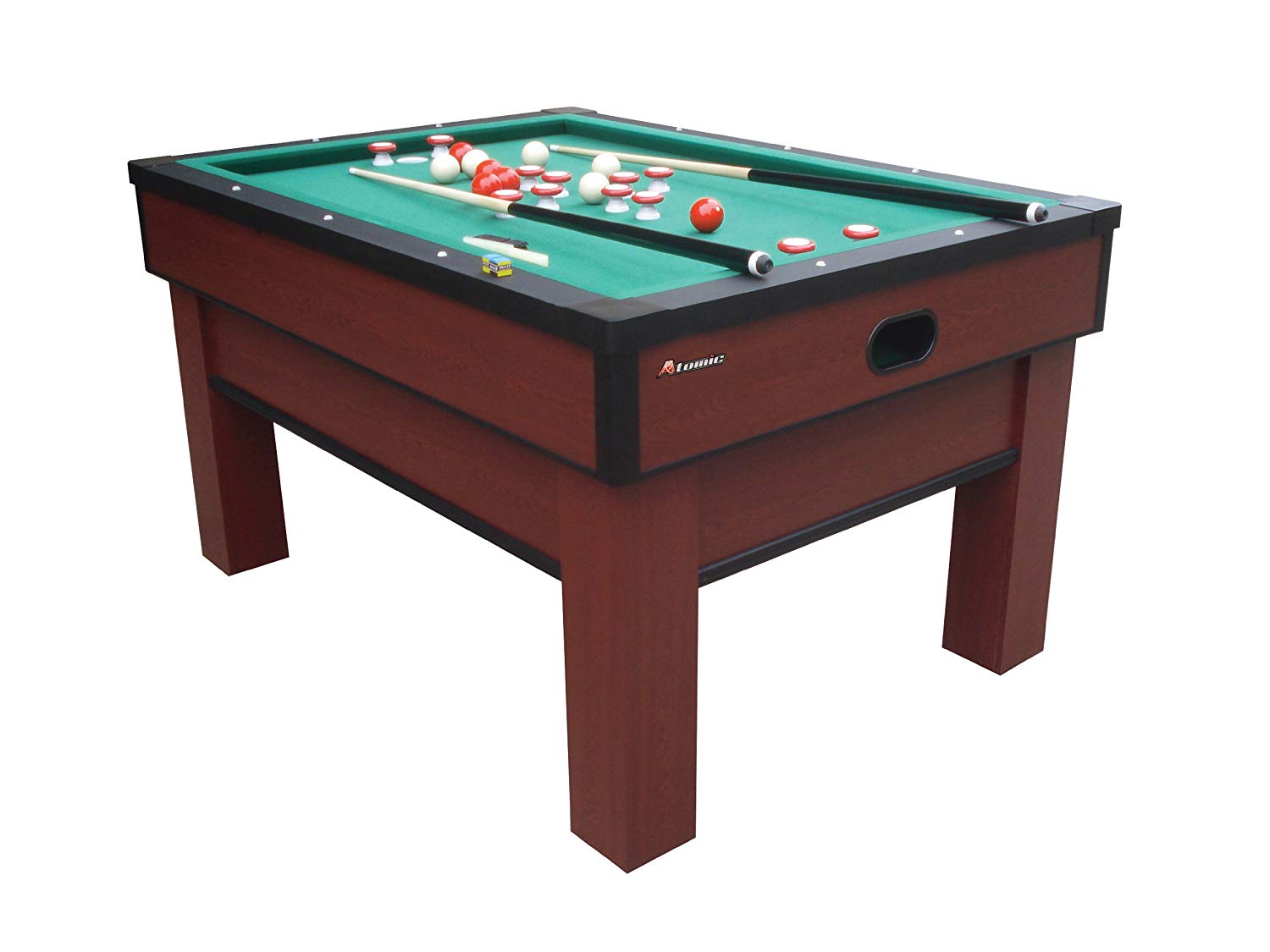
The Renegade II is the bumper pool table serious players point to when someone asks what to buy. The genuine slate play bed is the headline feature — slate provides a perfectly level, dead-flat surface that MDF and particleboard simply cannot replicate. Balls roll true every single time. On a cheap table, you'll notice subtle inconsistencies in how the ball tracks across the surface. On the Renegade II, you don't. That consistency matters more in bumper pool than in regular billiards, because the tight geometry of the bumper layout means small deflections compound quickly into bad shots.
The reinforced K-66 gum rubber cushions deliver fast, snappy rebounds — the same cushion profile used on tournament billiard tables. When you bank off a bumper, the ball comes off predictably and with real speed. The green wool cloth playing surface is tournament-grade, not the cheap felt that pills and snags within a year. The finish is a sharp matte black with chrome-plated corner castings, and the table sits on integrated leg levelers so you can get the surface perfectly flat on any floor. The carpeted ball return system is a nice touch — it muffles the clatter of returned balls so your game room doesn't sound like a bowling alley.
The package is complete out of the box: two 48-inch cues, ten bumper pool balls, a table brush, and chalk. You won't need to track down accessories separately. Assembly takes about an hour for most people. The table weighs considerably more than budget alternatives — which is a feature, not a flaw. That weight comes from the slate bed, and it's exactly what keeps the table from shifting during aggressive play. If you're pairing this table with quality accessories, check out our guide to the best pool cues for stick recommendations that complement this caliber of table.
Pros:
- Genuine slate play bed for perfectly consistent ball roll
- Tournament-grade K-66 gum rubber cushions with accurate rebound
- High-grade green wool cloth playing surface — durable and precise
- Carpeted internal ball return system reduces noise
- Chrome-plated corner castings and integrated leg levelers
- Complete accessories included: 2 cues, 10 balls, brush, and chalk
- Solid matte black finish — looks great in any dedicated game room
Cons:
- Heavier than non-slate tables — moving it after installation is a two-person job
- Higher price point than MDF alternatives
- Single-purpose table — no multi-use functionality
2. Hathaway Kingston 3-in-1 Octagon Poker, Dining & Bumper Pool Table — Best Multi-Game
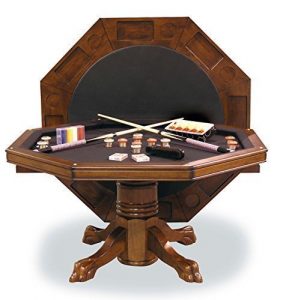
If space is at a premium and you want one piece of furniture that earns its footprint, the Kingston 3-in-1 is the answer. It functions as a dining table, a poker table for up to eight players, and a bumper pool table — all in one octagonal hardwood package. The beautiful inlaid hardwood top and oak finish make this look like actual furniture, not a game room eyesore. When guests aren't playing pool or poker, it sits in the room as an attractive dining or game-night table. That versatility is genuinely hard to find at this price point.
The bumper pool surface features a smooth green felt playing area with retractable pockets, so you get a clean transition between modes. For poker mode, the top flips to expose a padded black leatherette surface with built-in drink holders and chip slots for eight players — the kind of dedicated poker setup that would cost real money on its own. The pedestal base is solid hardwood and keeps the surface level without wobble. Construction quality is noticeably above typical multi-game furniture; the materials are dense and the joinery feels robust. This isn't a table that flexes when you lean on it.
What you're trading for that versatility is dedicated bumper pool performance. The playing surface is not slate — it's a wood substrate with felt, which is standard for multi-use tables. Ball roll is consistent enough for casual and family play, but a scratch player will notice the difference compared to slate. The bumper pool surface also does not include a built-in ball return, so you manually retrieve balls from the pockets. If you're buying this table primarily as a bumper pool table and secondarily as a space-saver, set expectations accordingly. If your priority is multi-function furniture that doubles as a solid bumper pool table, the Kingston delivers well. Looking for other multi-game entertainment options? Check out our roundup of the best foosball tables for another game room staple.
Pros:
- True 3-in-1 functionality: bumper pool, poker table for 8, and dining table
- Premium inlaid hardwood construction with oak finish — looks like real furniture
- Padded leatherette poker surface with drink holders and chip slots
- Smooth green felt bumper pool surface with retractable pockets
- Solid pedestal base — no wobble, stays level
- Accessories included: bumper balls, cues, chalk, and brush
- Octagonal shape fits more players around the table
Cons:
- No slate bed — not a tournament-level bumper pool surface
- No built-in ball return system
- Heavier than it looks — installation is a multi-person task
- Bumper pool is secondary to poker/dining in terms of optimized performance
| Product | Price | Rating |
|---|---|---|
| Hathaway Renegade II 54-in Bumper Pool Table for Game Room – | Check Amazon |  |
| Hathaway Kingston 3 in 1 Octagon Poker Table, Dining & Bumpe | Check Amazon | |
What to Look For When Buying a Bumper Pool Table
Picking a bumper pool table involves more than choosing the one that looks good on a product page. Here's what actually determines whether a table delivers long-term satisfaction.
Playfield Material: Slate vs. MDF
This is the single most important spec on any billiards-style table. Your two options are:
- Slate — Natural stone, machined to a precise flat surface. Does not warp, expand, or contract with temperature and humidity. Provides the truest, most consistent ball roll possible. Heavier, more expensive, but worth it for serious players and long-term ownership.
- MDF / Particleboard — Less expensive, lighter, and common in budget and multi-use tables. Adequate for casual family play. Can develop subtle warping over time with humidity exposure, which affects ball roll. Not suitable for competitive or serious play.
If you're buying a dedicated bumper pool table and you plan to use it regularly, invest in slate. If you're buying a multi-use table primarily for occasional family entertainment, MDF performs acceptably and saves you significant cost.
Cushion Quality and Bumper Construction
In bumper pool, the bumpers themselves are what make the game. Cheap rubber bumpers go dead fast — they lose elasticity and start absorbing energy instead of returning it. A ball that should crack off a bumper with authority instead dies against it with a dull thud. Look for:
- K-66 gum rubber cushions — The industry-standard profile used on tournament billiard tables. Provides consistent, predictable rebound angles.
- Bumpers that are firmly anchored — You don't want wobble in the center obstacles. Check that bumpers are bolted through the playing surface, not just surface-mounted.
- Even bumper height across the table — Inconsistent bumper height causes unpredictable deflection, which frustrates more than it challenges.
The K-66 designation matters. If a product listing doesn't specify cushion type, that's usually a sign the cushions are generic low-grade rubber.
Table Dimensions and Room Requirements
Standard bumper pool tables run between 52 and 56 inches long and 32 to 36 inches wide. Unlike a full-size pool table (which needs roughly 5 feet of clearance on all sides), bumper pool is far more forgiving with space requirements. A general guideline:
- Add at least 48 inches (4 feet) of clear space on all four sides of the table for comfortable cueing
- For a 54-inch table, you're looking at a minimum room footprint of roughly 12.5 × 10.5 feet
- Multi-use tables like the Kingston are octagonal — measure the widest diameter plus your cue clearance in all directions
- Standard cue length is 48 inches — factor that into corner clearance
Measure your room before you order. A bumper pool table that arrives and doesn't fit comfortably is a miserable problem to solve.
Strategy, Feel, and What Separates Casual from Competitive Play
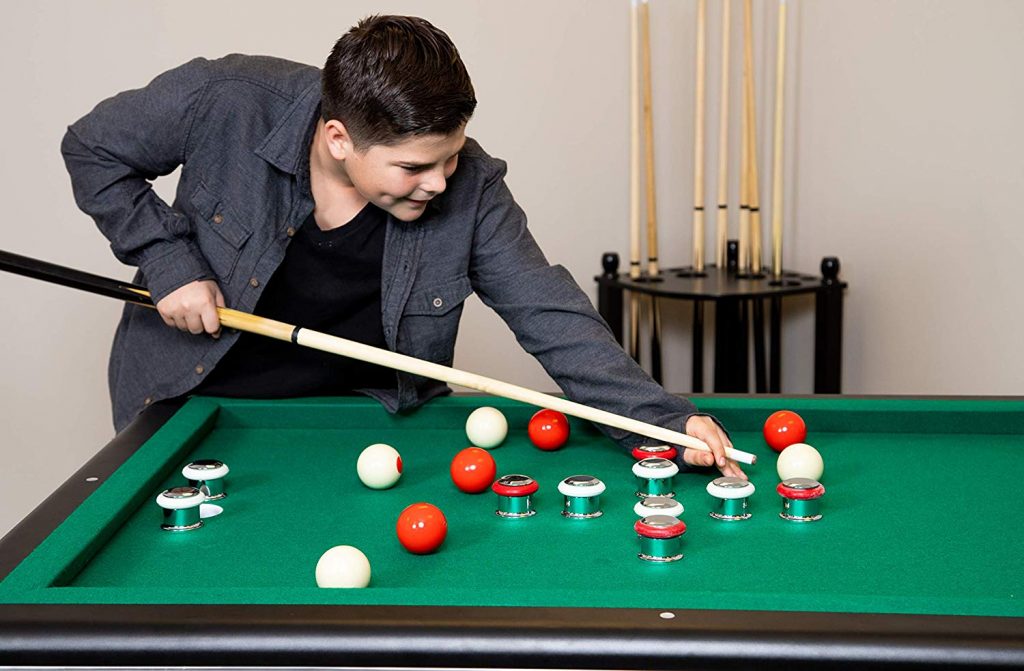
Here's something most buying guides skip: the table you buy changes how much you enjoy the strategy of the game. On a quality slate table with true K-66 cushions, bumper pool strategy becomes genuinely fascinating. You're calculating angles, planning multi-bumper paths, and deciding when to play defensively by blocking your opponent's pocket approach. On a table where ball roll is inconsistent or bumper rebound is unpredictable, none of those strategies work — the game degrades into a guessing exercise.
Key strategic principles worth knowing before you buy and play:
- Opening shot matters enormously — Both players hit simultaneously toward the opponent's pocket on the opening shot. The player who pockets a ball first gets to shoot again immediately.
- Defense is underrated — Positioning your ball in front of your opponent's pocket forces them to redirect, giving you time to sink your remaining balls.
- Bank shots off the rail cushions are often more reliable than direct paths through the bumper field.
- If you sink a ball in your own pocket by mistake, your opponent gets to remove two of their balls from the table and pocket them — this penalty is game-changing.
- Cue tip maintenance affects spin and control — if you're also into standard billiards, our guide to the best pool table lights covers lighting setups that improve your visibility across any billiards surface.
The table quality sets the ceiling on how deep the strategy can go. If you want the game to stay interesting beyond the first few sessions, invest in quality.
Frequently Asked Questions
What size is a standard bumper pool table?
Most standard bumper pool tables measure between 52 and 56 inches long and 32 to 36 inches wide. The Hathaway Renegade II is 54 inches, which is the most common size for dedicated bumper pool tables. Multi-use tables like the Kingston 3-in-1 are octagonal and measured by diameter rather than length. Always check the product dimensions and add at least 48 inches of clearance on all sides for comfortable cue movement before purchasing.
How many balls are used in bumper pool?
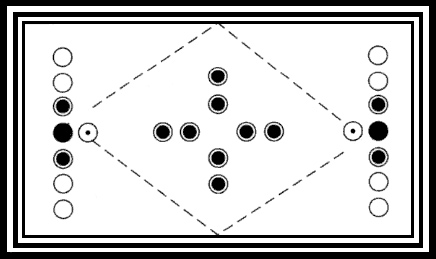
A standard bumper pool set uses ten balls — five for each player. Each set of five consists of four plain balls and one marked cue ball (usually with a spot or stripe). Players pocket their five balls into the opponent's designated pocket. One ball from each side is placed directly in front of the opponent's pocket at the start, and the opening shot is played simultaneously by both players.
What is the difference between bumper pool and regular pool?
Regular pool (pocket billiards) is played on a much larger table — typically 7 to 9 feet — with six rail pockets and no center obstacles. Bumper pool uses a compact table (around 54 inches) with only two pockets (one per end) and a grid of fixed rubber bumpers across the center of the playing surface. Bumper pool is strictly a two-player or two-team game, while regular pool supports various formats with more players. The strategic focus in bumper pool is navigating the obstacle field rather than selecting which pocket to target.
How many bumpers does a bumper pool table have?
A standard bumper pool table has twelve bumpers — ten arranged in a cross pattern in the center of the table and two flanking each of the two pockets (four pocket bumpers total). The center bumpers create the obstacle field that defines the game's strategy. The pocket bumpers force players to approach the target pocket at precise angles, making defensive blocking a viable tactic.
Is a slate bumper pool table worth the extra cost?
Yes — if you plan to use the table regularly and want the game to remain engaging over time. Slate provides a dead-flat, warp-resistant surface that delivers consistent ball roll session after session regardless of humidity or temperature changes. MDF tables are adequate for casual family play but can develop subtle surface inconsistencies over time. If you're buying a dedicated bumper pool table and not a multi-use furniture piece, the slate option is the right call for durability and playfield performance.
Can children play bumper pool?
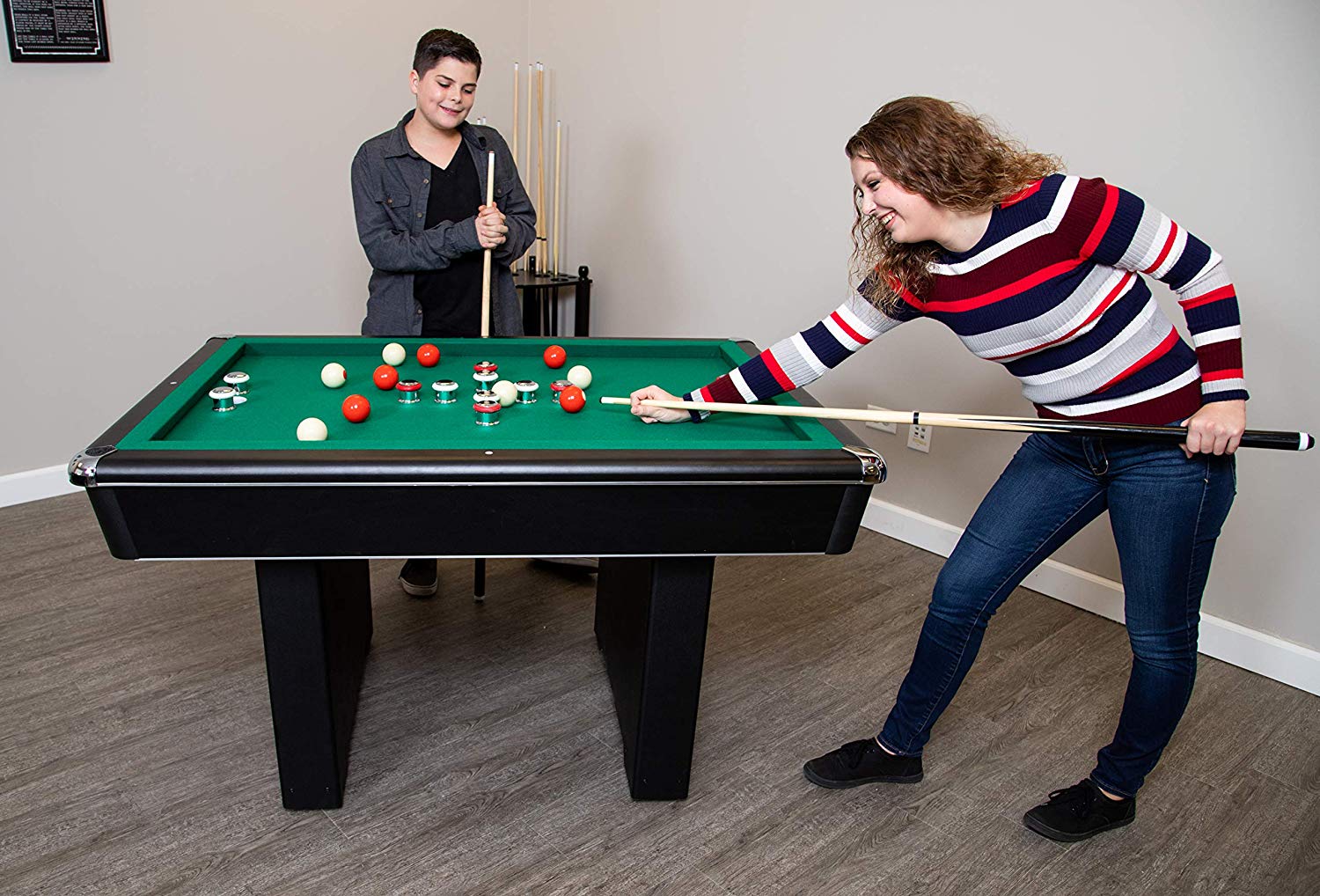
Yes. Bumper pool is one of the more accessible cue sports for younger players because the table is compact, the rules are simple, and the shorter cues (48 inches standard) are manageable for most kids ten and older. The main challenge for children is developing enough cue control to direct the ball with intention rather than just whacking it. The obstacle layout also keeps games short and action-packed, which suits younger attention spans better than full billiards. Supervise young children around cues and balls to avoid accidents.
Buy on Walmart
- Hathaway Renegade II 54-in Bumper Pool Table for Game Room – — Walmart Link
- Hathaway Kingston 3 in 1 Octagon Poker Table, Dining & Bumpe — Walmart Link
Buy on eBay
Buy the best slate table your budget allows — the game rewards precision, and precision demands a surface that doesn't lie to you.


About Mike Jones
Mike Jones grew up in the golden age of arcade and home gaming — a childhood shaped by Atari classics like Pitfall, Frogger, and Kaboom that gave him a lifelong appreciation for games of all kinds. These days he covers the full breadth of tabletop and family gaming: board games, card games, yard games, table games, and game room setup, with a particular focus on finding the games that bring different groups together. At GamingWeekender, he covers game reviews, buying guides, and recommendations for families, friends, and hobbyists who take their leisure seriously.
You can get FREE Gifts. Or latest Free phones here.
Disable Ad block to reveal all the info. Once done, hit a button below