Bowlers who know how to spin a bowling ball with a proper hook strike at nearly twice the rate of straight-ball throwers — competitive tracking data consistently shows hook shots generate a 58% higher strike rate than flat rolls into the pocket. That gap is not small. It's the difference between a forgettable 130 and a consistent 180+. If you're someone who enjoys precision-based other games — skee-ball, billiards, disc golf — you already understand that entry angle matters more than raw power. Bowling is no different.
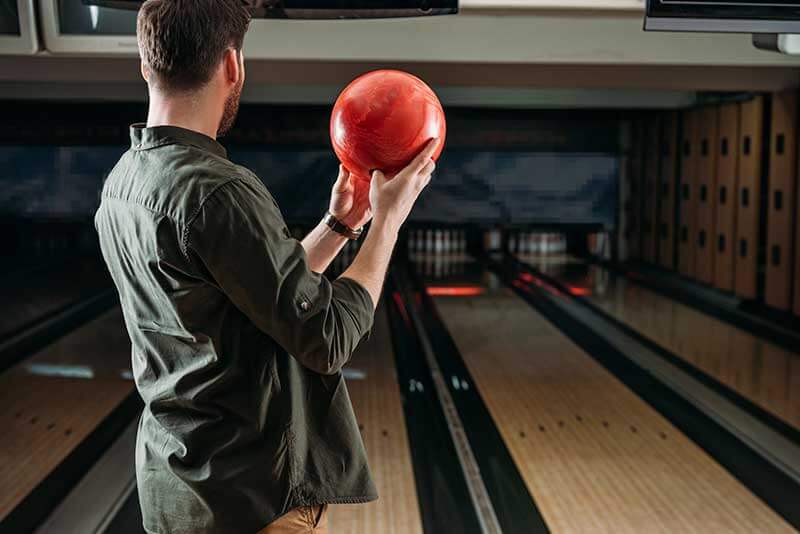
Here's the physics behind why the hook works: the ball skids through the oiled front section of the lane, then grabs the drier back-end boards and curves into the pocket at an angle. That angled entry — somewhere between 3 and 6 degrees — deflects pins into each other far more efficiently than a straight ball ever can. You're using the geometry of the lane to do work for you.
This guide covers the full picture. You'll get the mechanics of the spin broken down step by step, a practical strategy for building the skill over time, the situations where a hook helps (and where it hurts), what separates pro-level bowlers from the rest of us, and the maintenance habits that keep your ball performing at its best.
Contents
Master the Mechanics: How to Spin a Bowling Ball Step by Step
Most beginners try to spin the ball by flicking their wrist at the last second, then wonder why the ball rolls sideways into the gutter. The wrist flick is a symptom of bad fundamentals. The release is only effective when your grip and approach are already locked in. Build from the ground up.
The Grip: Fingertip vs. Conventional
Your grip is the foundation of your rev rate (the number of times the ball rotates as it travels down the lane). You have two real options:
- Conventional grip — Middle and ring fingers inserted to the second knuckle, thumb fully in. This is the default grip most beginners use. It gives you control and feels natural. The downside: it severely limits how much spin you can generate.
- Fingertip grip — Middle and ring fingers inserted only to the first knuckle. This creates more leverage on the ball at release, giving you dramatically more hook potential. It's harder to learn and uncomfortable at first. Use it anyway.
If you're serious about hooking, the fingertip grip is the only option. Stick with it through the awkward phase. Nearly every intermediate and advanced bowler uses it exclusively.
| Release Style | Grip Type | Rev Rate | Hook Potential | Best For |
|---|---|---|---|---|
| Straight roll | Conventional | Low (50–150 RPM) | Minimal | Beginners, spare shooting |
| Low rev hook | Fingertip | Medium (150–250 RPM) | Moderate | Intermediate players building control |
| High rev hook | Fingertip | High (300–450 RPM) | Strong | Advanced and competitive bowlers |
| Two-handed delivery | No thumb / modified | Very high (400–600 RPM) | Extreme | Power players with specific technique |
The Approach and Swing
Use a 4-step approach (or 5-step if that's more natural for your rhythm). Here's the 4-step breakdown for right-handed bowlers:
- Step 1 — Push the ball forward as your right foot steps out. Start your pendulum swing.
- Step 2 — Ball drops and swings back as your left foot steps forward.
- Step 3 — Ball reaches peak backswing as your right foot steps through.
- Step 4 — Your left foot slides into the foul line as the ball swings forward. This is your release point.
Keep your arm swing straight — back and through like a pendulum. A lot of players pull the ball across their body, which collapses the release and kills the spin. If your swing goes sideways, your release goes sideways. Fix the swing first.
The Release: Where the Spin Actually Happens
At the bottom of your forward swing, as the ball passes your ankle, here's exactly what you do:
- Let your thumb exit the ball first. This is non-negotiable.
- Your middle and ring fingers stay in a fraction of a second longer and lift through the ball.
- Rotate your hand from a "handshake" position to a "thumbs up" position as you release.
- Your hand ends up on the outside of the ball, not behind it — you're imparting side rotation, not backspin.
The thumb exits first, every single time. If the thumb doesn't leave before the fingers, you'll squeeze the ball or heave it straight. Practice the thumb-exit motion alone — without any ball — to build that muscle memory before you try it on the lane.
According to Wikipedia's entry on ten-pin bowling, the hook shot became the dominant strike delivery in competitive play after reactive resin balls were introduced in the early 1990s, giving average players hook potential that previously only high-rev pros could achieve.
Building a Hook That Lasts: Long-Term Skill Development
Learning to hook is not a one-session project. You're reprogramming years of straight-ball muscle memory. The players who develop reliable hooks do it through structured, consistent practice — not random attempts. Consistency over months beats intensity over a single weekend. Here's how to build it correctly.
The Practice Routine That Works
Follow this phased approach instead of trying to put it all together at once:
- Weeks 1–2: Focus only on the release. Bowl slowly. Don't care about score. Just make the thumb-exit and finger rotation repeatable at low speed.
- Weeks 3–4: Connect the release to your approach. The swing and the release need to flow together. Still bowl slowly — speed can come later.
- Month 2: Start reading the lane. Aim at the arrows (the seven diamond-shaped marks about 15 feet down the lane), not the pins. Adjust your target based on where your ball breaks.
- Month 3 and beyond: Work on strategic adjustments — moving your feet position left or right, changing your target arrow, and reading oil patterns.
Bowl at least once a week. Twice a week is better. Once a month won't build the muscle memory — you'll reset back to square one every time. Treat it like learning any physical skill. Repetition is everything.
Tracking Your Progress
You should be measuring specific outcomes, not just general "feel." Track these:
- Strike percentage — Striking 25% of the time is a solid beginner target. Hit 40%+ and your hook is working. PBA average is around 65%.
- Entry angle — Is the ball hitting the pocket at an angle, or still going mostly straight? Record a quick video from behind the approach to check.
- Spare conversion rate — A new hook can wreck your spare shooting early on. Track it separately so you know whether your miss is a strike problem or a spare problem.
- Ball reaction consistency — Does the ball do roughly the same thing each time? Wild inconsistency usually points to a grip or release issue, not a targeting issue.
Keep a simple bowling log. Score, observations, any adjustments you made. Bowling is a mental game as much as a physical one. Notes from two sessions ago are often the key to fixing a problem today.
When to Use a Spinning Hook (And When to Bowl Straight)
The hook is not always the right shot. Knowing when to put the hook away is just as important as knowing how to throw it. One-trick bowlers who hook everything leave easy spares they should be converting every single frame.
Lane Conditions That Favor the Hook
Use the hook when:
- The lanes are freshly oiled. Oil in the front part of the lane is what reactive resin balls are designed for. The ball skids through the oil, then snaps hard on the dry back end.
- You're making a strike attempt. The hook is a strike shot. That 3–6 degree entry angle into the 1-3 pocket (right-handers) or 1-2 pocket (left-handers) maximizes pin deflection. This is exactly what you want with all ten pins standing.
- The oil pattern creates a natural track. In league and competitive play, oil patterns shape where the ball wants to go. Learning to read those patterns — and hooking within them — lets you use the lane as a guide.
- You have a reactive resin ball that's properly surfaced. Equipment matters. A ball that's designed to hook and is maintained correctly will perform as expected. A neglected ball on a dry lane is a different story entirely.
Situations Where Straight Is the Smarter Play
Bowl straight when:
- You're shooting corner pins. The 7-pin (left corner for right-handers) and 10-pin (right corner) are best attacked with a straight delivery from the opposite side of the lane. Trying to hook into a corner pin is a low-percentage gamble.
- The lanes are very dry or heavily played. Dry lanes cause the ball to hook too early and too aggressively. You'll lose control of where it breaks.
- You're using a house ball. Polyester and urethane house balls off the rack aren't designed to hook significantly. Forcing the motion on equipment that won't respond just introduces inconsistency.
- You've lost your mark and need a reliable bailout shot. A controlled straight delivery beats a wild hook attempt when your timing is off.
This kind of situational thinking shows up in a lot of skill-based games. In skee-ball, for instance, you don't always aim for the 100-point ring — sometimes the smart play is the reliable 30 that you can hit all day. Same principle. Smart beats flashy.
What Separates Pro Bowlers from Everyone Else
Watching a PBA Tour player throw a ball is almost disorienting. The ball barely looks like it's doing anything for the first two-thirds of the lane. Then it snaps — hard — right into the pocket. That's not natural talent. That's the product of two measurable factors: rev rate and entry angle.
Rev Rate and Entry Angle
These two stats define how effective a hook shot actually is:
- Rev rate (revolutions per minute) — Average recreational bowler: 150–250 RPM. Average PBA player: 300–400 RPM. Two-handed players like Jason Belmonte regularly exceed 500 RPM. More revs means more hook potential and more power through the pins.
- Entry angle — Recreational players typically hit the pocket at 1–3 degrees. Pros consistently hit 4–6 degrees of angle. That extra 2–3 degrees sounds small. In practice it's the difference between 8-pin carries and consistent strikes.
You don't need 400 RPM to improve your game. Getting from 150 to 250 RPM — completely achievable with consistent practice — can add 20–30 pins to your average over a full season. Set realistic goals and build toward them.
Ball Selection at the Pro Level
Pros carry an arsenal — multiple balls for different oil conditions. Here's how they think about it:
- High-performance reactive resin for heavy oil — aggressive core, strong backend snap, maximum hook
- Urethane balls for lighter or shorter oil patterns — controlled arc, less abrupt backend motion
- Polyester spare balls for single-pin spares — minimal hook, pure accuracy, no surprises
You only need one or two balls to start. An entry-level reactive resin ball with a fingertip drill is the best single investment you can make. A symmetrical core with a reactive coverstock gives you enough hook to develop your game without being so aggressive that you can't control it. Don't worry about asymmetrical cores or aggressive surface textures until you've had at least a year of consistent practice.
Bowling Ball Care for Consistent Hooks
A dirty or worn-out ball doesn't hook the same way it did when it was new. Oil absorbs into the coverstock (the outer shell of the ball) over time, killing the ball's ability to grip the lane's back end. Skip maintenance and your reactive resin ball starts behaving like a house ball within a few dozen games. Ball maintenance is not optional if you want a consistent hook.
Cleaning Your Ball After Every Session
This is the single highest-impact habit you can build:
- Wipe the ball down with a dry microfiber towel between every shot to pull surface oil off the coverstock.
- After every session, use a dedicated bowling ball cleaner that's USBC-approved (United States Bowling Congress). Spray it on, wipe it off. Two minutes, every time.
- Never use household cleaners, alcohol wipes, or dish soap — these can damage the coverstock, dull the surface, and void your ball's warranty.
- If your ball feels noticeably slicker than usual or isn't reading the back end the way it used to, it needs a deep clean or a resurface — not just a wipe-down.
Make the post-session clean part of the routine before you put the ball back in your bag. Small habit, real difference in performance and ball lifespan.
Resurfacing and Storage
Even with regular surface cleaning, oil soaks deeper into the ball over time and the coverstock wears down. Here's what you need to do:
- Resurface every 60–75 games. A pro shop uses abrasive pads to restore the factory surface texture and remove the top layer of worn coverstock. Cost is usually $20–$40 per resurface. Worth every dollar.
- Deep clean every 6–12 months. Pro shops offer a hot-water soak or oven method to draw embedded oil out of the ball's interior. This extends ball life significantly and restores hook reaction you thought was gone.
- Store at room temperature. Never leave your ball in a hot car or unheated garage. Extreme temperature swings crack the coverstock. A crack means the ball is done.
- Use a ball bag during transport. Protect the surface from scratches, scuffs, and impacts. Coverstock damage affects hook reaction more than most bowlers realize.
A reactive resin ball that's properly cared for lasts 5–7 years of regular use. Neglect it and you'll be replacing it inside of two.
Frequently Asked Questions
- Can I learn to spin a bowling ball using a house ball?
- You can practice the hand position and release motion, but you won't generate much real hook. House balls are polyester and don't grip the lane the way reactive resin does. Use a house ball to learn the motion, then invest in a reactive resin ball to actually develop the hook.
- How long does it take to develop a reliable hook?
- Most people can throw a basic hook within a few sessions. Getting it consistent — same motion, same break point, predictable result — typically takes 2–3 months of weekly practice. Don't rush it. The time investment pays off in a much higher average.
- Does ball weight affect how much it spins?
- Weight affects momentum and pin carry, not spin directly. Most adult bowlers use 14–16 lb balls. Go as heavy as you can comfortably control through an entire game without straining your wrist, elbow, or shoulder. A ball that's too light will deflect away from pins instead of driving through them.
- Should I use a wrist brace when learning to hook?
- Yes, at first. A wrist brace locks your hand into the correct position while you're building muscle memory — it prevents the wrist from collapsing and forces the proper release angle. Use it as a training tool, then gradually reduce reliance on it as your technique solidifies.
- What's the difference between a hook and a backup ball?
- A hook curves toward the dominant hand's side of the lane (left for right-handers, toward the 1-3 pocket). A backup ball curves in the opposite direction — away from the dominant hand. Backup balls aren't optimal for strikes but some bowlers develop them accidentally. The hook is the correct technique to develop intentionally.
Next Steps
- Switch to a fingertip grip at your next session — visit a pro shop and ask for a trial fitting or temporary loan of a fingertip-drilled ball to feel the difference before committing to a new ball.
- Practice the thumb-exit and finger-rotation release motion at home for five minutes daily, with no ball, until the motion feels automatic rather than deliberate.
- Buy an entry-level reactive resin ball with a custom fingertip drill — this single equipment change will do more for your hook than any amount of technique practice with a polyester house ball.
- Pick up a USBC-approved bowling ball cleaner and clean your ball at the end of every session from day one — don't let oil absorption degrade your ball's hook potential before you've had a chance to develop your technique.
- Film a 15-second video of your release from directly behind your approach and review it — you'll immediately see whether your thumb is exiting first, whether your swing is staying straight, and whether your hand is rotating to the side rather than pushing behind the ball.


About Mike Jones
Mike Jones grew up in the golden age of arcade and home gaming — a childhood shaped by Atari classics like Pitfall, Frogger, and Kaboom that gave him a lifelong appreciation for games of all kinds. These days he covers the full breadth of tabletop and family gaming: board games, card games, yard games, table games, and game room setup, with a particular focus on finding the games that bring different groups together. At GamingWeekender, he covers game reviews, buying guides, and recommendations for families, friends, and hobbyists who take their leisure seriously.
You can get FREE Gifts. Or latest Free phones here.
Disable Ad block to reveal all the info. Once done, hit a button below