Bocce ball has been played in some recognizable form for over 9,000 years, and today it counts more than 25 million active participants in the United States alone — making it one of the most widely played outdoor sports you have probably never taken seriously enough. Learning how to play bocce ball is one of the fastest skills you can acquire in the world of yard games, with the core rules fully digestible in under ten minutes. The strategy, however, runs several layers deeper than the surface simplicity suggests, and that contrast is precisely what makes bocce such an enduring competitive game.
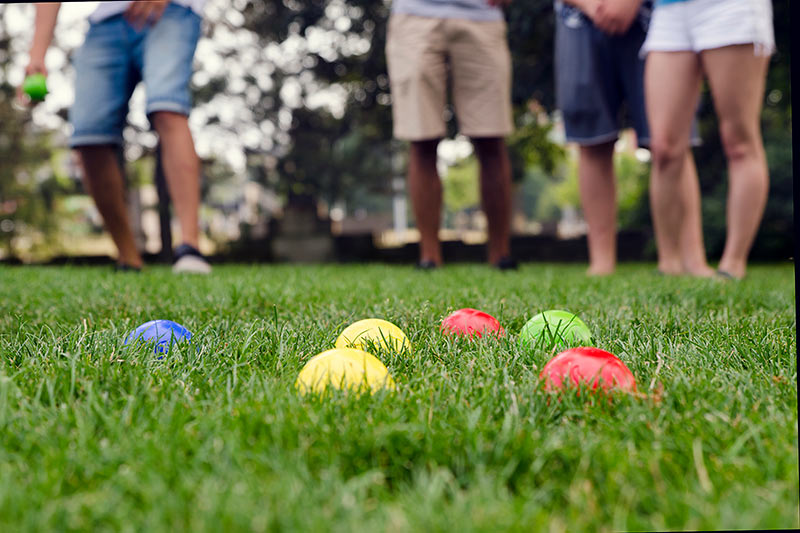
Bocce scales cleanly from a two-player casual match to a structured eight-player team competition, and that flexibility has kept the game thriving across every demographic and every generation of players. You do not need a dedicated court, specialized equipment, or a large budget to play a genuinely competitive game — the investment barrier is low, but the skill ceiling is legitimately high. Whether you are organizing a neighborhood tournament or simply absorbing the rules before your first game, this guide gives you everything you need to play, compete, and win consistently.
This guide covers the historical origins of bocce, the complete official ruleset, the best contexts for playing, how it compares against similar outdoor games, and the advanced strategic concepts that consistently separate winners from players who rely entirely on luck.
Contents
- The Ancient Roots and Modern Appeal of Bocce Ball
- How to Play Bocce Ball: Rules, Setup, and Scoring
- When and Where Bocce Ball Delivers the Most Fun
- Bocce Ball vs. Other Classic Lawn Games
- The Real Strengths and Limitations of Bocce Ball
- Advanced Tactics for Dominating Your Bocce Matches
- Common Bocce Ball Mistakes and How to Correct Them
- Frequently Asked Questions
- Next Steps
The Ancient Roots and Modern Appeal of Bocce Ball
Egyptian and Roman Origins
Bocce is one of the oldest documented sports in the world, with historical records tracing the game's origins to ancient Egypt and the Roman Empire, where soldiers played a version of the game using polished rocks and rounded stones. Roman legions carried the game across Europe during their military campaigns, spreading variations of the throwing-and-targeting concept from Britain to North Africa. The essential mechanic — throw a ball as close as possible to a target — remained consistent across every culture that adopted it, which tells you something important about how intuitive and satisfying the core gameplay loop actually is.
Bocce Ball in the Modern Era
Modern bocce arrived in North America primarily through Italian immigrant communities in the nineteenth and early twentieth centuries, where it established deep roots in urban neighborhoods before expanding into parks, backyards, and organized club settings nationwide. Formal bocce competition is now governed by organizations including the World Bocce Association, with sanctioned tournaments played on regulation clay courts measuring 76 feet long by 10 feet wide. The game's durability over millennia is not accidental — bocce hits a rare combination of attributes most sports never achieve simultaneously:
- Low physical demand paired with genuine skill requirements and a high strategic ceiling
- Simple enough for children to understand after one demonstration, deep enough to engage competitive adults for years
- No specialized venue, footwear, or expensive membership required to play at a high level
- Social by design, with natural pauses built into every frame that encourage conversation and interaction
- Adaptable to grass, gravel, sand, or purpose-built clay courts without changing the fundamental rules
How to Play Bocce Ball: Rules, Setup, and Scoring
The official ruleset is more detailed than most casual players realize, and knowing the precise rules gives you both a competitive and a social advantage at every gathering where bocce comes out. Here is exactly what you need to know before your first throw.
Equipment You Need
A standard bocce set contains the following components, and understanding each piece before the game begins prevents the most common setup confusion:
- Eight bocce balls — four balls per team, each team's set marked by a distinct color or surface pattern so scoring is unambiguous at the end of every frame
- One pallino — the small target ball, also called the jack or boccino, which sets the scoring target for each frame
- A flexible measuring tape for close scoring calls — this is essential for any serious game and non-negotiable in competitive settings
- A defined court space of at least 60 feet in length, though shorter distances work acceptably for casual or youth play
Regulation ball diameter runs between 107mm and 110mm, and quality sets use resin or metal composite construction that delivers consistent weight distribution across every throw. Budget resin sets perform adequately for casual backyard use, but experienced players feel differences in rollout predictability and surface grip almost immediately when switching between quality tiers.
Pro tip: Weigh your bocce balls before any competitive game — regulation play requires all balls within a set to match within 10 grams of each other, and even slight inconsistency in weight distribution visibly warps your accuracy on longer throws.
Step-by-Step Gameplay
- Determine the starting team via coin flip or mutual agreement; the team that wins the toss throws the pallino first to open the game.
- Throw the pallino so it lands at least halfway down the court and remains in bounds; if it goes out of bounds, the opposing team re-throws it from the same position.
- The starting team throws their first bocce ball, attempting to land as close to the pallino as possible without displacing it.
- The opposing team now throws until they place a ball closer to the pallino than the leading team's closest ball, or until they exhaust all four of their balls.
- The leading team throws again whenever their ball is no longer the closest to the pallino — the team NOT holding point always throws next throughout the frame.
- Continue alternating throws until all eight balls have been thrown; then score the completed frame before moving on.
- Score the frame — only the team with the ball closest to the pallino scores points; that team earns one point for each of their balls that sits closer to the pallino than the nearest opposing ball.
- First team to reach 12 points wins the match — some recreational games use 9 or 15 points depending on the players' preference and available time.
The throwing team in each new frame is always the team that did NOT score in the previous frame, which keeps possession rotating naturally and prevents any single team from maintaining indefinite court control.
When and Where Bocce Ball Delivers the Most Fun
Casual Backyard and Park Play
Bocce thrives in low-pressure social settings where the game runs alongside conversation rather than demanding its own undivided focal point. Your backyard, a public park, a beach, or a campsite all function as viable playing surfaces without any special preparation, and the game's tolerance for imperfect terrain is a genuine competitive advantage over games like croquet or shuffleboard that require level, manicured ground. You can establish a playable court on slightly sloped grass simply by agreeing on local out-of-bounds rules before the first throw.
Ideal casual settings include:
- Backyard barbecues and family reunions where teams form naturally from guests of mixed ages and abilities
- Beach vacations where a bocce set packs compactly and sand provides a consistent, fair throwing surface
- Camping trips with enough flat ground to define a reasonable court boundary
- Public parks with gravel paths or open grass areas where no setup or permission is required
Leagues and Tournament Settings
Competitive bocce is organized at club, regional, and national levels across North America and Europe, with dedicated clay courts that reward precise ball control and highly consistent delivery mechanics across every frame. If organized competition interests you, look for local bocce clubs affiliated with the United States Bocce Federation, which maintains a directory of sanctioned leagues and tournaments sorted by state. Many Italian-American community centers and sports clubs run house leagues that accept new members with no prior competitive experience, making bocce one of the most accessible organized sports for adult beginners who want structured, skill-building competition without an intimidating entry barrier.
Bocce Ball vs. Other Classic Lawn Games
Setup, Accessibility, and Player Count
Before you invest in a bocce set, understanding how it stacks up against similar outdoor options helps you choose the right game for your specific context. If you are shopping across multiple lawn game categories, our guides to the best croquet sets for the money and the best horseshoes game sets for your backyard offer detailed comparisons of two of bocce's closest competitors, both of which deliver a meaningfully different competitive experience on the same patch of grass.
Key distinction: Bocce is the only major lawn game where the losing team always throws next — which means every player remains actively engaged in strategy throughout the entire frame, rather than waiting passively for a turn cycle to complete.
Comparing Strategic Depth
| Game | Players | Setup Time | Surface Required | Physical Demand | Skill Ceiling |
|---|---|---|---|---|---|
| Bocce Ball | 2–8 | 2 minutes | Any flat ground | Low | High |
| Croquet | 2–6 | 10–15 minutes | Level lawn | Low–Medium | High |
| Horseshoes | 2–4 | 5 minutes | Sand pits required | Low–Medium | Medium–High |
| Cornhole | 2–4 | 2–3 minutes | Any flat ground | Low | Medium |
| Lawn Bowling | 2–8 | 5 minutes | Specialized flat green | Low | Very High |
Bocce's key competitive advantage in this comparison is its combination of near-zero setup requirements and a legitimately high skill ceiling — a pairing that most lawn games fail to achieve simultaneously. Cornhole matches bocce on setup speed but tops out at a lower strategic depth, while lawn bowling rivals bocce's skill ceiling but demands a specialized venue that most players simply cannot access without a club membership.
The Real Strengths and Limitations of Bocce Ball
Where Bocce Genuinely Excels
- Truly inclusive gameplay — age, athletic ability, and physical fitness have minimal impact on competitive balance, making mixed-generation games genuinely fair
- Works on almost any outdoor surface without modification, special preparation, or additional equipment purchases
- Full sets are available at every price point, from $25 recreational resin sets to $300-plus tournament-grade options with carry cases
- Games run 20–45 minutes at a casual pace, fitting neatly into almost any event or gathering schedule without dominating the afternoon
- Accommodates uneven team sizes by adjusting the number of balls each player throws per frame, keeping games fair even with odd-numbered groups
- The pallino's position changes with every frame, ensuring no team consistently benefits from a fixed court layout or favorable starting position
Honest Drawbacks to Consider
- Close balls require a measuring tape to resolve accurately, and disputes over measurements stall casual games noticeably when no tape is available
- Quality resin sets weigh 20–25 pounds total, making transport to parks or beaches more effort than lighter alternatives like cornhole or horseshoes
- Without a defined court boundary marked in advance, determining out-of-bounds calls introduces ambiguity that frustrates first-time players until house rules are clearly established
- Rain-softened ground changes roll behavior dramatically and can make consistent throwing feel nearly impossible until surface conditions improve
- Players who rely purely on luck may find casual games satisfying initially, but competitive play exposes gaps in technique very quickly and can discourage early-stage learners
Advanced Tactics for Dominating Your Bocce Matches
Offensive vs. Defensive Play
Most beginners play bocce as a pure placement game — throw close to the pallino, win the frame, repeat. Experienced players understand that defensive strategy frequently outperforms aggressive placement, particularly when your team already holds point position heading into the final throws of a frame and your opponent needs a precise shot to displace you.
Defensive tactics worth building into your game:
- Banking your ball behind the pallino to block the opposing team's most direct angle of approach on subsequent throws
- Placing a secondary ball just outside your closest ball to protect your scoring position without committing an additional throw to offense
- The volo (aerial throw) to knock an opponent's ball off the pallino when no placement throw can realistically beat their position
- Deliberate short throws that cluster your remaining balls near the throwing end as a fallback if the pallino is knocked deep into an unfavorable position
Reading the Court and Controlling Position
Every surface rolls differently, and learning your specific court in the first few frames of any game gives you a measurable advantage over opponents who make no deliberate adjustment for local conditions. Pay close attention to these factors every time you step to the foul line:
- Slope direction — even minor grade changes pull balls predictably toward one side on long throws, and that pull compounds across the length of the court
- Surface texture — packed clay slows balls and holds line well; loose gravel introduces unpredictable deflection that makes precise placement significantly harder
- Wind — a consistent crosswind requires you to aim several inches off your target line to compensate, and that offset changes as wind speed varies through the game
Advanced technique: Use your very first ball in each frame as a deliberate court-reading throw — observe exactly how it rolls and where it deflects, then apply that specific information to every subsequent throw in that frame rather than throwing on instinct alone.
Common Bocce Ball Mistakes and How to Correct Them
Throwing Mechanics Problems
The most common mechanical error in bocce is releasing the ball too high, which creates excessive bounce on landing and produces unpredictable rollout that no amount of aim adjustment can compensate for. The correct release point is at or below hip height, with your palm facing upward and the ball rolling cleanly off your fingertips rather than being lobbed into the air like a casual toss. Walk through these mechanical checkpoints methodically if your throws produce inconsistent results across a game:
- Grip: hold the ball in your palm with fingers spread naturally underneath it, not cupped aggressively over the top, which causes inconsistent release angles
- Stance: feet shoulder-width apart, non-dominant foot positioned forward, body squared squarely to your intended target line before the swing begins
- Swing: use a pendulum motion driven from the shoulder, not the elbow — locking your elbow creates flat, hard-to-control throws that consistently miss long or short
- Release: let the ball roll off your fingertips naturally as your arm passes your hip, never forcing additional distance with a wrist snap that destroys accuracy
- Follow-through: your throwing hand should finish pointing directly at the pallino after the ball leaves your fingers, confirming a clean, aligned release every time
Scoring Disputes and Rule Confusion
Scoring disputes are the most common source of game-stopping conflict in recreational bocce, and the vast majority of them are avoidable with clear pre-game agreements that take less than two minutes to establish. Before the game begins, confirm these rules explicitly with every player in the group:
- Define your court boundaries clearly and agree on what constitutes an out-of-bounds ball versus an out-of-bounds pallino
- Agree on your winning score — 9, 12, or 15 points — before the pallino is ever thrown for the first time
- Decide whether the volo aerial throw is legal for your session, since many casual players ban it to keep the game more accessible for beginners
- Establish your tie-breaking rule in advance for frames where two balls appear equidistant from the pallino on visual inspection
- Confirm whether a pallino knocked out of bounds ends that frame entirely or is re-thrown, since both rules exist in common house variations and neither is obviously "correct"
When a close call cannot be resolved visually, use a flexible measuring tape extended from the center of the pallino to the nearest surface of each disputed ball — measuring from ball center to ball center introduces additional error into an already tight call and should be avoided in competitive play.
Frequently Asked Questions
How many balls does each player throw in bocce ball?
In a standard two-player or two-team game, each player throws four balls per frame, for a total of eight balls thrown each round. In a four-player game with two players per team, each player throws two balls per frame. The exact distribution adjusts based on the total number of players, but each team always controls four balls per frame regardless of how many players make up that team.
Can the pallino be knocked out of bounds during play?
In official bocce rules, if the pallino is knocked out of bounds during a frame, that frame is declared dead and no points are awarded — all balls are returned and the same team throws the pallino again to open a fresh frame. Many recreational players use a house rule that allows play to continue with the pallino re-spotted at the boundary, so confirm your local rules clearly before the game begins to prevent disputes mid-match.
What is the difference between bocce ball and lawn bowling?
Bocce and lawn bowling are related but meaningfully distinct games. Bocce balls are perfectly round spheres that roll in a straight line, while lawn bowling uses biased bowls with an off-center weight distribution that causes them to curve predictably throughout their roll. Bocce is playable on almost any outdoor surface, while competitive lawn bowling requires a specialized flat green maintained to precise standards. Bocce is also considerably easier for first-time players to learn, with a shorter ruleset and more forgiving throwing mechanics that allow beginners to compete meaningfully within their first few frames.
How do you win consistently at bocce ball?
Consistent bocce wins come from three practiced habits: reliable throwing mechanics that minimize variance in your placement throws across every frame, disciplined court-reading in the opening frames of every game to understand how that specific surface behaves, and knowing when to shift from placement strategy to volo knockaway shots when your opponent holds a strong position that placement throws cannot realistically displace. Players who develop and maintain all three skills while staying composed under scoring pressure win the majority of their competitive matches over time.
Next Steps
- Purchase a quality bocce set rated for outdoor use — look for resin or metal composite balls in the 107mm–110mm regulation diameter range, and include a flexible measuring tape in your kit before you play your first competitive game.
- Practice your throwing mechanics solo for 20 minutes before joining a group game: set a pallino at three different distances and work on achieving a consistent hip-height release with a clean follow-through that points directly at the pallino after every single throw.
- Establish your house rules in writing before any group game — covering court boundaries, winning score, volo legality, and pallino out-of-bounds handling — and share the written rules with all players before the pallino is first thrown so no dispute can claim ambiguity.
- Play at least five complete games before evaluating your strategy and adjusting your technique: court-reading instincts and defensive positioning judgment develop through repetition, not theory, and the first several games are genuinely a learning investment rather than a fair measure of your actual skill level.
- Research competitive league options through the United States Bocce Federation once you feel confident in your mechanics — organized league play accelerates skill development significantly faster than casual backyard games, and most club leagues accept adult beginners with no prior competitive experience required.


About Mike Jones
Mike Jones grew up in the golden age of arcade and home gaming — a childhood shaped by Atari classics like Pitfall, Frogger, and Kaboom that gave him a lifelong appreciation for games of all kinds. These days he covers the full breadth of tabletop and family gaming: board games, card games, yard games, table games, and game room setup, with a particular focus on finding the games that bring different groups together. At GamingWeekender, he covers game reviews, buying guides, and recommendations for families, friends, and hobbyists who take their leisure seriously.
You can get FREE Gifts. Or latest Free phones here.
Disable Ad block to reveal all the info. Once done, hit a button below