More than 7 million people across the United States play ultimate frisbee in recreational, competitive, and collegiate settings — and participation continues to grow as more players discover how accessible and engaging this disc sport really is. If you want to understand ultimate frisbee rules and how to play, you're in exactly the right place, whether you're a complete beginner stepping onto the field for the first time or a casual player looking to sharpen your technique. Ultimate is one of the most rewarding yard games you can pick up, requiring minimal equipment but rewarding sharp strategy and athletic coordination, which makes it genuinely worth learning properly from the start.
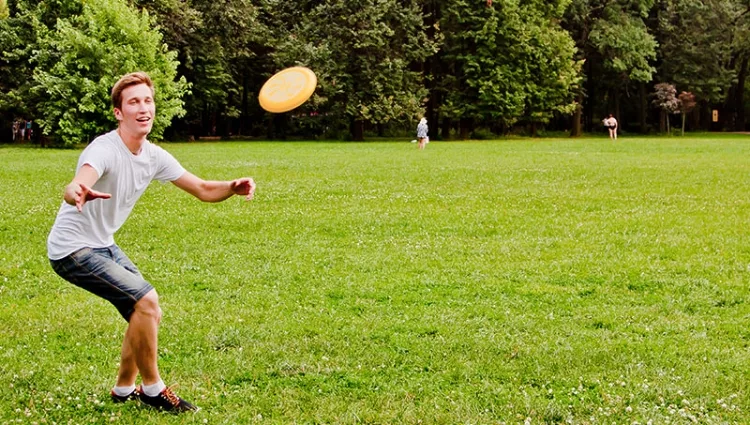
Ultimate combines elements of football, soccer, and basketball into a single non-contact disc sport that virtually anyone can play, and the rules are surprisingly straightforward once you break them into digestible pieces. You don't need a referee, a massive budget, or years of athletic training to enjoy a real game — just a disc, some willing friends, and enough open space to run. This guide covers everything from the sport's history and core rules to throwing mechanics, strategy, common mistakes, and what gear you actually need to get started without overspending.
By the time you finish reading, you'll have a clear picture of how a game is structured, what each player is expected to do, and how to walk onto any pickup field and hold your own from day one.
Contents
- The Origins and Rise of Ultimate Frisbee
- Core Ultimate Frisbee Rules and How to Play the Right Way
- Essential Skills Every New Player Should Learn First
- Game Formats and Settings Where Ultimate Thrives
- When Ultimate Is the Right Fit (and When It's Not)
- Common Mistakes and How to Fix Them
- What It Costs to Get Started with Ultimate Frisbee
- Frequently Asked Questions
- Final Thoughts
The Origins and Rise of Ultimate Frisbee
From Campus Fields to a Global Sport
Ultimate was invented in 1968 by a group of high school students in Maplewood, New Jersey, and it made its first intercollegiate appearance at Rutgers University in 1972 — the same campus where the first college football game was ever played, which feels fitting for a sport so clearly influenced by football's end-zone scoring structure. According to the Wikipedia overview of ultimate, the sport now has an active presence in more than 80 countries, with the World Flying Disc Federation governing international competition. What started as an informal student pastime grew into a structured, globally competitive discipline within just a few decades, which is a remarkable arc for any sport to trace.
- The first college ultimate club was organized at Columbia University in 1970
- USA Ultimate (formerly the Ultimate Players Association) was founded in 1979
- The sport is now played at youth, collegiate, club, semi-professional, and international levels
- USA Ultimate estimates over 9 million recreational and competitive players nationwide
How Ultimate Compares to Other Field Sports
Ultimate shares DNA with several sports you're probably already familiar with, which makes it easier to pick up if you have any background in team athletics at all. The end-zone scoring mirrors American football, the continuous running and spatial possession game resembles soccer, and the passing-only ball advancement calls back to basketball — all without the physical contact that defines most of those sports. If you've spent time developing precision and positioning in other competitive games, like understanding how to play and improve at ping pong, you'll recognize the same spatial awareness and lane-reading skills that apply when you're trying to create clean passing opportunities in ultimate.
| Feature | Ultimate Frisbee | Flag Football | Soccer |
|---|---|---|---|
| Contact level | Non-contact | Non-contact | Light contact |
| Self-officiated | Yes (recreational/club) | No | No |
| Startup equipment cost | Very low ($10–30) | Low ($30–80) | Moderate ($50–150) |
| Active players per side | 7 | 5–8 | 11 |
| Field space required | Large (110 × 40 yds) | Large (80–100 yds) | Very large |
| Referee required | No | Usually yes | Yes |
Core Ultimate Frisbee Rules and How to Play the Right Way
Field Dimensions and Team Setup
Getting the ultimate frisbee rules and how to play locked in starts with understanding the playing surface and team structure before you worry about anything else. A regulation field is 110 yards long by 40 yards wide, with two 20-yard end zones at each end and a 70-yard central playing area between them. Each team puts seven players on the field at a time, and while the rulebook doesn't mandate formal position names, most teams develop recognizable offensive and defensive roles through practice and strategic repetition.
- Total field length: 110 yards (including both end zones)
- Field width: 40 yards
- End zone depth: 20 yards on each side
- Active players: 7 per team (rosters typically run 20–28 players in organized leagues)
- Game target: usually 15 points, with halftime triggered at 8 points for one team
Scoring, Possession, and Turnovers
A point is scored when an offensive player catches the disc in the opposing team's end zone — clean and simple in concept, but demanding in practice because it requires coordinated passing under sustained defensive pressure across the full length of the field. The thrower cannot run with the disc once they catch it; they must establish a pivot foot and release within a 10-second stall count called aloud by the marker, who is the defender assigned to guard them directly. If the count reaches 10 before the disc is released, possession immediately transfers to the defense.
Turnovers occur in four primary situations:
- The disc hits the ground — whether from an incomplete pass, a dropped catch, or a missed layout attempt
- The stall count reaches 10 before the thrower releases the disc
- The defense intercepts a pass or knocks the disc to the ground mid-flight
- The disc lands out of bounds without a legal in-bounds catch establishing possession first
After a turnover, the newly offensive team must work the disc toward the opposite end zone immediately — there's no reset or pause. USA Ultimate rules allow each team two timeouts per half in sanctioned competition, though casual pickup games typically waive this entirely and play continuously until a point is scored.
The Spirit of the Game
One of the most distinctive aspects of ultimate is its self-officiated culture, governed by a core principle called Spirit of the Game (SOTG). Because most recreational and club-level games have no referees on the field, players are expected to call their own fouls with honesty and resolve disputes through direct, respectful conversation rather than appealing to an external authority. This places a real premium on sportsmanship and mutual accountability in a way that most competitive sports don't require, which is a significant part of why the ultimate community consistently earns a reputation for positive, inclusive culture across skill levels.
Pro tip: When you're new to the game, call only the fouls you're absolutely certain about — overcalling is considered poor spirit and damages your on-field reputation far faster than simply losing will.
Essential Skills Every New Player Should Learn First
Throwing Techniques
Your throwing ability is the single biggest factor in your value as an ultimate player, especially in your first season, so investing focused time in building a reliable throwing arsenal before worrying about advanced strategy is the most efficient path forward for any new player. The three throws every player needs are the backhand, the forehand (also called a flick), and the hammer, and each carries a different flight path, release angle, and ideal use case depending on the defensive coverage you're facing at any given moment.
- Backhand: The most natural throw for beginners — grip the rim with four fingers underneath, step toward your target, and release with a flat wrist snap through the throw
- Forehand (flick): Two-finger grip on the inside rim with elbow out, wrist snapping toward the target — harder to mark because it releases from a different angle than backhand
- Hammer: An overhead throw with a forehand grip, released steeply so it flies upside down and lands flat — effective for clearing defenders who are set up for standard throws
- Scoober: A short-range overhead release used in tight spaces when the forehand lane is completely closed by a defender
Consistent technique built through deliberate drilling — rather than just playing more games and hoping improvement happens naturally — is what actually produces reliable throws under pressure, the same way that focused practice translates to measurable improvement in precision sports like bowling. Drill each throw stationary before adding movement or defensive pressure to the equation.
Cutting and Positioning
Cutting is the art of getting open to receive a pass, and it's where most beginners struggle earliest because it demands that you simultaneously read your defender's positioning, time your movement to match the thrower's readiness, and communicate your intentions to teammates — all while running at full effort. The basic cut involves making a hard fake in one direction to pull the defender's momentum that way, then explosively breaking in the opposite direction to create a split-second window of separation that your thrower can exploit with a well-timed release.
- Set up your defender with at least two full steps before committing to your actual cut direction
- Commit completely to each direction — hesitant, half-speed cuts give defenders more than enough time to recover and close the window
- Call out "up" when the disc is airborne so every teammate can immediately locate it
- Clear the lane immediately after your cut whether you receive the disc or not — clogging the space hurts the next cutter's opportunity
- In a stack offense, non-active cutters line up vertically in the middle of the field and wait their designated turn rather than freelancing
Game Formats and Settings Where Ultimate Thrives
Recreational Leagues vs. Competitive Play
Ultimate fits a remarkably wide range of commitment levels, from a low-key Saturday pickup game in the park to a USA Ultimate sanctioned club tournament with regionally ranked teams competing for a bid to nationals, and the experience genuinely feels different at each tier. Recreational leagues — which you can find in virtually every mid-to-large city through local ultimate associations or community sports platforms — typically run 8–12 week seasons with weekly games, relaxed rules enforcement, and a social component after games that many players value just as much as the competition itself. If you enjoy organized play without the intensity of a high-commitment team sport, understanding the structure of beginner-level leagues in sports like bowling offers a useful comparison for what that kind of recreational format looks and feels like.
- Pickup games: No commitment required — drop in when available, great for practice and meeting local players
- Recreational leagues: Weekly schedule, team assignments, often coed mixed divisions with built-in social culture
- Club teams: Tryout-based rosters, seasonal tournament travel, a meaningfully higher skill and commitment ceiling
- Collegiate: USA Ultimate-governed with full spring and fall seasons, leading to national championships
Beach and Indoor Variants
Beach ultimate runs 5-on-5 on a smaller sand field with slightly modified rules, and it's widely regarded as one of the most enjoyable formats because the softer surface actively encourages diving catches and layouts while substantially reducing the injury risk that comes with diving on grass or turf. Indoor ultimate exists in some markets using modified rules on gymnasium or artificial turf surfaces, providing a practical way to stay sharp during winter months when outdoor fields aren't usable. If you're building out a versatile outdoor entertainment setup that accommodates multiple games, the guide to creating the perfect outdoor game room covers how to design a space that supports lawn sports and yard games alongside other entertainment options.
When Ultimate Is the Right Fit (and When It's Not)
Ideal Conditions for a Great Game
Ultimate works best under specific conditions, and knowing those conditions upfront helps you organize games that people genuinely enjoy rather than grinding through circumstances that make the sport frustrating for participants at every skill level.
- You have at least 12 players available — six per side is the practical minimum for a meaningful game that doesn't feel sparse
- Wind is under 15 mph — lighter wind keeps disc flight manageable and consistent, especially for newer players still developing their release mechanics
- The field is flat, open, and free of significant obstacles, uneven terrain, or hazards that create injury risk on layouts and sprints
- Players share a broadly similar skill level, or experienced players are intentionally distributed across both teams to keep competition balanced
- Everyone has agreed in advance on which rule set is being used — USA Ultimate standard, casual pickup conventions, or a hybrid format your group decides on together
Ultimate is also an excellent option when you want a team activity that requires no venue rental and almost no equipment investment — unlike table-based competitive games such as shuffleboard (which you can explore in detail in the table shuffleboard guide), where you need a dedicated playing surface, ultimate needs only a disc and a few cones to mark the field boundaries.
Situations Where You Might Reconsider
Not every situation is the right context for a full game of ultimate, and there are conditions where the sport loses much of its appeal or creates problems for the players involved that outweigh the benefit of playing at all.
- Fewer than 10 total players: The game becomes too sparse and unbalanced to be enjoyable or to develop any meaningful tactical sense
- Heavy rain or extreme heat: Rain makes disc flight dramatically unpredictable, while high heat without shade or water access creates a genuine safety concern during a high-cardio sport
- Severe skill mismatch between teams: Lopsided games demoralize newer players quickly and create bad habits in experienced ones who aren't being challenged
- No shared understanding of the rules: Without a common rulebook, Spirit of the Game disputes can derail the experience faster than any other factor
- Small or obstacle-filled fields: Constant out-of-bounds situations break up the flow that makes ultimate engaging and prevent any real offensive strategy from developing
Common Mistakes and How to Fix Them
Throwing Errors
Most beginner throwing problems trace back to two root causes — poor grip and an inconsistent release point — and both are correctable through focused drilling rather than simply playing more games and hoping the issues work themselves out over time through repetition alone. Watching your disc wobble in flight is a reliable signal that your wrist isn't snapping cleanly through the throw at the release point, while short floaty passes almost always mean you're releasing too early and not following through toward your actual target.
- Wobble or unsteady flight = wrist not snapping flat through the release point
- Disc turning over and curving sharply away = grip too loose or release angle tilted incorrectly
- Short range despite full effort = not following through toward the target after release
- Stall violations = no secondary throw ready when the primary option is closed by the defender
The fix for most throwing errors is disciplined stationary drilling with a partner at 10–15 yards before you add distance or defensive pressure — the same methodical skill-building approach that produces results in team coordination games like human foosball, where body positioning and controlled movement matter at least as much as raw athleticism.
Defensive Gaps
Defensive breakdowns in ultimate almost always trace back to one of three sources: losing track of your assigned cutter as the disc moves, being caught out of position when the thrower changes, or failing to communicate with teammates about coverage switches in real time. Person-to-person defense is the most common format in casual and recreational play, where each defender takes full responsibility for one offensive player throughout the entire point, which means your defensive performance is directly and visibly tied to your individual attention and effort.
- Keep your body positioned between your cutter and the disc at all times — not between your cutter and the thrower
- Communicate loudly and immediately when you need a switch — silence causes collisions between defenders and creates wide-open receivers
- When your assigned cutter clears out of the active zone, scan for other dangerous open cutters rather than mentally relaxing
- Force defense — where all defenders honor a backhand or forehand forcing direction — falls apart entirely if even one defender breaks from the assigned force, opening the entire field
What It Costs to Get Started with Ultimate Frisbee
Budget-Friendly Gear
One of the most practically appealing aspects of ultimate is that the barrier to entry is genuinely low compared to almost any other team sport — you need exactly one piece of specialized equipment to play a real game, and it costs less than a large pizza. The standard competition disc is the Discraft Ultra-Star 175g, which is the official disc of USA Ultimate sanctioned events worldwide and retails for $10–14 at most sporting goods stores or online. Beyond that, cleats are the only other meaningful investment if you're playing regularly on natural grass, where traction meaningfully affects both your cutting ability and injury risk.
- Disc (Discraft Ultra-Star 175g): $10–14 — the only piece of gear you truly need
- Athletic cleats (recommended for grass): $25–80 depending on brand and cleat type
- Athletic shorts and shirt: Whatever you already own works fine for casual play
- Field marking cones: $8–15 for a set of 20, enough to mark a full field
- Team jersey (league play): $15–30 depending on custom printing quantity and quality
Joining a League
Recreational league registration fees vary by city and organization, but most fall between $40 and $120 per season — a total that typically covers jersey, field rental, and administrative costs spread across 8–12 weeks of weekly games and makes the per-game cost genuinely competitive with other recreational activities. Club team costs run considerably higher when you factor in tournament registration fees, travel, and team gear like matching jerseys and bags, often landing in the $300–700 range per season for mid-level club players who travel to multiple tournaments. Pickup games are almost universally free — just find your local ultimate association's schedule, show up at the listed time, and join a team on the spot. If you enjoy thinking through the cost structures of different competitive games — including what it takes to set up equipment at home like air hockey — ultimate represents one of the best value propositions in all of recreational sports when you factor in fun per dollar spent.
Frequently Asked Questions
What are the basic rules of ultimate frisbee?
Each team puts seven players on the field, and the objective is to advance the disc downfield through passing and catch it in the opponent's end zone to score a point. The thrower cannot run with the disc and must release it within a 10-second stall count called by the marking defender. Turnovers happen when the disc hits the ground, flies out of bounds, is intercepted, or the stall count reaches 10. Games are typically played to 15 points and are self-officiated under the Spirit of the Game principle, with no formal referee required.
How many players do you need to play ultimate frisbee?
A regulation game requires 14 players total — seven per team — but pickup games regularly run with smaller numbers and adjusted rules. Beach ultimate uses a 5-on-5 format on a smaller field, and informal mini-ultimate can work with as few as 3-on-3 in tight spaces. The game is functional with fewer players, though the strategic depth and physical demand change noticeably when you move away from the standard seven-per-side format.
What disc should I use for ultimate frisbee?
The official disc for USA Ultimate sanctioned play is the Discraft Ultra-Star 175g, and it's the universally accepted standard across recreational leagues and competitive tournaments worldwide. It retails for roughly $10–14 and is widely available at sporting goods stores and online. Avoid using lightweight recreational frisbees for real gameplay — they don't fly consistently enough in wind and don't have the right weight distribution for accurate throwing technique development.
Is ultimate frisbee a contact sport?
Ultimate is officially classified as a non-contact sport, meaning you cannot physically impede, push, or body-check another player intentionally. However, incidental contact does occur in competitive play, and the rules include specific foul call procedures for when contact happens and affects the play. Because the game is self-officiated, players are expected to call their own fouls honestly and work through disputes through direct conversation rather than appealing to an outside official.
How long does a game of ultimate frisbee take?
A full regulation game to 15 points typically runs between 90 minutes and two hours, depending on how competitive the teams are and how frequently turnovers interrupt the flow of scoring. USA Ultimate uses time-capped formats in tournament play, where a hard cap stops the game at a set time regardless of score to keep schedules running on time. Casual pickup games are usually informal about time and may run shorter or longer depending entirely on how long players want to keep going.
Final Thoughts
Ultimate frisbee is one of those rare sports that rewards you the moment you step onto the field and keeps rewarding you the deeper you commit to it — whether you're playing your first pickup game with strangers or grinding through a competitive club season with a team that travels for tournaments. Grab a Discraft Ultra-Star, find a local pickup game through USA Ultimate's field finder or your city's recreational sports listings, and show up ready to move and learn rather than waiting until you feel fully prepared. You don't need to have every rule memorized before your first point — bring a willingness to communicate, respect the Spirit of the Game, and keep your disc flat on release, and you'll find your footing faster than you expect.


About Mike Jones
Mike Jones grew up in the golden age of arcade and home gaming — a childhood shaped by Atari classics like Pitfall, Frogger, and Kaboom that gave him a lifelong appreciation for games of all kinds. These days he covers the full breadth of tabletop and family gaming: board games, card games, yard games, table games, and game room setup, with a particular focus on finding the games that bring different groups together. At GamingWeekender, he covers game reviews, buying guides, and recommendations for families, friends, and hobbyists who take their leisure seriously.
You can get FREE Gifts. Or latest Free phones here.
Disable Ad block to reveal all the info. Once done, hit a button below