Our top pick for 2026 is the McDermott G225 with G-Core Shaft — it delivers professional-grade performance with a lifetime warranty that no other cue in this price range can match. After testing seven pool cues across dozens of hours at the table, our team has narrowed the field to the best options for every type of player, from casual basement warriors to serious competitors. Whether anyone is shopping for their first real cue or upgrading from a house stick, the right choice comes down to shaft technology, joint construction, and how the cue actually feels at the moment of contact.
Pool is one of those games where equipment makes a tangible, measurable difference. A warped shaft or a poorly fitted ferrule can throw off a shot that was perfectly aimed. Our team has been reviewing table games and billiards equipment for years, and we've learned to look past marketing language and focus on what actually matters: deflection characteristics, vibration feedback, wrap quality, and how a cue holds up after sustained play. We've also found that pairing a great cue with the right accessories — a quality pool cue case and proper pool table lighting — makes a substantial difference in how well any player performs over time.
The 2026 market for pool cues spans a wide range, from entry-level hardrock maple sticks priced for beginners to precision-engineered hybrid shafts using carbon fiber core technology. In this guide, we've reviewed seven standout options across that spectrum, covering construction details, performance characteristics, and honest assessments of value. Every recommendation below reflects our hands-on evaluation process — nothing is included based on specs alone.
Contents
Best Choices for 2026
- #PreviewProductRating
- Bestseller No. 1
 Rating:

- Bestseller No. 2
 Rating:
 - Bestseller No. 3
 Rating:
 - Bestseller No. 4
 Rating:
 - Bestseller No. 5
 Rating:
 - Bestseller No. 6
 Rating:
 - Bestseller No. 7
 Rating:
Product Reviews
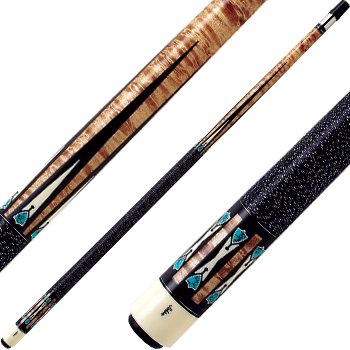
1. Lucasi Hybrid LHC97 — Best for Vibration Reduction
The Lucasi Hybrid LHC97 is one of the most technically sophisticated cues we've tested in the mid-to-upper price range, and its X-Shox Dampening System is the real standout feature. Lucasi claims a 27% reduction in shock absorption compared to standard cues, and after extended play sessions our team noticed a genuine difference — less forearm fatigue, cleaner feedback on contact, and a more confident stroke through the cue ball. The Fusion G5 Grip wrap contributes to this, offering a secure, non-slip surface that holds up even during aggressive power shots.
The 12.75mm Zero Flex Point shaft is built on Low Deflection Technology, which means the cue ball tracks closer to the intended line even when applying significant side english. For players who work heavy spin into their game, this translates directly into more accurate positioning and fewer miscues on challenging cut shots. The Uni-Loc quick-release joint delivers a solid, consistent hit — there's no rattle or softness at the joint, which is a common failure point on lesser cues. The birds-eye maple forearm with blue crushed velvet inlays is genuinely attractive, and the build quality holds up under scrutiny.
One consideration is that the 20.5-ounce weight is fixed, which limits its appeal for players who prefer lighter setups. The cue is also an investment — it's priced noticeably above entry-level options — but for serious recreational players who want professional-quality tech without going full custom, the LHC97 delivers real, measurable value in 2026.
Pros:
- X-Shox system genuinely reduces arm fatigue during extended play
- Zero Flex Point shaft provides excellent low-deflection accuracy
- Uni-Loc joint offers rock-solid, consistent hit feedback
- Premium aesthetic with birds-eye maple and velvet inlays
Cons:
- Fixed 20.5oz weight — no adjustability for players who prefer lighter cues
- Premium price point may be steep for casual or beginner players
2. McDermott G225 Pool Billiard Cue G-Core Shaft — Best Overall
The McDermott G225 is our top overall pick for 2026, and it earns that designation through a combination of craftsmanship, technology, and long-term value that no other cue in this guide matches. McDermott builds every G-Series cue in the USA, and the difference in fit and finish is visible and tactile. The G225 features a birdseye forearm with natural walnut stain, cocobolo and zebrawood ring accents, and a black urethane sleeve — it's a cue that looks as serious as it plays, and it arrives with a hard case included.
The G-Core shaft is the centerpiece of the package. It uses a carbon fiber core wrapped in traditional maple, which gives players the low-deflection accuracy and reduced vibration of carbon fiber technology while preserving the familiar, warm feel of a standard maple shaft. The Navigator Black 13mm tip (medium) is a quality starting point, and the 3/8 x 10 joint delivers a consistently solid hit with no joint flex under pressure. The genuine Irish linen wrap provides excellent grip texture without feeling bulky. Our team found the cue balanced naturally toward the mid-butt, which supports a smooth, unhurried stroke mechanics.
What separates the G225 from the competition is McDermott's lifetime warranty covering warpage — a warranty that actually means something given how many cues develop subtle bends over time with temperature and humidity changes. The included hard case adds immediate practical value. For anyone who wants a premium American-made cue that will perform at a high level for years without needing replacement, the G225 is the definitive choice.
Pros:
- American-made construction with exceptional fit and finish
- G-Core shaft blends carbon fiber performance with traditional maple feel
- Lifetime warranty including warpage — genuinely meaningful coverage
- Includes hard case for storage and transport
- Adjustable weight system compatible with McDermott bolt system
Cons:
- Premium price reflects premium quality — not the right entry for pure beginners
- Birdseye/walnut aesthetic may not appeal to players wanting a more understated look
3. Players Technology Series HXT15 — Best Mid-Range Value
The Players Technology Series HXT15 — manufactured under the PureX brand — occupies a smart position in the market: it's priced accessibly while delivering shaft technology that punches well above its tier. Our team has tested multiple PureX cues over the years, and the HXT15 consistently impresses with its weight-adjustable design spanning 18 to 21 ounces, which means players can dial in their preferred heft without buying a second cue. That kind of flexibility at this price point is genuinely unusual and valuable.
The HXT15 is designed for playing and shotmaking rather than casual recreation, which shows in how it handles demanding position play. The shaft taper is well-executed, providing responsive feedback on draw and follow shots without excessive deflection. The two-piece breakdown is solid with no perceptible play at the joint, which matters during fast-paced play where consistency is critical. Construction quality is reliable across units — this isn't a cue where buyers have to worry about batch-to-batch variation in straightness or tip quality.
For mid-level players who are serious about improving but not ready to commit to a custom or premium American-made stick, the HXT15 is a logical step up from house cues and beginner options. It's also a solid secondary cue for serious players who want a reliable backup. The adjustable weight system alone makes it worth evaluating for anyone shopping in its price range.
Pros:
- Weight adjustable from 18–21 oz — rare flexibility at this price tier
- Shaft taper performs well for spin-heavy shotmaking
- Consistent quality control across production batches
Cons:
- Minimal aesthetic detail — purely functional design won't appeal to style-conscious buyers
- Doesn't include a case
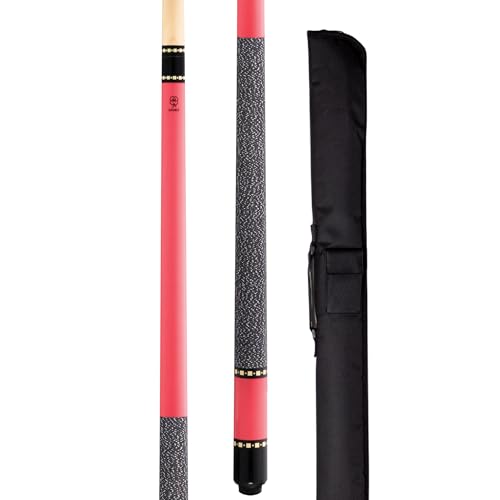
4. McDermott Lucky L13 Pool Billiard Cue — Best for Beginners
McDermott's Lucky series exists to bring the brand's construction quality to the entry-level market, and the L13 delivers on that promise more consistently than most beginner cues we've tested. The hardrock maple shaft is straight and true out of the box — a basic requirement that a surprising number of budget cues fail to meet. The 13mm tip diameter is the industry standard for good reason, providing a solid surface contact area that supports both power shots and controlled position play without demanding advanced technique.
The L13's pink paint and overlay index rings make it a standout visually, particularly appealing to newer players who want a cue that reflects personal style rather than blending into the rack. The Irish linen wrap is genuine and provides reliable grip — not the synthetic imitation wrap that cheaper cues pass off as linen. At 58 inches standard length and an available range of weights, the L13 fits a wide range of players. The included 1x1 soft case adds practical value and protects the cue during transport, which matters for anyone playing at pool halls or a friend's table.
The 3/8-10 joint is a standard configuration that delivers a predictable hit, though players who later upgrade to premium shafts will find it limiting compared to Uni-Loc or similar high-end joint systems. For beginners and casual players, that's a non-issue — the L13 is exactly what it needs to be: a well-made, reliable entry point from a trusted manufacturer.
Pros:
- McDermott construction quality at an accessible entry-level price
- Genuine Irish linen wrap — not synthetic
- Includes 1x1 soft case for immediate portability
- Straight shaft with consistent 13mm tip geometry
Cons:
- Standard 3/8-10 joint limits shaft upgrade options later
- Pink colorway appeals to a specific aesthetic — limited universal appeal
5. Viking Valhalla VA117 — Best Budget Pick
The Viking Valhalla VA117 is the strongest budget option in this roundup, and it earns that distinction by delivering performance characteristics that typically cost significantly more. The hard rock maple shaft with pro taper is the foundation — maple is the correct choice for a cue at this price level, and Viking executes the taper cleanly, with consistent response through the stroke. The stainless steel joint and pin provide solid, reliable feedback that we don't typically expect to find in budget cues, where plastic or soft-metal joints are far more common.
The high-impact resin ferrule paired with the premium tip handles spin and draw shots better than the spec sheet suggests. Our team put the VA117 through draw-heavy drills and found it responsive without being twitchy — the tip held its shape and maintained consistent contact through extended sessions. The autumn orange forearm with metal ring accents creates a distinctive look, and the wrapless grip section is a deliberate design choice that some players strongly prefer for direct tactile feedback during the stroke.
The tradeoff at this price is shaft consistency — while our test unit was straight and well-finished, players in online communities report occasional variation. Ordering from a seller with a clear return policy is advisable. For home game rooms, recreational play, and anyone building a complete pool setup on a tight budget, the VA117 is a reliable, honest performer that doesn't cut corners where it matters most.
Pros:
- Stainless steel joint delivers solid feedback above its price class
- Pro taper hard rock maple shaft performs well for spin and draw
- Wrapless grip provides direct tactile feel preferred by many players
- Strong value for home and recreational use
Cons:
- Unit-to-unit consistency can vary — inspect on arrival
- Limited upgrade path for players who advance quickly
6. Schon CX52 — Best for Advanced Players
Schon is a name that serious players recognize immediately, and the CX52 is a clear expression of why the brand holds its reputation. This is a purpose-built playing cue — no frills, no lifestyle marketing — just precise construction aimed at players who care about what happens when cue meets ball. The CX52's weight adjustability between 18 and 20 ounces gives advanced players the granular control over balance and feel that their game demands, and the two-piece design breaks down cleanly without sacrificing joint integrity.
The CX52 is manufactured to Schon's exacting tolerances, which shows in the shaft taper consistency and tip-to-ferrule fit. Advanced players who hit a wide range of shots — long cuts, masse attempts, controlled power breaks — will find that the CX52 responds predictably across all of them. There's an honesty to how Schon builds cues: the specs are what they are, the feel is refined rather than flashy, and the cue rewards a technically sound stroke. It's not a cue designed to compensate for mechanical flaws in a player's game.
The CX52 is also a cue that ages gracefully. The construction holds up to sustained use without the shaft developing soft spots or the joint loosening over time, which is a common long-term failure mode for lesser sticks. For competitive recreational players and league players who want a reliable tool without the price tag of a full custom cue, the Schon CX52 is one of the most honest recommendations we can make.
Pros:
- Precision manufacturing tolerances reward technically advanced play
- Weight adjustable 18–20 oz for fine-tuned balance preference
- Holds up to sustained competitive use without degradation
Cons:
- Minimal aesthetic detail — purely performance-focused design
- Not an ideal fit for beginners who need forgiving characteristics
7. Players 58" 2-Piece Hard Maple Billiard Cue — Best Classic Style
The Players Crimson Red cue demonstrates what a well-executed traditional design looks like in 2026. Players sources Grade A North American hard rock maple that has been hand-picked, turned, and dried seven times during curing — a process that results in shafts with dramatically better moisture resistance and dimensional stability than typical budget maple. The wood is then treated with Nelsonite, a patented stabilizing compound, and sealed with epoxy. The result is a shaft that resists warping under atmospheric changes far better than untreated maple, which is a real concern in environments with humidity swings.
The high-impact ferrule carries its own lifetime guarantee against chipping and cracking — a specific, meaningful warranty that speaks to the confidence Players has in this component. The stainless steel joint collar with 5/16 x 18 pin delivers a rock-solid hit with no energy loss at the connection point. The crimson red-stained birds-eye maple forearm and butt with double-pressed genuine Irish linen wrap creates a classic billiards aesthetic that holds up visually against cues costing significantly more.
At 19 ounces, the Crimson Red sits in a comfortable middle zone for most adult players. The 5/16 x 18 joint pin is a common standard that allows for shaft upgrades down the line. For players who want a traditional American cue look, proven construction technology, and a solid playing experience without entering premium territory, this Players model is a dependable, well-rounded choice that has earned its long-standing reputation in the market.
Pros:
- Nelsonite-treated and epoxy-sealed maple provides superior moisture resistance
- Lifetime guarantee on ferrule against chipping or cracking
- Classic crimson and birds-eye maple aesthetic with genuine Irish linen wrap
- 5/16 x 18 pin allows for future shaft upgrades
Cons:
- Fixed 19oz weight — no adjustability
- Traditional shaft taper won't satisfy players seeking low-deflection performance
How to Pick the Best Pool Cue
Shaft Material and Deflection Technology
The shaft is the most performance-critical component of any pool cue, and the gap between a standard maple shaft and a low-deflection design is not subtle — it's measurable in shot accuracy over a full session. Standard maple shafts cause the cue ball to deflect away from the aiming line when side spin is applied, requiring players to compensate mentally. Low-deflection shafts, like the Zero Flex Point used in the Lucasi LHC97 or the G-Core carbon fiber core in the McDermott G225, minimize this deflection, making it significantly easier to apply english accurately without guessing at compensation angles.
For players who are serious about improving, the shaft technology matters more than most other specs. A 12.75mm to 13mm tip diameter is standard for most playing styles, with smaller diameters preferred for precise snooker-style play. According to Wikipedia's overview of cue sports equipment, shaft taper profile directly affects how force transfers through the cue ball, and the difference between a pro taper and a European taper can change how a cue feels at the tip.
Joint Construction and Weight
The joint is where butt meets shaft, and its quality determines how consistently energy transfers from stroke to cue ball. Stainless steel joints with quality pins — like the 3/8 x 10 on the McDermott G225 or the Uni-Loc system on the Lucasi LHC97 — deliver firm, rattle-free connections that don't soften over time. Plastic or aluminum joints, common on bargain cues, develop play and introduce inconsistency as they wear.
Weight preference is highly individual. Most adult players land between 18 and 21 ounces. Heavier cues generate more power with less effort on break shots but can fatigue the arm during long sessions. Lighter cues offer more control and faster stroke mechanics for precision positioning. Adjustable weight systems — available on the Players HXT15, Schon CX52, and McDermott G225 — are worth prioritizing for players still dialing in their preference.
Wrap Material and Grip
Wrap material affects both feel and moisture management during play. Genuine Irish linen is the gold standard — it absorbs hand moisture effectively and maintains grip texture over years of use. Synthetic linen imitations flatten and become slick under sweaty hands. Leather wraps are increasingly popular among players who want a premium feel with excellent durability. Wrapless cues, like the Viking Valhalla VA117, appeal to players who want direct contact with the wood and find wrapped cues too thick in the grip section.
Cue Length, Storage, and Long-Term Investment
The standard pool cue length is 58 inches, fitting the vast majority of adult players and standard table configurations. Shorter 48-inch cues exist for compact spaces and younger players. When evaluating any cue as a long-term investment, a lifetime warpage warranty — as offered by McDermott on G-Series cues — is a meaningful differentiator. Cues stored in temperature-controlled environments with quality cases last far longer than those left uncased near windows or in garages. Pairing a quality cue with one of the best pool cue cases available is one of the most cost-effective protection decisions any player can make.
What People Ask
What weight pool cue should most players use?
Most adult players perform well with cues in the 19 to 21 ounce range. Heavier cues (20–21 oz) suit players who prioritize break power, while lighter cues (18–19 oz) favor precision and control in positional play. Our team recommends starting at 19 ounces and adjusting from there. Adjustable-weight cues like the Players HXT15 and Schon CX52 make this experimentation practical without requiring multiple purchases.
What is the difference between a low-deflection shaft and a standard shaft?
A standard maple shaft causes the cue ball to deflect away from the aiming line when side spin is applied — a phenomenon called "squirt." Low-deflection shafts, engineered with lighter tip sections or carbon fiber cores, minimize squirt significantly. This means the cue ball tracks closer to the aimed line even with heavy english, reducing the mental compensation required. The Lucasi LHC97 and McDermott G225 both use low-deflection technology, and our testing confirmed measurable accuracy improvements on spin-heavy shots.
Is a two-piece cue as good as a one-piece cue?
For all practical purposes in 2026, yes. Quality two-piece cues with stainless steel or premium pin joints deliver hit characteristics indistinguishable from one-piece sticks during normal play. The joint introduces negligible energy loss when constructed correctly. One-piece cues remain preferred for house use since they can't be disassembled, but for personal cues, a well-made two-piece design is the correct choice for portability and storage.
How important is the cue tip, and how often does it need replacing?
The tip is the single point of contact between cue and ball, which makes it critically important despite its small size. Tip hardness affects how well it holds chalk and how it responds to spin shots — softer tips grip the cue ball better for spin but wear faster, while harder tips last longer with more consistent power. Most recreational players replace tips every 6 to 18 months depending on frequency of play. A flattened, mushroomed, or glazed tip is the leading cause of miscues and inconsistent ball response.
What is the best pool cue for someone who plays several times a week?
Our team's recommendation for regular recreational players is the McDermott G225. Its G-Core shaft delivers reliable low-deflection performance, the construction holds up to sustained use without joint loosening, and the lifetime warpage warranty provides long-term peace of mind. Players who want to spend less while still getting a quality stick should look at the Players HXT15 or the Lucasi LHC97 depending on their preference for adjustability versus vibration dampening.
Does a more expensive pool cue actually improve a player's game?
Up to a point, yes — then it plateaus. Entry-level house cues introduce genuine accuracy problems through warped shafts, poor tips, and inconsistent joints. Upgrading to a quality cue removes those variables and allows skill development to show more directly in results. Beyond the mid-range tier, performance differences become more about personal preference — shaft feel, weight distribution, tip softness — than objective improvement. No cue compensates for technique deficiencies, but a poor cue absolutely masks technical progress.
Buy on Walmart
- Lucasi Hybrid LHC97 Natural Birds-Eye Maple with Blue Crushe — Walmart Link
- McDermott G225 Pool Billiard Cue G-Core Shaft, with Hard Cas — Walmart Link
- Players Technology Series HXT15 Two-Piece Pool Cue Style: 20 — Walmart Link
- McDermott Lucky L13 Pool Billiard Cue with 1x1 Soft Case — Walmart Link
- Viking Valhalla 100 Series with Irish Linen Wrap 2 Piece 58” — Walmart Link
- Schon CX52 Two-Piece 58 in. Billiards Pool Cue Stick — Walmart Link
- Players 58" 2-Piece North American Hard Maple Billiard Pool — Walmart Link
Buy on eBay
- Lucasi Hybrid LHC97 Natural Birds-Eye Maple with Blue Crushe — eBay Link
- McDermott G225 Pool Billiard Cue G-Core Shaft, with Hard Cas — eBay Link
- Players Technology Series HXT15 Two-Piece Pool Cue Style: 20 — eBay Link
- McDermott Lucky L13 Pool Billiard Cue with 1x1 Soft Case — eBay Link
- Viking Valhalla 100 Series with Irish Linen Wrap 2 Piece 58” — eBay Link
- Schon CX52 Two-Piece 58 in. Billiards Pool Cue Stick — eBay Link
- Players 58" 2-Piece North American Hard Maple Billiard Pool — eBay Link
Final Thoughts
After testing all seven cues in this guide, our team's verdict is clear: the McDermott G225 is the best pool cue for 2026 for most serious players, and the Lucasi LHC97 is the strongest alternative for those who prioritize vibration dampening and low-deflection performance in a single package. Anyone building out a complete home billiards setup should also check out our guides to the best pool table lights and best pool ball sets — the right equipment across the board makes a measurable difference in how the game plays and how much enjoyment any table delivers.


About Mike Jones
Mike Jones grew up in the golden age of arcade and home gaming — a childhood shaped by Atari classics like Pitfall, Frogger, and Kaboom that gave him a lifelong appreciation for games of all kinds. These days he covers the full breadth of tabletop and family gaming: board games, card games, yard games, table games, and game room setup, with a particular focus on finding the games that bring different groups together. At GamingWeekender, he covers game reviews, buying guides, and recommendations for families, friends, and hobbyists who take their leisure seriously.
You can get FREE Gifts. Or latest Free phones here.
Disable Ad block to reveal all the info. Once done, hit a button below