Have you ever set down a controller and thought — that game will never get old? That feeling is the starting point for understanding what makes a video game classic, and the answer is more specific than most people realize. It's not just about age. It's not just about sales. It's about a combination of timeless design, emotional weight, and cultural staying power that keeps players coming back long after the hype fades. This guide breaks that formula down clearly, so you can spot true classics, collect them smartly, and appreciate what separates them from games that simply had a good run. Explore the video games section for more titles worth your time.
The word "classic" gets thrown around carelessly. Publishers use it to sell rereleases. Nostalgia makes people apply it to anything they loved as a kid. But genuine classics — the games that actually deserve the label — share a short list of hard qualities. Once you know what those are, the distinction becomes obvious.
This guide walks through the defining criteria, looks at real examples, covers how to keep classic games playable, and gives you a realistic cost breakdown for building a collection. By the end, you'll have everything you need to make smart decisions about what to play, what to buy, and what to skip.
Contents
What Makes a Video Game Classic: The Core Criteria
Ask ten gamers what makes a video game classic and you'll get ten different answers. But strip away the personal preferences and the pattern becomes clear. Three things show up in almost every title that earns the label: tight core mechanics, meaningful progression, and staying power across different types of players. A game can have stunning graphics and a massive marketing budget and still disappear from memory in five years. Meanwhile, a game with blocky pixels and simple controls gets played and recommended constantly — because the fundamentals are solid.
Gameplay That Outlasts Its Era
The clearest sign of a classic is gameplay you can describe in one sentence — and that sentence still sounds fun. Consider what that means in practice:
- The controls feel responsive even on hardware that's decades old
- The challenge curve teaches you without frustrating you unfairly
- There's always one more thing to try, one more strategy to explore
- You can pick it up after months away and immediately remember why you loved it
If a game requires its era's best hardware to feel good — if it only held up because it was the cutting edge at the time — it's not a classic. It was just impressive. Classics feel designed, not engineered. The most difficult video games to beat prove this point well: brutal challenge works when the mechanics are fair, and players keep returning to master them precisely because the design holds up under pressure.
Pro tip: If you can't explain why a game is fun without mentioning its graphics or hype cycle, it probably isn't a classic — it was just well-timed.
Cultural Weight and Community Legacy
The second criterion is harder to quantify but just as real. A classic game becomes part of shared language. People reference it in conversation. It spawns genres, mechanics, and entire studios built around its influence. It shows up in discussions about the broader history of video games because it genuinely changed what came after it.
Cultural weight also shows up in communities. Classic games don't just have players — they have dedicated fan bases, speedrun communities, mod scenes, and ongoing debates about lore. The top video game stories of all time almost all belong to titles in this category, because narrative depth is one of the strongest anchors for long-term community engagement.
| Criterion | What It Looks Like | Classic Example | Non-Classic Comparison |
|---|---|---|---|
| Core Mechanics | Tight, responsive, learnable in minutes | Super Mario Bros. | A cinematic game where cutscenes outweigh gameplay |
| Challenge Curve | Difficulty that teaches, not punishes | Dark Souls series | A game with arbitrary difficulty spikes |
| Cultural Impact | Referenced, imitated, discussed for decades | The Legend of Zelda | A franchise entry that was quickly forgotten |
| Replayability | New discoveries on repeated playthroughs | Tetris | A linear game with no reason to replay |
| Accessibility | Easy to start, hard to master | Street Fighter II | A game locked behind complicated systems |
Where Classic Games Still Hold Up Today
Knowing what makes a video game classic is useful — but knowing where classics actually fit into your gaming life is what makes this practical. The good news is that classic games aren't museum pieces. They work in real, modern gaming contexts, and in many cases they outperform new releases at specific jobs.

Single-Player Experiences Worth Revisiting
For solo gaming, classics are unbeatable when you want a complete, self-contained experience. Modern live-service games demand constant attention — daily logins, limited-time events, season passes. A classic asks nothing of you except that you sit down and play. You finish it on your schedule. That's increasingly rare.
- Great for evenings when you want focused, low-pressure play
- No internet connection required for most titles
- No content gets patched out or removed after launch
- You own the experience completely — no subscription needed
There's also a well-documented psychological benefit here. Research covered in the science-backed benefits of playing video games shows that games with clear goals and feedback loops reduce stress more effectively than passive entertainment. Classics are built around exactly those loops — mastery, feedback, reward. They're genuinely good for you in ways that aimless open-world grinding often isn't.
Multiplayer Classics and Social Play
For multiplayer, classic games level the playing field in a way modern titles rarely do. When everyone understands the mechanics equally — because the game has been out long enough for the knowledge to be widespread — the competition becomes about skill and strategy, not about who spent the most time grinding a current season.
Classic arcade fighters, racing games, and party titles work especially well for mixed-skill groups. You can hand a controller to someone who hasn't gamed in years and they'll be competitive in twenty minutes. That accessibility is a feature, not a limitation.
Warning: Don't confuse "easy to learn" with "shallow." The best classics reward hundreds of hours of play — they just don't lock you out until you've put in those hours first.
Games That Actually Earned the Title
Theory is useful, but examples make it concrete. The following games show exactly how the criteria for what makes a video game classic play out in practice — not because they're the oldest or most famous, but because each one embodies the qualities that matter.
Nintendo's Blueprint for Timeless Design
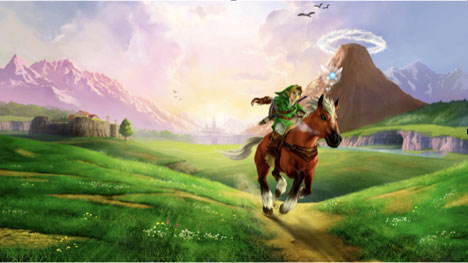
Nintendo's catalog is the clearest case study in classic game design available. The Legend of Zelda: Ocarina of Time didn't just tell a good story — it invented a camera system and Z-targeting mechanic that became industry standard. The original Super Mario Bros. established platform design principles still taught in game development courses today.
What made these games work wasn't the technology. It was design discipline — the willingness to cut anything that didn't serve the core experience, and to polish what remained until it was perfect. If you want to understand the depth behind titles like these, the real meaning of the Triforce in Zelda lore shows just how much thought went into every layer of those games, from mechanics down to mythology.
Not every Nintendo title hit that mark, of course. The story of the Nintendo Wii U is a useful counterpoint — a console that had strong games but failed because the design decisions around the hardware itself confused players. Even great first-party titles couldn't save it. Classic status requires the whole package: game design, player experience, and accessibility all pulling in the same direction.
When the Hype Fades and Classics Emerge
Some games get called classics the moment they launch. That label usually doesn't stick. Real classics get recognized over time, after the marketing noise fades and players are left with just the game itself.
The opposite is also true: some games launch with massive hype and collapse under the weight of unmet expectations. The story of why No Man's Sky disappointed at launch is exactly this — a game sold on promises rather than finished design. It took years of updates to become something genuinely worth playing. A classic doesn't need those years of patches. It ships complete.
When you're evaluating whether something deserves the classic label, ask yourself this: if all the marketing disappeared tomorrow and you encountered this game cold, would you still find it remarkable? If the answer is yes, it's probably a classic. If the answer depends on knowing what it was supposed to be, it isn't.
Keeping Classic Games Playable Long-Term
Identifying classic games is one thing. Actually being able to play them years down the road is a different challenge. Physical media degrades. Hardware breaks. Compatibility issues multiply as operating systems and display technology evolve. If you want to build and maintain a classic game collection, you need a plan for preservation from the start.
Physical Hardware and Cartridge Care
If you're collecting physical copies, treat them like what they are: fragile storage media that can and will fail without proper care. Here's what actually matters:
- Store cartridges upright in a cool, dry location — humidity is the primary enemy of contact pins
- Clean cartridge pins with 90%+ isopropyl alcohol and a cotton swab before playing, not just when problems appear
- Keep discs in cases with the printed side up — the label side scratches more easily than most people expect
- Original hardware runs hotter than modern consoles; ensure adequate ventilation around older systems
- Test every cartridge and disc when you acquire it, not months later when the return window has closed
For CRT televisions (cathode-ray tube displays, the kind most older consoles were designed for), proper storage means keeping them away from magnets and strong electromagnetic sources. Many collectors argue you need a CRT for authentic classic game display — and for pixel-art games designed around scan lines, that argument has real merit.
Pro tip: A dehumidifier in your game storage room does more for long-term cartridge preservation than any cleaning kit. Moisture is what kills the contacts.
Digital and Emulation Options
If physical collecting isn't your priority, digital and emulation routes give you access to classics without the storage and degradation concerns. Official re-releases through platform storefronts are the cleanest option — you get legal access, modern controller support, and often save states and rewind features built in.
Emulation (running games through software that mimics original hardware) is a more complex topic legally, but it's how a significant portion of classic game preservation actually happens. Projects like video game preservation initiatives documented on Wikipedia show the scale of the challenge — thousands of titles exist only in fragile physical formats, and without active preservation efforts, they'll simply become unplayable.
For practical purposes, if you own the original physical version of a game, playing a digital backup is widely considered a reasonable personal use. Whether you go physical or digital, the goal is the same: keep the games accessible so you can actually play them.
What It Actually Costs to Build a Classic Game Collection
Building a classic game collection can cost anywhere from almost nothing to thousands of dollars, depending entirely on your focus. The price range is wide because classic status doesn't track with rarity, and rarity doesn't always track with quality. You need to understand both variables before you spend anything.
Getting Started on a Budget
If you're new to collecting or just want to play classics without spending much, digital options are your best entry point. Platform subscription services often include large libraries of classic titles for a flat monthly fee — you'll pay less per game than almost any other route. Mini consoles (official hardware rereleases with games pre-loaded) are another strong budget option and require zero technical setup.
- Platform subscriptions: access to dozens or hundreds of classics for a monthly fee
- Mini consoles: one-time purchase, games included, no additional hardware needed
- Used physical copies: check local game stores, thrift stores, and online secondhand markets before paying collector prices
- Mobile ports: many classic titles have been ported to mobile — imperfect controls but affordable access
The case for being a patient gamer applies strongly here. Prices on classic titles fluctuate, and buying at peak hype — when a title gets mentioned in a popular video essay or gets a remaster announcement — usually means overpaying. Wait a few months and the price drops back down.
Where the Real Money Goes
If you move into serious physical collecting, the costs escalate fast in specific categories. Complete-in-box copies (game, manual, and original box in good condition) command significant premiums over cartridge-only prices. Sealed copies of well-known classics can reach extraordinary figures at auction.
The categories where prices stay high regardless of condition:
- Late-run titles for discontinued platforms (limited production runs, high demand)
- Games with cult followings that were never reprinted
- Region-exclusive titles that required import at launch
- Complete-in-box copies of early console launch titles
A practical approach: decide upfront whether you're collecting to play or collecting as an investment. Those two goals require different strategies and different spending priorities. If you want to play, go digital or buy loose cartridges in good working condition. If you're treating it as a collection, condition and completeness matter — and so does patience. Don't rush purchases on titles you're not certain about.
Frequently Asked Questions
Does a game have to be old to be a classic?
No. Age is a factor only in that it gives a game time to prove itself. What actually matters is whether the design holds up, whether the game influenced what came after it, and whether players continue to return to it by choice rather than nostalgia. Some older games don't qualify, and some newer titles will earn the label over time.
Can a game be a classic if it was a commercial failure at launch?
Absolutely. Commercial performance at launch and long-term classic status are almost unrelated. Several games that sold poorly when released are now considered essential titles because they found their audience later — through word of mouth, rereleases, or critics revisiting them. Sales numbers tell you what was popular at a moment in time, not what was well-designed.
What separates a classic from a game that's just old?
A classic remains genuinely fun and playable regardless of when you first encounter it. An old game that isn't a classic feels dated — the mechanics are clumsy, the design reflects limitations that were worked around rather than designed through, and the appeal depends heavily on having played it at the right time. If you hand it to a new player today and they get hooked, it's a classic.
Is it worth buying original hardware to play classic games, or is emulation good enough?
For most players, emulation is good enough and significantly more convenient. For collectors and purists playing games designed around specific display technology — like pixel-art titles built for CRT scan lines — original hardware provides a noticeably different experience. Start with emulation or digital rereleases, and only invest in original hardware if you find yourself wanting that specific authenticity after playing for a while.
Next Steps
- Pick one game from the data table above that you haven't played — find it on a platform you already own and play through at least the first hour before judging it.
- Audit your current game library against the five criteria in the core criteria section. Identify which titles you own that genuinely qualify as classics and which ones were just popular at the time.
- Decide whether you want to go physical or digital for classic game access — then set a realistic budget before you start buying anything. Impulse purchases in this category are how you overpay.
- If you're interested in deep-diving on specific titles, read through the top video game stories of all time for a curated list of narrative classics worth your time.
- Set up proper storage for any physical games you already own — clean the contacts, find a dry storage location, and test every cartridge now rather than when you're ready to play and find it doesn't work.


About Mike Jones
Mike Jones grew up in the golden age of arcade and home gaming — a childhood shaped by Atari classics like Pitfall, Frogger, and Kaboom that gave him a lifelong appreciation for games of all kinds. These days he covers the full breadth of tabletop and family gaming: board games, card games, yard games, table games, and game room setup, with a particular focus on finding the games that bring different groups together. At GamingWeekender, he covers game reviews, buying guides, and recommendations for families, friends, and hobbyists who take their leisure seriously.
You can get FREE Gifts. Or latest Free phones here.
Disable Ad block to reveal all the info. Once done, hit a button below