Have you ever picked up a controller, stared at the screen, and had absolutely no idea where to begin? That feeling is completely normal — and the good news is the answer is simpler than you think. The best video games for beginners are built to welcome you, guide you through every step, and make sure every session is genuinely fun. Browse our full video games section for deeper coverage, but right here we are focusing on five titles that do exactly what a first-time player needs. By the time you finish reading, you will know precisely where to start.

Choosing the right first game matters more than most people realize. Start with something too difficult and you will put the controller down and never pick it back up. Start with something too shallow and you will get bored before you ever discover what gaming can genuinely feel like. The five games in this guide hit the perfect middle ground — each one is accessible without being patronizing, and genuinely engaging without requiring any prior skills whatsoever.
Every game here was selected based on how thoughtfully it handles brand-new players. They feature forgiving difficulty curves, clear feedback systems, and gameplay loops — the repeating cycle of actions that keeps you engaged and moving forward — that feel natural from your very first session. Whatever platform you own, whether that is a Nintendo console, a PlayStation, or a modern PC, at least a few of these titles will be available to you.
Contents
The Best Video Games for Beginners Hook You from Level One
The first game you play sets the tone for your entire relationship with gaming. The right one makes you curious, excited, and hungry to play again tomorrow. The wrong one leaves you frustrated and convinced that gaming just "isn't for you." Here are two games that get it completely right from the very first screen.
Kirby's Epic Yarn: Pure Joy from the Start
If there is one game that belongs at the very top of every beginner's list, it is Kirby's Epic Yarn. Originally released for the Nintendo Wii, this platformer (a game where you run and jump through levels) wraps everything in a world made entirely of fabric, yarn, and felt. It looks incredible, and it plays even better for players who have never touched a controller before.
The mechanic that makes Kirby's Epic Yarn so perfect for newcomers is this: you cannot die. When you take damage, you simply lose some beads — the game's collectible currency — and keep moving. No lives lost. No game over screen. No frustration spiral. You are completely free to experiment, make mistakes, and figure out how the game works at your own pace, without any penalty for doing so.
The controls take about five minutes to learn. You run, jump, and use a yarn whip to interact with the environment. That is essentially it. What follows is hours of creative, colorful level design that rewards curiosity without ever punishing failure. It is the single safest starting point for an absolute beginner, and it never once feels condescending about it.
PaRappa the Rapper: Rhythm and Zero Pressure
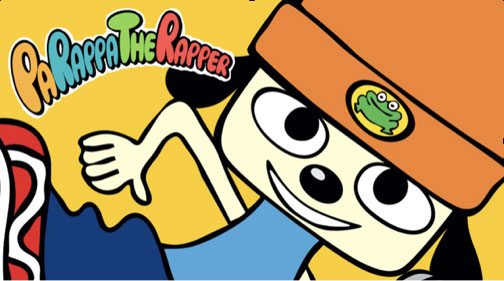
PaRappa the Rapper is a rhythm game — a game where you press buttons in time with music — for the original PlayStation. It is short, genuinely quirky, and almost impossible not to enjoy. The premise follows a cartoon dog learning to rap to impress a girl he likes, and every level is a different rap battle presented as a call-and-response challenge. It sounds strange. It is strange. And it works beautifully.
The reason PaRappa works so well for newcomers is its absolute simplicity. You watch a prompt on screen, press the matching button at the right moment, and hear the result immediately. The feedback loop is instant and satisfying. Even when you miss a beat, the game is forgiving enough that you can recover and keep going without losing your place in the song.
PaRappa is also short enough to finish in a single afternoon, which means you experience the full arc of starting and completing a game. That sense of accomplishment matters enormously when you are just beginning. Finishing your first game builds more confidence than any tutorial ever could.
Building Skills That Actually Stick
Not every beginner game is built for quick sessions. Some of the most valuable titles on this list are worth your time precisely because they teach you how to think — and those thinking skills transfer into every game you play after them.
Professor Layton and the Curious Village
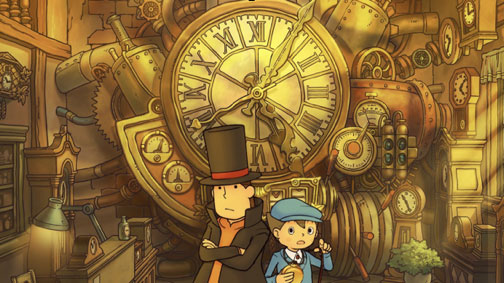
Professor Layton and the Curious Village is a puzzle-adventure game for the Nintendo DS. You play as Professor Hershel Layton, a charming archaeologist, and his apprentice Luke, as they investigate a mysterious village full of brain teasers. The story is engaging, the hand-drawn art style is gorgeous, and the puzzles are perfectly calibrated for someone with zero gaming background.
What separates this game from everything else on the list is how organically it integrates learning into play. Each puzzle teaches you something new — how to think laterally, how to approach a problem from a different angle, how to re-read instructions carefully when you are stuck. These are not just gaming skills. They are life skills. Players who complete Professor Layton come away sharper and more patient, whether they realize it or not.
If you enjoy working through logic challenges — the way that learning chess strategy as a beginner trains you to think several steps ahead — Professor Layton is a natural fit. The game never rushes you. You think, you experiment, and when the answer clicks, the satisfaction is genuinely hard to match.
What Puzzle Games Teach You Without You Noticing
Puzzle and adventure games like Professor Layton build something that pure action games sometimes skip: patience and deliberate problem-solving. When you sit with a puzzle, turn it over in your mind, try a few wrong answers, and finally crack it, you are training yourself to persist under pressure. That habit carries into every harder game you play later.
Here is a quick comparison of all five games so you can see at a glance which one fits your situation best right now:
| Game | Genre | Platform | Difficulty | Best For |
|---|---|---|---|---|
| Kirby's Epic Yarn | Platformer | Wii / Wii U | Very Easy | Absolute first-timers of any age |
| PaRappa the Rapper | Rhythm | PlayStation / PC | Easy | Music lovers and casual players |
| Professor Layton | Puzzle / Adventure | Nintendo DS / Mobile | Easy–Medium | Thinkers and story-driven players |
| Streets of Rage | Beat 'em Up | Sega / PC / Console | Easy–Medium | Players who want action and co-op |
| Katamari Forever | Puzzle / Action | PlayStation 3 | Easy | Creative and laid-back players |
When to Push Through — and When to Walk Away
Even the most beginner-friendly game has moments that test your patience. Knowing how to handle those moments is one of the most important habits a new gamer can develop — and it makes the difference between growing as a player and burning out entirely.
Streets of Rage: The Right Kind of Challenge

Streets of Rage is a classic beat 'em up — a game where you walk through side-scrolling levels punching and kicking enemies — originally released on the Sega Genesis. It is action-packed, approachable, and features a difficulty setting that lets you dial the experience to your exact comfort level. According to Wikipedia, the original Streets of Rage sold over eight million copies across all platforms, cementing it as one of the most beloved games of its era.
For beginners, Streets of Rage works because the controls are stripped down to their essentials. You move with a directional pad or stick, and you attack with two buttons. There is no complex combo system to memorize, no inventory to juggle, and no overwhelming map to navigate. You can finish a full stage in under ten minutes, which means progress comes quickly and momentum builds naturally.
The game is at its best in two-player co-op mode — playing side-by-side with a friend. When you share the challenge, celebrate small victories together, and cover each other against tough enemies, the difficulty feels far less daunting and far more fun. For a new player, that social layer transforms what could be stressful into something genuinely exciting.
Recognizing When You Need a Break
Every new gamer hits a wall eventually. You get stuck on a section, you keep losing, and what started as fun starts to feel like a chore. This is normal — and the smart response is to step away, not push harder.
Learning research consistently shows that rest is a core part of skill development. When you stop playing and come back later, your brain has had time to process what you experienced. Many players find that a section they struggled with for an hour suddenly feels straightforward after a night's sleep. Trust that process. Forcing yourself through frustration does not make you tougher — it just makes gaming feel like work.
Pro tip: If you have failed the same section three times in a row, walk away for at least ten minutes before trying again. Coming back fresh almost always produces better results than grinding through frustration.
Small Habits That Make Gaming Way More Fun
Experienced gamers do certain things automatically that nobody ever explicitly teaches beginners. These habits are easy to adopt, and they make every game more enjoyable and more manageable from day one.
Use Every Tool the Game Gives You
Every game on this list — and virtually every beginner-friendly game ever made — comes with tutorials, hints, and built-in assists. Use them without hesitation. There is no prize for ignoring help systems. The fastest way to enjoy a game is to understand it, and the people who designed these games built those tools specifically so you would.
Accessibility settings (options designed to remove barriers for different kinds of players) are now standard across most modern titles. These include things like adjustable game speed, aim assistance, simplified controls, and auto-recovery mechanics similar to Kirby's bead system. Always check the settings menu before deciding a game is too hard. There is almost always an option that smooths the experience without taking anything meaningful away from it.
Also — do not skip cutscenes or story elements on your first playthrough. The world and narrative context are part of what makes a game feel worth playing. Skipping them leaves you confused about what you are actually doing, and confusion kills motivation faster than any difficult level ever will.
Find Your Gaming Community
One of the most underrated things a new gamer can do is connect with other players, even casually. Online forums, YouTube channels, and gaming communities dedicated to beginners can answer questions faster than any in-game help menu. The gaming community has a genuinely welcoming side that loves helping new people discover the hobby.
Warning: Avoid reading detailed walkthrough guides on your very first playthrough — they tend to eliminate the discovery process that makes starting a new game genuinely exciting.
Once you feel comfortable with the basics, titles like the ones featured in our roundup of indie games worth playing right now offer fresh, creative experiences that build directly on the skills you pick up from these five beginner titles.
How to Choose Your Next Game After These Five
Once you have worked through one or two games from this list, you will notice something shift: the next game you pick up feels easier to get into. That is not luck. Each of these titles is designed not just to entertain in the moment, but to lay groundwork for everything that comes after. You are building transferable skills, and you are doing it without any of the frustration that typically stops new players cold.
Katamari Forever: Your Bridge to Harder Titles
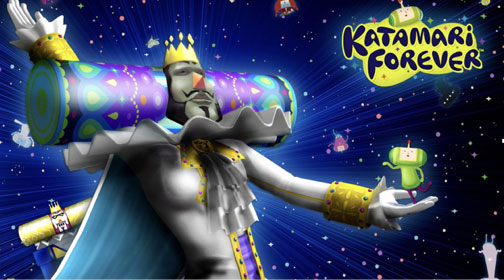
Katamari Forever is one of the most unusual games ever made — and one of the most perfectly suited for beginners who are ready to take a small step up. You control a tiny prince who rolls a sticky ball called a Katamari through elaborate environments, picking up every object in his path as the ball grows larger. The goal is to reach a target size before the timer runs out. Simple on paper. Endlessly satisfying in practice.
What makes Katamari Forever so valuable as your fifth game is that it introduces a concept nearly every harder game relies on: scaling challenge. Early levels are open and forgiving with generous time limits. Later levels demand stricter precision and tighter timing. You are being trained to handle increasing pressure — but so gradually that it never feels unfair. By the time you finish, you have experienced a complete difficulty ramp without ever feeling blindsided by it.
The controls rely on both analog sticks working together to steer the ball, which builds a kind of spatial coordination that transfers surprisingly well to more complex games. It is fun, wonderfully strange, and a genuinely smart choice as the last stop on your beginner journey.
Growing Your Gaming Habit the Smart Way
Once you have played through a game or two from this list, the question becomes: what next? The answer depends entirely on what hooked you. If the story and puzzles of Professor Layton were the highlight, look into other narrative-driven adventure games. If the co-op action of Streets of Rage was the most fun you had, explore other games with local multiplayer options.
For players ready to step into richer or more competitive territory, our guide to the best video game sequels ever made is a great next read — many of those titles are far more accessible than they appear from the outside, especially when you arrive with the foundational skills these five games give you. The habits you build here — reading on-screen cues, managing objectives calmly, knowing when to take a break — carry directly into everything that comes next.
- Start with one game from this list. Finish it before moving on.
- Let what you enjoyed most guide your next pick — genre, tone, pace.
That is the most reliable path to building a long-lasting love for gaming. Not a game list. Not a YouTube algorithm. Your own instincts, sharpened by the games that welcomed you in the first place.
Frequently Asked Questions
What is the single easiest video game for absolute beginners?
Kirby's Epic Yarn is the easiest and most welcoming game on this list — and arguably one of the most beginner-friendly games ever made. You cannot die, the controls take under five minutes to learn, and the entire experience is built to be stress-free from start to finish. It is the safest starting point for someone who has never picked up a controller before.
Do I need a specific console to play these games?
Not necessarily. Kirby's Epic Yarn is available on Wii and Wii U. PaRappa the Rapper is accessible through digital PlayStation stores and PC. Streets of Rage is available on virtually every modern platform via the Sega Genesis Classics collection. Professor Layton runs on Nintendo DS and Nintendo 3DS, with select entries on mobile. Katamari Forever requires a PlayStation 3 or access to a PlayStation streaming service.
How long does it take to get comfortable with video games?
With beginner-friendly games like these, most players feel at ease within two or three sessions. The bigger milestone is finishing your first full game — that experience builds more genuine confidence than any tutorial. Focus on enjoying the process rather than measuring improvement, and you will get better faster than you expect.
Are these games actually fun for adults, or are they just for kids?
All five are genuinely enjoyable for adults. Kirby and Katamari may look cartoonish, but they are designed to entertain at any age. Professor Layton features a sophisticated story and puzzles that adults find deeply satisfying. Streets of Rage and PaRappa the Rapper carry strong nostalgic appeal for anyone who grew up during the era when they were first released — and hold up completely even for players discovering them fresh.
What should I look for when choosing a beginner-friendly video game?
Look for three things: tutorials that explain mechanics as you encounter them naturally, a difficulty system that does not punish mistakes too harshly, and session lengths short enough that you can make meaningful progress in under an hour. All five games on this list meet those criteria, which is exactly why they earn their place as the best video games for beginners starting completely from scratch.
The right game does not ask you to already be a gamer — it turns you into one without you even noticing.


About Mike Jones
Mike Jones grew up in the golden age of arcade and home gaming — a childhood shaped by Atari classics like Pitfall, Frogger, and Kaboom that gave him a lifelong appreciation for games of all kinds. These days he covers the full breadth of tabletop and family gaming: board games, card games, yard games, table games, and game room setup, with a particular focus on finding the games that bring different groups together. At GamingWeekender, he covers game reviews, buying guides, and recommendations for families, friends, and hobbyists who take their leisure seriously.
You can get FREE Gifts. Or latest Free phones here.
Disable Ad block to reveal all the info. Once done, hit a button below