Table tennis has more than 300 million active players worldwide — more than golf, squash, or any other racket sport on Earth. Despite that staggering number, most beginners pick up a paddle with zero guidance and spend months reinforcing habits that are hard to break later. The good news? The right ping pong tips for beginners can compress that learning curve dramatically. Whether you just cleared space in your basement or you're heading to a local club for the first time, this guide covers everything: technique, gear, common pitfalls, and how real progress actually feels. You'll find even more ways to fill your game room in our table games section.
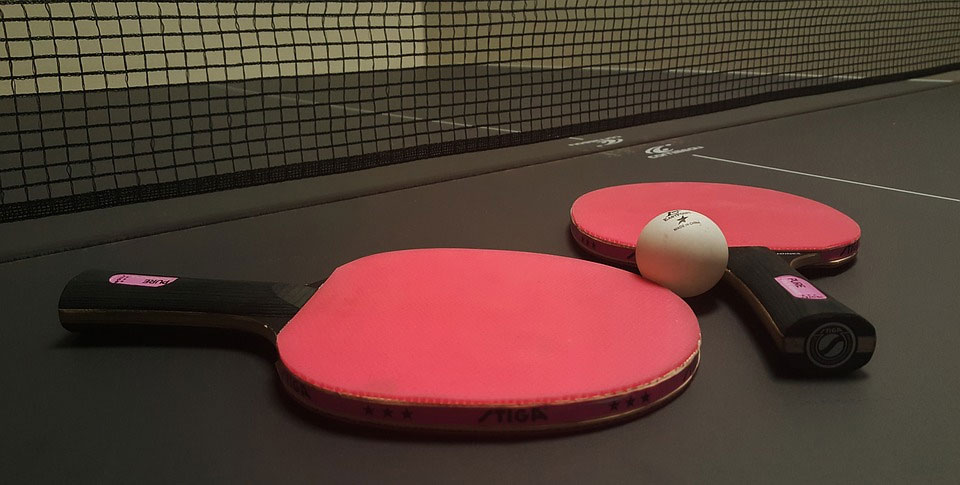
Ping pong looks deceptively simple from the sidelines. Two players, a tiny ball, and a table — how complicated can it be? But once you step up, you realize that spin, footwork, paddle angle, and timing all work together at once. The gap between casual play and solid fundamentals is wider than most people expect.
The encouraging part is that the core skills are learnable quickly. You don't need to master everything at once. Focus on a few key concepts, build good habits early, and your game will improve with every session.
Contents
- The Origins of Ping Pong
- Essential Ping Pong Tips for Beginners
- Mistakes That Hold Beginners Back
- From Beginner to Intermediate: What Actually Changes
- Solo Practice vs. Playing Against Others
- What Does Getting Started Cost?
- Real Progress Looks Different Than You Expect
- Frequently Asked Questions
- Final Thoughts
The Origins of Ping Pong
From Victorian Parlors to Olympic Sport
Ping pong didn't start in a sports arena — it started in upper-class British living rooms in the 1880s as an after-dinner parlor game. Early players used stacks of books as a net, cigar box lids as paddles, and golf balls (or sometimes champagne corks) as the ball. That improvised pastime gradually formalized into a competitive sport, and by 1988 it became an Olympic discipline. Today's professional game features lightning-fast rallies, extreme spin, and athletes who train full-time. The journey from a Victorian parlor trick to Olympic stage is a reminder that even the most casual games carry surprising depth.
Ping Pong vs. Table Tennis: Is There a Difference?
You'll hear both terms used interchangeably, and for most casual players, the distinction doesn't matter. Technically, "table tennis" refers to the formal sport governed by the International Table Tennis Federation (ITTF), while "ping pong" is often associated with recreational play — and in some countries, it even has its own separate competitive organization. The rules and equipment are essentially the same. Call it whatever feels natural; the skills transfer completely either way.
Essential Ping Pong Tips for Beginners
The Ready Position
Before anything else, get your stance right. Stand with your feet shoulder-width apart, knees slightly bent, and your weight on the balls of your feet. Keep your non-paddle arm slightly extended for balance. This is the ready position, and it lets you react and move quickly in any direction. Most beginners stand flat-footed and upright, which means they're always a half-step late to the ball. Fixing your stance alone produces an immediate jump in consistency — no technique changes required.
Basic Strokes to Learn First
There are four core strokes in table tennis: the forehand drive, the backhand drive, the push, and the block. As a beginner, prioritize the forehand and backhand drive. These are your bread-and-butter attacking shots and the foundation everything else builds on. The push is a defensive stroke for low, short balls. The block is a compact return against an opponent's topspin. Don't try to learn all four simultaneously — get comfortable with forehand and backhand first, then add the others naturally as your rallies get longer.
Pro tip: Keep your elbow close to your body on a forehand drive. Letting it flare out is one of the most common beginner errors and kills both accuracy and power.
Mistakes That Hold Beginners Back
Gripping the Paddle Too Tight
A death grip is the number one beginner mistake. When you squeeze too hard, your wrist stiffens, your stroke turns mechanical, and your feel for the ball disappears. You want a firm but relaxed grip — think of holding a small bird: tight enough that it can't escape, loose enough that you're not hurting it. There are two main grip styles: the shakehand grip (common in Western countries, held like a handshake) and the penhold grip (popular in Asia, with the handle pointing downward). Either works for beginners, but the shakehand grip is generally easier to learn and more versatile.
Ignoring Footwork
New players tend to stand in one spot and reach for the ball with their arm. This produces weak, off-balance shots and inconsistent contact. Good footwork means moving your whole body into position before you swing — using small, quick side-steps, not big lunges. Practice moving to the ball first, then hitting from a balanced, stable base. It feels awkward at first, but it becomes second nature faster than you'd expect. If you're curious about the broader cognitive benefits that come with mastering physical skill games, there's fascinating research covered in our piece on the science-backed benefits of playing games that applies directly here.
From Beginner to Intermediate: What Actually Changes
How Your Game Evolves
When you first start, your only goal is keeping the ball on the table. Consistency is everything. Intermediate players shift focus to placement — putting the ball where their opponent struggles to return it. Advanced players layer on spin, speed variation, and tactical planning. The jump from beginner to intermediate typically happens faster than the jump from intermediate to advanced. Once you can sustain a controlled 10-shot rally, you've crossed the beginner threshold. At that point the game opens up significantly, rewarding continued investment in the same way that deep strategy games reward players who put in the hours.
When to Start Learning Spin
Spin is what separates casual players from serious ones. Topspin makes the ball dip and bounce aggressively. Backspin (or "chop") keeps it low and skidding. Sidespin curves the ball's flight path. As a beginner, don't chase spin techniques too early. Get your flat drives consistent first — rushing into spin before your mechanics are solid usually causes a frustrating step backward. Once you can place your drives reliably, start experimenting with light topspin on your forehand. It's the most natural spin to develop and gives you immediate tactical advantages in rallies.
Warning: Heavy spin requires real contact speed to work correctly. Trying to generate it on slow, floaty practice shots mostly produces errors — add speed first, then spin.
Solo Practice vs. Playing Against Others
Drills You Can Do Alone
You don't always need an opponent to improve. A rebound board (a slanted surface that reflects the ball back to you) lets you practice drives continuously. Multiball training — where someone feeds you a rapid sequence of balls from a bucket — is another excellent format for building muscle memory. Even simple keepy-uppy (bouncing the ball on your paddle without letting it drop) builds touch and control surprisingly fast. Solo practice is most valuable for locking in stroke mechanics. Use it to clean up your technique before bringing it into live play.
When a Live Opponent Teaches You More
Solo drills build your foundation, but a real opponent forces you to adapt to things you can't simulate alone: unexpected serves, unfamiliar spins, and genuine pressure. Playing against people who are slightly better than you is the fastest route to improvement. Don't avoid stronger players — actively seek them out. One session against a skilled opponent can expose more about your weaknesses than weeks of solo drilling. If you're setting up a space for this, our guide to essential home game room equipment covers everything you'll need. When the table is occupied, games like foosball are a surprisingly good way to keep your hand-eye coordination and tactical instincts sharp between ping pong sessions.
What Does Getting Started Cost?
Budget vs. Mid-Range Gear
One of ping pong's genuine strengths as a hobby is its low barrier to entry. If you're buying gear to use at a club or friend's table, you can get started for under $50. A full home setup costs more, but it doesn't have to be extravagant. Budget paddles in the $15–$30 range work fine for casual play and learning. Once you're past the basics and want to grow, a mid-range paddle in the $40–$80 range delivers noticeably better control and spin sensitivity. Avoid the cheap "toy" paddles from discount stores — the rubber quality is often so poor that it actively makes it harder to develop correct technique.
A Simple Cost Breakdown
| Item | Budget | Mid-Range | Enthusiast |
|---|---|---|---|
| Paddle | $15–$30 | $40–$80 | $100–$200+ |
| Balls (12-pack) | $8–$12 | $15–$25 | $25–$40 (ITTF-rated) |
| Table | $200–$400 | $500–$900 | $1,000–$2,500+ |
| Net & Post Set | Included with table | $15–$30 upgrade | $30–$60 |
| Table Cover | — | $20–$40 | $40–$80 |
Most beginners land in the $600–$1,000 range for a solid mid-grade home setup. Our ping pong table buyer's guide breaks down the best home options by price range with detailed reviews. It's also worth thinking about how a ping pong table fits into your broader game room — our fun dinner table game ideas article and best board games for family game night guide are great resources for planning a space that works for everyone. And like any equipment investment, regular maintenance extends the life of your table significantly.
Real Progress Looks Different Than You Expect
The First-Month Reality
In your first few sessions, expect to miss more shots than you land. That's completely normal. Your brain is mapping a new physical skill, and it takes repetition to build reliable muscle memory. Most beginners experience a noticeable jump in consistency around the two-to-three-week mark, when the stroke mechanics stop requiring conscious thought and start happening automatically. Don't compare yourself session-to-session — look back at where you were two weeks ago. The improvement is almost always there; it just doesn't feel obvious while you're in it.
Small Wins That Signal Improvement
Progress in ping pong shows up in specific, quiet ways. You start reading the ball's trajectory a half-second earlier. Your rallies extend without effort. You notice your opponent's spin and adjust your paddle angle before you swing rather than reacting too late. These micro-wins are more meaningful than your win/loss record. They tell you that your instincts are calibrating. The game has a way of clicking suddenly — one day the footwork, the grip, and the stroke timing all feel natural at the same time. It's worth sticking around for that moment.
Frequently Asked Questions
How long does it take to get decent at ping pong as a beginner?
Most beginners can hold a consistent rally and understand basic positioning within two to four weeks of regular practice. Getting genuinely competitive — where you can place shots intentionally and read spin — typically takes three to six months of consistent play. Progress depends heavily on how often you practice and whether you focus on proper technique from the start rather than just hitting as hard as you can.
What grip is best for a complete beginner?
The shakehand grip is the most recommended starting point for beginners outside of Asia. It's intuitive, allows both forehand and backhand strokes from a natural wrist position, and is used by the majority of competitive players in Europe and North America. The penhold grip is equally valid and favored in many Asian playing styles, but it has a steeper learning curve for total newcomers.
Do I need an expensive paddle to improve?
No. A mid-range paddle in the $40–$80 range is more than enough for most beginners and even intermediate players. The biggest factor in your improvement is technique and consistent practice, not equipment cost. That said, avoid very cheap discount-store paddles — the rubber quality is often poor enough to actively interfere with learning correct form. Once you plateau at the intermediate level, upgrading your paddle can make a noticeable difference.
Final Thoughts
Ping pong rewards players who start with solid fundamentals and build patiently from there. Grab a decent paddle, spend a few sessions on your stance and basic strokes, and find someone slightly better than you to play against regularly. The improvement comes faster than you'd think — and the game gets more fun the better you get. Head over to our ping pong table buyer's guide to find the right table for your space, and start putting these tips into practice today.


About Mike Jones
Mike Jones grew up in the golden age of arcade and home gaming — a childhood shaped by Atari classics like Pitfall, Frogger, and Kaboom that gave him a lifelong appreciation for games of all kinds. These days he covers the full breadth of tabletop and family gaming: board games, card games, yard games, table games, and game room setup, with a particular focus on finding the games that bring different groups together. At GamingWeekender, he covers game reviews, buying guides, and recommendations for families, friends, and hobbyists who take their leisure seriously.
You can get FREE Gifts. Or latest Free phones here.
Disable Ad block to reveal all the info. Once done, hit a button below