The best arcade games of all time come down to a short, decisive list — Pac-Man, Donkey Kong, Street Fighter II, Galaga, and a handful of others that permanently shaped what gaming could be. Our team has played all of them, argued about all of them, and landed on clear favorites. For anyone ready to explore the genre in full, our arcade games section covers every corner of it.
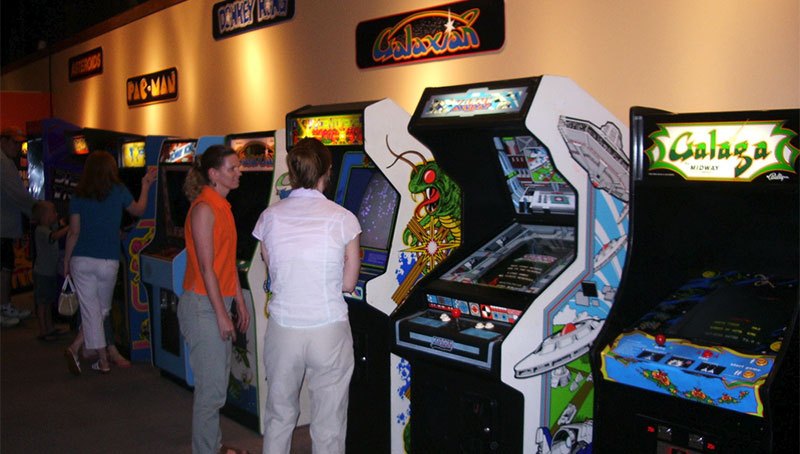
Arcade games earned their reputation by doing something almost nothing else in gaming manages: teaching players everything in under ten seconds while still being deep enough to master over years. The best ones reward persistence without demanding it. Anyone can have fun on a first playthrough, but the real magic shows up after hours of repetition.
Our team spent serious time breaking down what separates genuine legends from forgotten filler. We also drew on our research into what actually makes a video game a classic to sharpen our thinking here. The short answer is longevity, influence, and replay value — and every game on this list has all three in abundance.
Contents
Casual Picks vs. Hardcore Classics
Not every classic arcade game is built the same. Some welcome newcomers with open arms. Others punish the unprepared immediately. Knowing which category a game falls into saves a lot of frustration — and a lot of quarters.
Games Anyone Can Pick Up Immediately
These are the titles that most people gravitate toward first. The controls are simple, the objective is obvious, and the fun starts within seconds.
- Pac-Man — Eat dots, avoid ghosts. One joystick, zero confusion. The gold standard of accessible design.
- Space Invaders — Move left and right, shoot upward. Iconic pacing that hooks players almost involuntarily.
- Frogger — Navigate traffic and rivers. Every generation understands it immediately.
- Centipede — Trackball control with simple shooting mechanics and a forgiving early difficulty curve.
- Turtles in Time — Beat-'em-up action with beloved characters and co-op play that holds up remarkably well.
These games built the arcade industry. Our team considers them essential starting points for anyone assembling a classic collection or setting up a shared game space.
Our team's tip: for family-friendly arcade setups, Pac-Man and Frogger get the most consistent play from the widest age range — most people find them irresistible regardless of gaming experience.
Titles With a Serious Skill Ceiling
These games are legendary precisely because mastering them takes real commitment. Casual play is possible — but reaching high-score territory demands deep study.
- Street Fighter II — The foundational competitive fighting game. Frame data, combo execution, and matchup knowledge separate good players from great ones.
- Donkey Kong — Deceptively simple to start, brutally difficult to master. Still the subject of active competitive play among dedicated players worldwide.
- Robotron: 2084 — Twin-stick chaos with overwhelming enemy counts at high levels. One of the hardest games ever put into a cabinet.
- 1942 — A scrolling shooter that requires pattern memorization for survival past the early stages.
Our experience with these titles makes one thing clear: the skill ceiling is exactly what keeps serious players coming back. There is always another level to reach, always a record worth chasing.
The Best Arcade Games of All Time: Our Full Breakdown
When our team talks about the best arcade games of all time, we mean the ones that defined the medium, influenced everything that came after them, and still hold up without apology. This list is not arbitrary. It is built on historical impact, design quality, and replay durability.
Our Top Picks
Here are the games our team ranks highest, with brief notes on why each one earned its spot:
- Pac-Man — The most recognized arcade game ever made. Perfect loop design, iconic characters, and a difficulty curve that ramps naturally without overwhelming newcomers.
- Donkey Kong — Introduced narrative structure to arcade gaming. Still competed at the highest level by a global community of players.
- Street Fighter II — Created the competitive fighting game genre. Everything in that space traces directly back to this cabinet.
- Galaga — Refined the space shooter formula and added enemy formation patterns that gave the genre genuine depth.
- Mortal Kombat — Brutal, cinematic, and controversial in the best way. Changed conversations about violence in gaming permanently.
- Turtles in Time — The gold standard of beat-'em-up co-op. Still beloved by anyone who played it with a friend.
- Ms. Pac-Man — Many consider it a better game than the original. Faster mazes, smarter ghost AI, and more complex routing decisions.
- Asteroids — Vector graphics at their finest. Clean, precise, and infinitely replayable with almost no learning curve.
Side-by-Side Comparison
Our team put together this reference table to help anyone compare top titles across the dimensions that matter most when building a collection or choosing what to learn next.
| Game | Genre | Players | Difficulty | Replay Value | Cultural Impact |
|---|---|---|---|---|---|
| Pac-Man | Maze | 1 | Medium | Very High | Iconic |
| Donkey Kong | Platformer | 1 | High | Very High | Iconic |
| Street Fighter II | Fighting | 1–2 | Very High | Exceptional | Genre-Defining |
| Galaga | Shooter | 1 | Medium | High | Significant |
| Mortal Kombat | Fighting | 1–2 | High | High | Iconic |
| Turtles in Time | Beat-'em-up | 1–2 | Medium | High | Significant |
| Ms. Pac-Man | Maze | 1 | Medium-High | Very High | Iconic |
| Asteroids | Shooter | 1–2 | Medium | High | Significant |
According to Wikipedia's overview of arcade games, the golden age of arcade gaming ran roughly from the late 1970s through the mid-1980s — and nearly every game on our list falls within or was directly shaped by that era.
When the Cabinet Fights Back: Common Arcade Problems
Anyone who owns or operates an arcade cabinet eventually runs into technical issues. These machines are decades old. Problems are expected. The good news is that most common failures are straightforward to diagnose and fix without professional help.
Display and Screen Issues
- Dim or flickering display — Usually a failing capacitor on the monitor board. A recap (replacing aging capacitors) is the standard fix for this.
- No picture but sound works — Often a monitor chassis failure or a disconnected video signal cable. Check connections first before assuming the worst.
- Wrong colors or color bleeding — RGB cable issues, or a neck board problem on CRT monitors. Both are repairable with basic electronics knowledge.
- Screen burn-in — Common on original CRTs due to static game elements sitting in place for years. No complete fix exists, but modern screen saver solutions minimize further damage.
Pro insight: our team strongly recommends recapping any CRT monitor that is more than 20 years old before powering it on — old capacitors can fail catastrophically and take other components with them.
Joystick and Button Problems
- Sticky or unresponsive buttons — Clean or replace the microswitch underneath. Most arcade buttons use standard Sanwa or Happ switches that are cheap and widely available.
- Joystick drifting in one direction — Usually a worn restrictor plate or microswitches. Replacement parts cost very little and install in minutes.
- Controls test fine but fail in-game — Check the Molex connectors running from the control panel to the PCB. Loose connections cause phantom failures that look like software problems.
- Coin mechanism not registering — Clean the coin mech with compressed air and check the optical sensor for dust or debris. This is the most common fix.
Arcade Myths Our Team Keeps Hearing
Decades of nostalgia have created some persistent myths around classic arcade games. Our team hears these constantly, and most of them are simply not accurate.
Older Always Means Better
This assumption comes up constantly — that a game from the early days must be superior because it is older and more "authentic." Our team disagrees, and the evidence backs us up.
- Many early arcade games were technically groundbreaking but are genuinely not enjoyable by modern standards.
- Later-era games like Street Fighter II, Mortal Kombat, and Turtles in Time are objectively more polished than the majority of golden-age titles.
- Age contributes to nostalgia, not necessarily quality. Our team separates these two things entirely when evaluating a game's actual merit.
The best arcade games of all time span multiple decades. Dismissing anything made after the early 1980s is a mistake our team encounters too often in classic gaming circles.
Arcades Are Dead
This myth has been declared true repeatedly since the early 1990s. It keeps being wrong.
- Barcades (bar and arcade hybrids) have been growing steadily for over a decade across major cities.
- Home arcade setups — using original cabinets or multi-game systems — are more popular than at any point since the original arcade boom.
- Competitive play around games like Donkey Kong and Pac-Man maintains an active global community with real prize money.
- Retro gaming conventions regularly feature working arcade cabinets that draw massive crowds of players across all age groups.
Arcades evolved. They did not die. Our team's position is clear: the format is healthier right now than it has been in two decades.
Caring for an Arcade Cabinet the Right Way
Arcade cabinets are real investments — financially and emotionally. Proper care keeps them running for another forty years. Our team treats maintenance as non-negotiable for anyone serious about owning original hardware.
Cleaning and Basic Upkeep
Most people underestimate how much accumulated dust and grime affects long-term performance. Our team recommends a consistent, scheduled cleaning routine.
- Monthly: Wipe down the cabinet exterior with a damp cloth. Clean the control panel surface and buttons with isopropyl alcohol at 70% or lower.
- Every three months: Open the cabinet and blow out dust from the PCB, power supply, and monitor chassis with compressed air.
- Annually: Inspect all wiring harnesses for cracking or fraying. Check power supply capacitors. Clean the coin mechanism thoroughly.
Warning: never use household glass cleaner on arcade monitor screens — ammonia-based products damage anti-glare coatings and plastic bezels permanently. Stick to isopropyl alcohol at 70% or lower.
Long-Term Care
Long-term care goes well beyond cleaning. These practices keep a cabinet in collector-grade condition indefinitely.
- Store cabinets away from direct sunlight — UV exposure fades cabinet artwork and damages plastic components over time.
- Maintain stable room temperature and humidity. Excessive moisture causes PCB corrosion. Our team targets 40–60% relative humidity for any storage space.
- Keep original boards and parts even when upgrading to a multi-game setup. Original hardware holds real collector value.
- Document every repair — a paper trail increases resale value and helps future owners understand the machine's history.
For anyone building out a dedicated game room around these classics, our guide to setting up the perfect family game room covers environmental factors and layout decisions that directly affect cabinet longevity.
Games That Proved Their Staying Power
Some arcade games had their moment and faded quietly into storage units. The best arcade games of all time did the opposite — they became more relevant over time. Our team finds this the most compelling argument for their greatness: the market kept voting for them, decade after decade.
Modern Venues Still Running These
Walking into any barcade or retro gaming venue today reveals the same titles appearing over and over. There is a reason operators keep choosing them.
- Pac-Man and Ms. Pac-Man — Universal crowd-pleasers. Operators keep them because they earn consistently and attract players who have never touched an arcade cabinet before.
- Street Fighter II — Still draws competitive play at modern events. Informal tournaments break out spontaneously wherever a working cabinet exists.
- Mortal Kombat — Nostalgia-driven but genuinely competitive. Always earns a crowd the moment someone starts playing seriously.
- Galaga — A staple of any classic lineup. Players who grew up with it keep returning, and new players discover it easily.
The staying power of these titles at real venues is our team's strongest argument for their place on any definitive list. Every quarter inserted is a vote cast.
Home Arcade Setups
Home arcade setups have become one of the most satisfying ways to experience these games. Our team has seen remarkable collections built around these exact titles.
- Multi-game boards — like the classic 60-in-1 or full MAME setups — let collectors access dozens of titles in a single cabinet footprint.
- Dedicated original cabinets for Pac-Man or Donkey Kong are specific collector goals that have proven to be smart long-term holds in terms of value.
- Countertop bartop units bring authentic arcade controls to smaller spaces without sacrificing the physical gameplay feel that home consoles cannot replicate.
- Raspberry Pi-based builds have made assembling a fully functional arcade cabinet accessible to anyone with basic technical skills and a weekend to spare.
Frequently Asked Questions
What is the single best arcade game of all time?
Our team's pick is Pac-Man. It has the widest recognition, the most consistent engagement across all demographics, and a design so tight it has never needed improvement. That said, Street Fighter II and Donkey Kong are equally defensible choices depending on what someone values most — competition, depth, or cultural footprint.
Are original arcade cabinets worth buying?
Our team says yes, when the condition is right and the price reflects it honestly. Original cabinets for titles like Pac-Man, Galaga, and Donkey Kong have held their value reliably. Most collectors report that playing on original hardware is a meaningfully different experience than emulation — and that difference is the whole point.
What makes an arcade game a classic?
Longevity, cultural influence, and replay value are the three factors our team weighs most heavily. A game earns classic status when it is still being actively played — not just remembered — decades after its release. Games that inspired entire genres get additional weight in that evaluation.
Is MAME a good way to play classic arcade games?
MAME (Multiple Arcade Machine Emulator) is the most accurate emulation option available, and our team uses it regularly for research and testing. For most people, it is the most practical way to access a wide library of classics without owning multiple physical cabinets. Original hardware still provides a different tactile and visual experience, especially for games with unique control schemes.
What arcade games work best for home setups?
Our team recommends starting with games that have broad appeal and standard joystick-and-button controls. Pac-Man, Ms. Pac-Man, Galaga, and Frogger all work exceptionally well. For fighting game fans, Street Fighter II on a quality arcade stick is our top recommendation without question.
How much does a classic arcade cabinet typically cost?
Prices vary significantly by title and condition. Common titles like Pac-Man or Centipede in working condition typically range from a few hundred to over a thousand dollars. More sought-after titles like Donkey Kong or Mortal Kombat command higher prices. Our team always recommends buying locally when possible so the cabinet can be inspected and tested before any money changes hands.
Why do people still play arcade games when home consoles are so advanced?
Our team's honest answer: the experience is fundamentally different. The physical cabinet, the tactile controls, the social atmosphere of standing around a screen together — none of that translates to a couch and a wireless controller. The best arcade games of all time were designed for a specific environment, and that environment still delivers something home gaming genuinely cannot replicate.
Final Thoughts
The best arcade games of all time are not a mystery — Pac-Man, Donkey Kong, Street Fighter II, Galaga, and a handful of others earned their reputations the hard way, one quarter at a time, over decades of continuous play. Our team's recommendation is simple: pick one title from this list, find a working cabinet or a solid emulation setup, and commit to actually mastering it. The depth hiding inside these deceptively simple games is the whole reward, and most people who go that route end up more hooked on classic arcade gaming than they ever expected.


About Mike Jones
Mike Jones grew up in the golden age of arcade and home gaming — a childhood shaped by Atari classics like Pitfall, Frogger, and Kaboom that gave him a lifelong appreciation for games of all kinds. These days he covers the full breadth of tabletop and family gaming: board games, card games, yard games, table games, and game room setup, with a particular focus on finding the games that bring different groups together. At GamingWeekender, he covers game reviews, buying guides, and recommendations for families, friends, and hobbyists who take their leisure seriously.
You can get FREE Gifts. Or latest Free phones here.
Disable Ad block to reveal all the info. Once done, hit a button below