Foosball has been a staple of bars, rec rooms, and family basements for over 80 years — and according to the Table Football Wikipedia page, an estimated 160,000 people compete in organized foosball tournaments across North America every year. That number keeps climbing as game rooms make a serious comeback in 2026. Whether you're setting up a dedicated game den or just want something fun for family nights, picking the right foosball table makes all the difference between a purchase you love for a decade and one collecting dust in a corner.

The problem is that the market is flooded with options at every price point — from wobbly $150 entry-level tables to rock-solid USA-made competition rigs pushing $1,000 and beyond. Cheap tables feel flimsy after a few months of hard play. Overspending on a tournament-grade table when you just want something for casual Friday nights doesn't make sense either. You need to know what you're actually getting for your money. That's exactly what this guide breaks down. We've evaluated seven of the top foosball tables available right now and matched each one to the right type of buyer.
If you love game room setups in general, our guides to the best air hockey tables and best bumper pool tables are worth checking out too — together they cover most of what you'd want in a serious game room. But right now, let's talk foosball. Here are the best foosball tables for the money in 2026, tested and ranked across build quality, playability, value, and long-term durability.
Contents
- Our Top Picks for 2026
- In-Depth Reviews
- Tornado Tournament 3000 — Best for Serious Competitors
- Garlando G-500 — Best Safety-Focused Pick
- KICK Triumph 55" — Best Mid-Range Value
- GoSports 54 Inch — Best for Modern Home Décor
- Shelti Pro Foos II — Best USA-Made Runner-Up
- Fat Cat Rebel 4.5 Foot — Best Budget Pick
- Hathaway Primo 56-In — Best for Family Game Rooms
- What to Look For When Buying
- Frequently Asked Questions
- Key Takeaways
Our Top Picks for 2026
- #PreviewProductRating
- Bestseller No. 1
 Rating:

- Bestseller No. 2
 Rating:
 - Bestseller No. 3
 Rating:
 - Bestseller No. 4
 Rating:
 - Bestseller No. 5
 Rating:
 - Bestseller No. 6
 Rating:
 - Bestseller No. 7
 Rating:
In-Depth Reviews
1. Tornado Tournament 3000 Foosball Table — Best for Serious Competitors
If you're serious about foosball — not just weekend-casual but actually want to play the way the pros do — the Tornado Tournament 3000 is the gold standard. This table is made in the USA and built to commercial grade, meaning it's the same type of table you'd find in a bar or tournament hall, just set up in your home. At 355 pounds, it's not something you're going to move around casually, but that weight is a feature: zero wobble, zero flex during intense play. The thick split cabinet construction keeps the playing surface perfectly flat regardless of how hard the game gets.
The 3-goalie setup paired with Tornado's patented counterbalanced players (players that stay in place when you let go of the rod) gives you a level of ball control that cheaper tables simply can't match. The 8-sided molded handles with a non-slip surface feel professional-grade the moment you grip them. Chrome-plated hollow steel rods are heat treated for strength — these aren't the thin flimsy rods that bend and stick after a year of use. Everything about this table is engineered for longevity and performance. It ships with three precision high-visibility balls, silicone lubricant, a bearing wrench, pin punch, and a rulebook, so you're ready to play right out of the box.
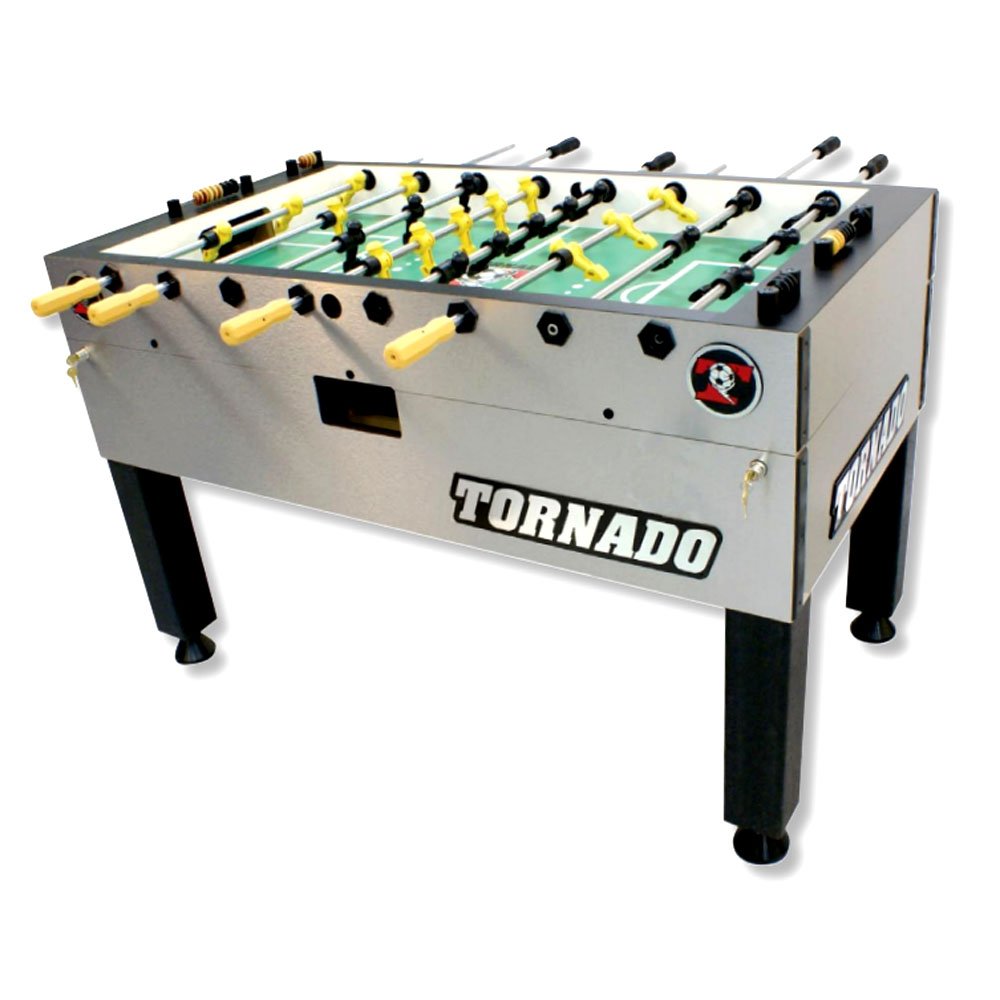
The price is significant — this is an investment piece. But if you're comparing this to other "premium" tables in this guide, the Tornado T3000 is in its own category. The abacus scoring unit keeps things clean and manual, and the leg levelers mean you can set it perfectly even on any floor surface. If you want the best foosball table money can buy for home use in 2026, this is it. No debate.
Pros:
- Commercial-grade build made in the USA — built to last decades
- Counterbalanced players with patented foot design for precise ball control
- Heat-treated chrome steel rods that don't bend or wear out
- Includes accessories: balls, silicone, wrench, pin punch, rulebook
Cons:
- 355 pounds — moving it is a two-person job at minimum
- Premium price point that's overkill for casual players
2. Garlando G-500 Indoor Foosball Table — Best Safety-Focused Pick
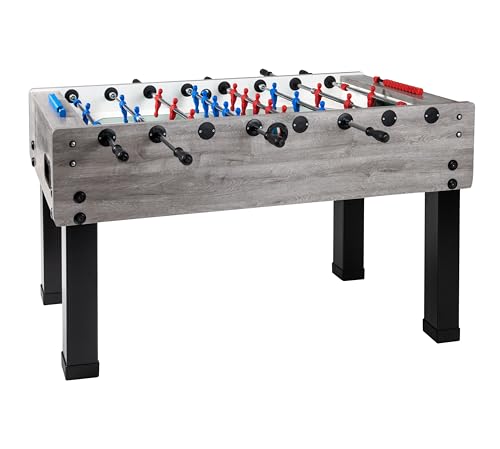
Garlando is a European brand with serious foosball credibility — they've been manufacturing tables since 1954 and supply equipment to international competitions. The G-500 brings that heritage into a home-friendly package. The standout feature here is the telescoping rods, which retract into the cabinet instead of poking out the other side. If you have kids running around the game room, this matters — those protruding rods on standard tables are a genuine hazard. With the G-500, that safety concern is completely eliminated.
The integrated mid-field ball drop is a nice quality-of-life touch, keeping the game moving without having to reach awkwardly to reintroduce the ball. Steel roller bearings ensure the rods slide smoothly under pressure, and the build quality reflects Garlando's manufacturing standards — solid, precise, and built to European safety norms. The grey finish looks sharp and modern, fitting cleanly into a home game room aesthetic without looking like something dragged in from a dive bar.
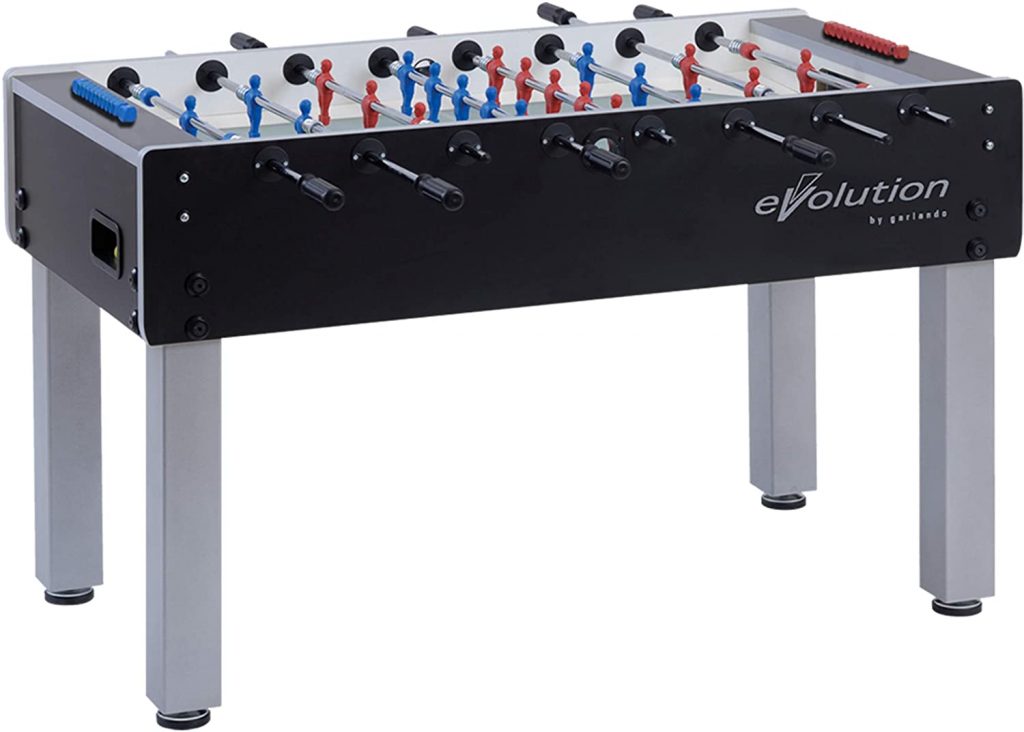
If you have children in the house and want a table with legitimate pedigree that doesn't compromise on safety, the Garlando G-500 is your answer. The telescoping rod system alone sets it apart from most competitors at this price range, and the European build quality gives you confidence that this table will hold up through years of family play.
Pros:
- Telescoping rods eliminate the protruding-rod safety hazard — essential for households with kids
- Steel roller bearings for smooth, consistent rod action
- Integrated mid-field ball drop keeps the game flowing
- European manufacturing with a long competition pedigree
Cons:
- Telescoping rods can feel slightly different from standard rods for players used to traditional setups
- Higher price point compared to similarly-sized domestic alternatives
3. KICK Triumph 55" Foosball Table — Best Mid-Range Value
The KICK Triumph 55" hits a genuinely impressive sweet spot between affordability and playability. At 55 inches long with a 30-inch width and 36-inch height, this is a full regulation-style table that won't leave adult players feeling cramped. What makes it especially interesting is that it ships with two complete player sets — counterbalanced men and uniformed men — giving you flexibility in how you configure your game. Most tables at this price point give you one or the other. Getting both is a real value-add.
The build leans toward elegant simplicity. There are no superfluous design elements here — just a clean, functional table focused on delivering a good game. The cabinet is solid, the rods move consistently, and the playing surface provides a good ball roll. If you're stepping up from a budget table or buying your first real foosball table, the Triumph 55" delivers the kind of gameplay that makes you want to play again tomorrow. It fits comfortably into a dedicated game room or a large living room without dominating the space.

The dual-player-set inclusion is the clincher here. You can run uniformed players for official-looking games with guests, then switch to counterbalanced men when you're practicing shots and want more control. For a mid-range table, that kind of versatility is hard to beat in 2026.
Pros:
- Includes both counterbalanced and uniformed player sets — rare at this price
- Full 55-inch regulation size comfortable for adult play
- Clean, elegant design that suits most room aesthetics
Cons:
- Build materials don't quite match the premium tables above it
- Assembly instructions could be more detailed according to buyer feedback
4. GoSports 54 Inch Full Size Foosball Table (Oak Finish) — Best for Modern Home Décor
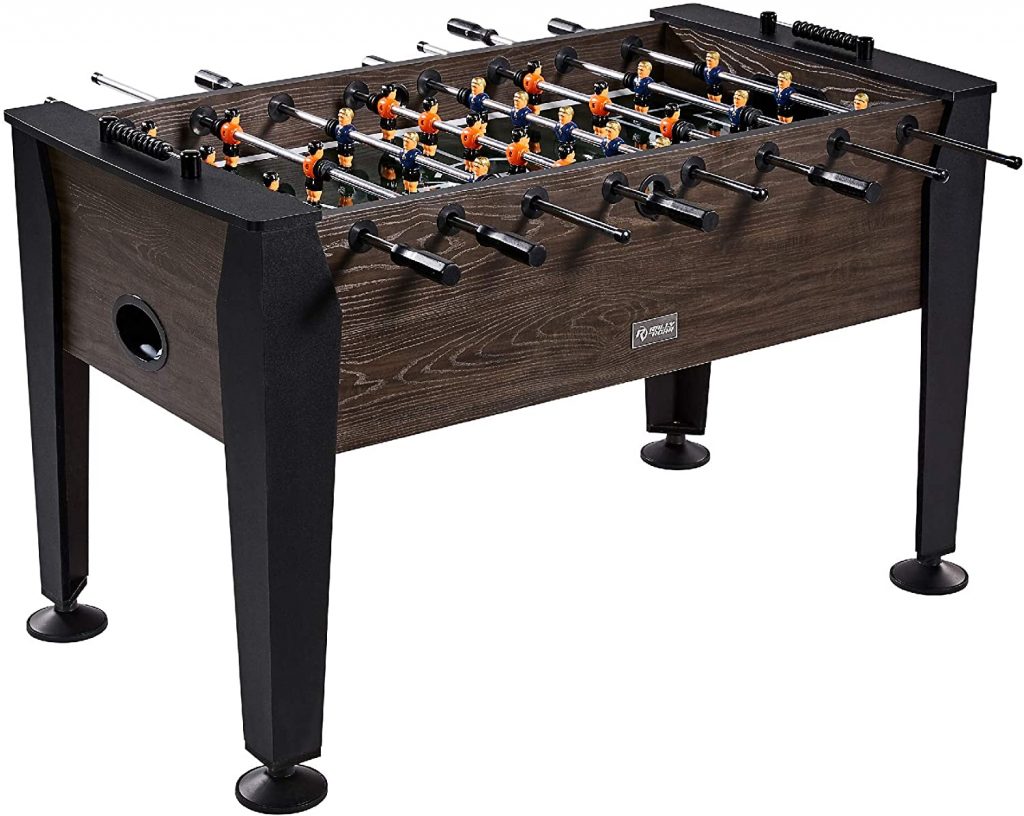
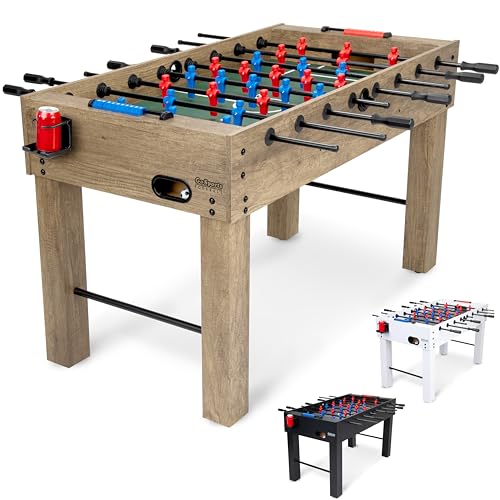
Most foosball tables look exactly like what they are — big, boxy game furniture designed for function over form. The GoSports 54 Inch Oak Finish breaks that mold. This table is genuinely attractive. The modern oak finish with vibrant red and blue players looks polished enough to fit in a home office or upscale rec room without looking out of place. At 54 x 29 x 34.5 inches, it's full-sized for competitive adult play while staying compact enough for tighter spaces.
GoSports nailed the assembly experience here — illustrated step-by-step instructions paired with a video guide make setup genuinely easy, even if you're not mechanically inclined. The low-friction playing field keeps the ball moving at the right pace, and the included 4 balls plus 2 cup holders (yes, cup holders are a win) make it immediately game-ready. This table also earns points for stability — no wobble or shifting mid-game, which matters more than people realize until they've played on a table that does wobble.
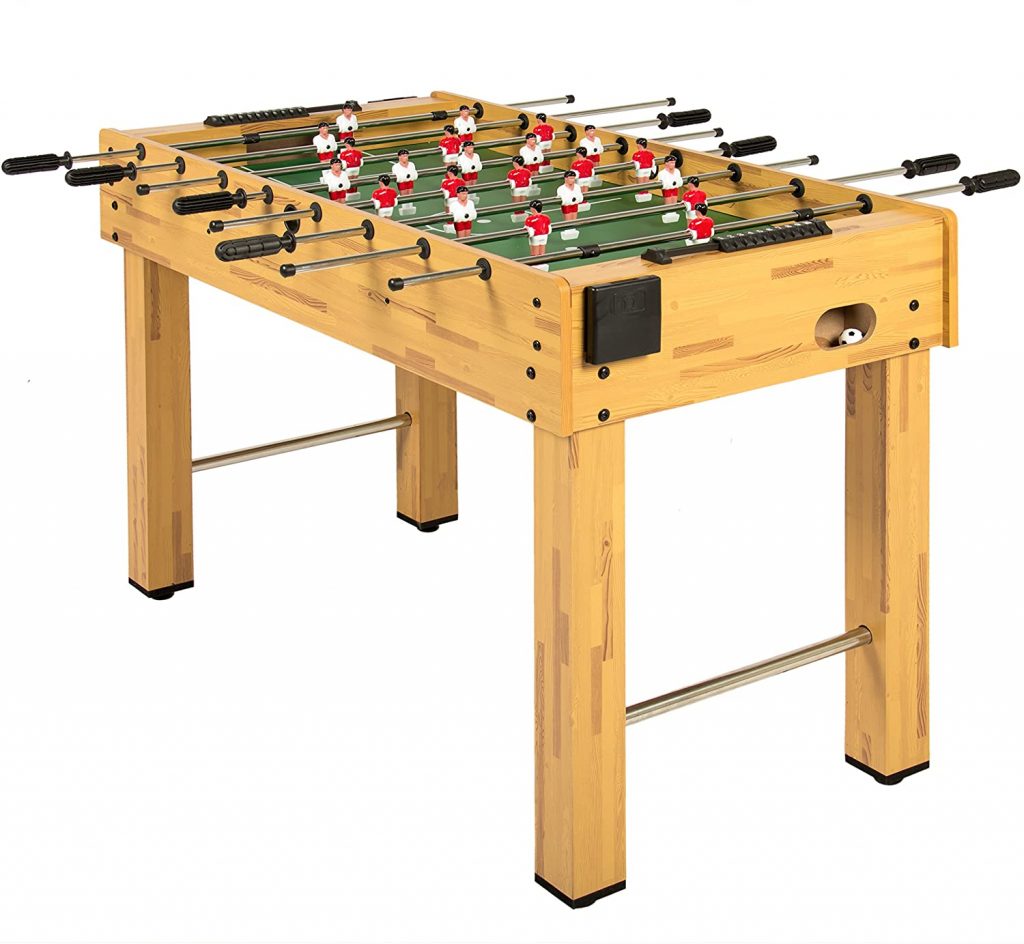
If you care about your game room looking as good as it plays, the GoSports 54 Inch Oak Finish is the table to buy. You get everything you need included, the setup is painless, and the end result looks like something from a furniture catalog rather than a sporting goods warehouse.
Pros:
- Modern oak finish looks great in home offices, game rooms, and upscale rec spaces
- Includes 4 balls and 2 cup holders right out of the box
- Clear illustrated + video assembly guide makes setup easy
- Low-friction playing surface for responsive ball movement
Cons:
- Not quite at the performance level of competition-grade tables
- Cup holders, while fun, can occasionally get bumped during intense play
5. Shelti Pro Foos II — Best USA-Made Runner-Up
Shelti is the other name that serious foosball players respect alongside Tornado. The Pro Foos II is American-made, regulation-size, and built to commercial quality standards — meaning this table is designed to survive the kind of high-volume, hard-hitting play you'd find in a pub or tournament venue. If you're looking at the Tornado T3000 and want a worthy alternative with a similar pedigree, the Shelti is it.
What distinguishes the Pro Foos II technically is its engineering: precisely sized and angled player feet for accurate ball control, unique lock-on-men compression bumpers that keep players exactly where you put them, and counterbalanced men made from high-strength automotive-grade ABS plastic. That material choice matters — cheaper tables use brittle plastic men that crack and chip. Automotive-grade ABS doesn't. The counterbalancing means players park at any position within a 360-degree rotation without flopping down into the lane and deflecting random shots.
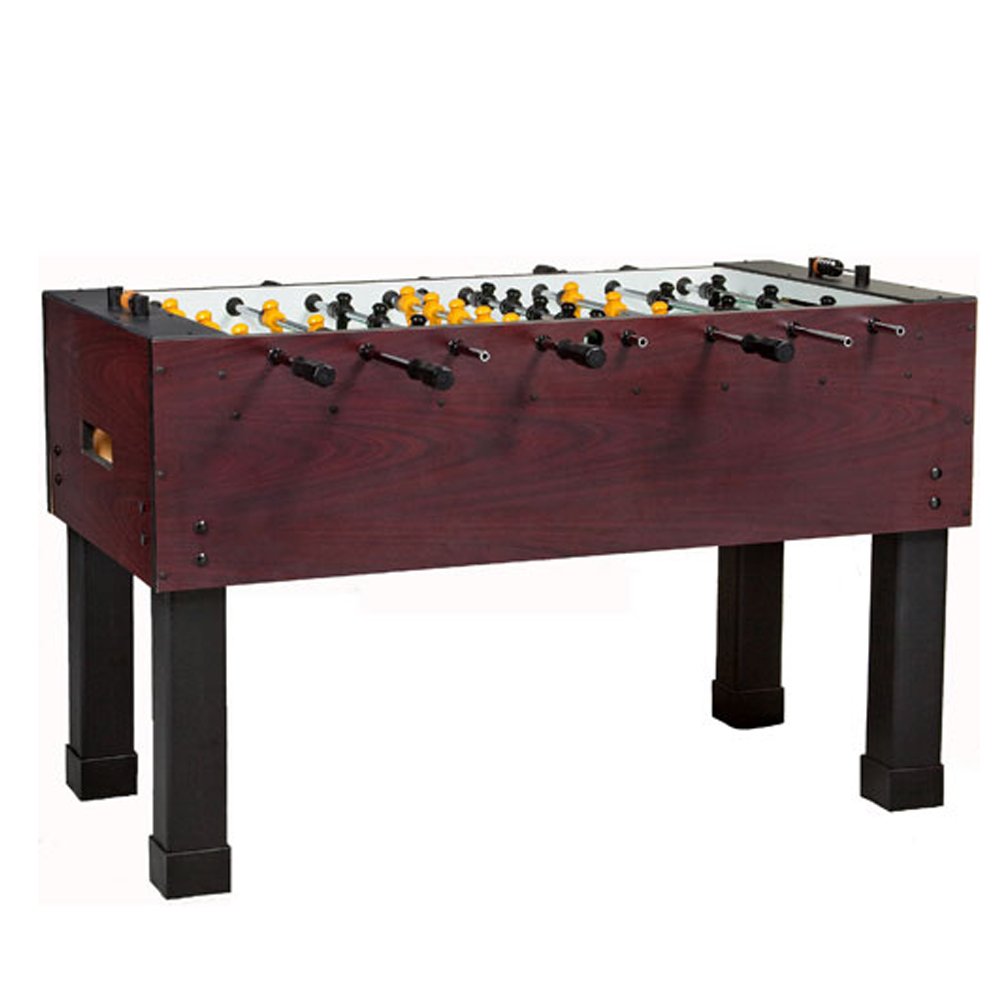
The Shelti Pro Foos II is a serious table for serious players. It's not a budget pick, and it's not trying to win points on aesthetics. It's built to play exceptionally well for a very long time. If you plan to have regular competitive games in your home and want something that won't degrade over years of hard use, this belongs on your shortlist right next to the Tornado.
Pros:
- Made in the USA to commercial grade — built for high-volume competitive play
- Automotive-grade ABS men with compression bumpers that lock in place
- Precisely engineered player feet for superior ball control
- Regulation size for serious home play
Cons:
- Premium pricing puts it out of reach for casual buyers
- Heavier and harder to move once installed
6. Fat Cat Rebel 4.5 Foot Foosball Table — Best Budget Pick
Not everyone needs a 355-pound tournament table. If you're furnishing a basement, a dorm common room, or buying a first foosball table for a family that's just getting into it, the Fat Cat Rebel is the right call. It's a 4.5-foot adult-size table — full size enough for real competitive play between 2 to 4 people — without the premium price tag. The blue playing field looks sharp and gives the table a distinct, modern identity compared to the standard green-field look.
The quick snap player rod system is the feature that earns it real points. You don't need tools to get this table assembled. The rods snap into place cleanly, and the whole setup process is designed to be finished in under an hour. That's meaningful when you're dealing with a table that arrives in multiple boxes. The half-inch solid wooden walls with MDF cabinet construction feel sturdy for this price point — no flex or creaking during play, which is a common complaint on cheaper tables. Fat Cat backs the build with steel reinforcements where it counts, giving you a table that handles real competitive matches without embarrassing you.
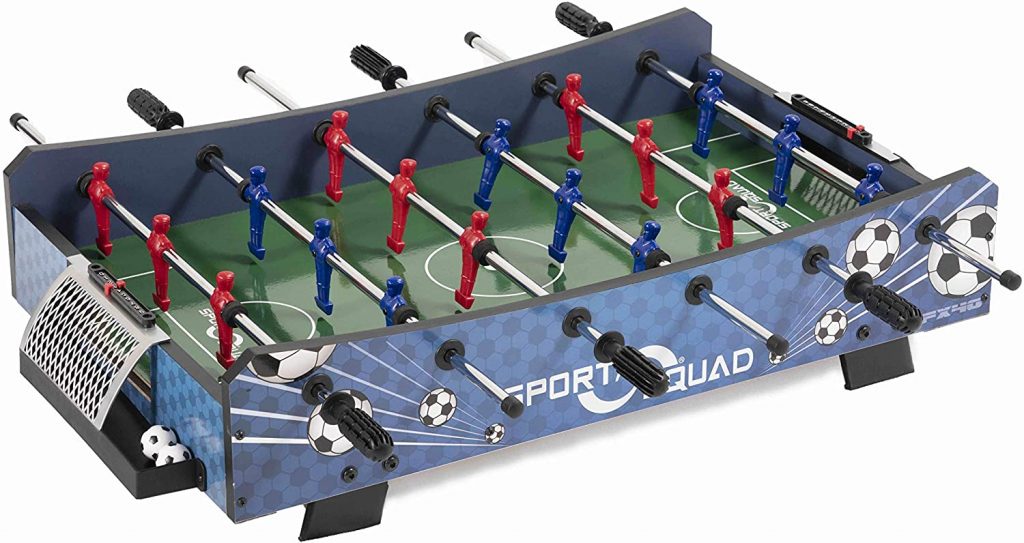
The Fat Cat Rebel proves you don't need to spend a fortune to have genuine fun. It's not going to compete with Tornado or Shelti at a tournament level — but it will give your family or friend group dozens of entertaining, competitive sessions. For a first foosball table or a casual game room addition, this is your pick.
Pros:
- Tool-free quick snap rod assembly gets you playing fast
- Solid MDF cabinet with steel reinforcements — better build than most in this price range
- Distinctive blue playing field looks great in a game room
- Accommodates 2 to 4 players comfortably
Cons:
- 4.5 feet is slightly shorter than full regulation size — competitive purists will notice
- Not designed for intense daily high-volume play the way commercial tables are
7. Hathaway Primo 56-In Foosball Table — Best for Family Game Rooms
The Hathaway Primo 56-In hits all the family-friendly checkboxes without cutting corners on build quality. At 56.5 x 29 x 34 inches, it's full regulation size — big enough for adult players, accessible enough for younger family members to enjoy. The wood grain melamine finish gives it a warm, attractive look that fits naturally into a dedicated game room or finished basement. It's the kind of table that looks intentional in your space rather than like a sporting goods store threw up in your living room.
The counterbalanced ABS players with a dimpled surface provide solid ball control — the dimpling creates better grip between the player foot and ball, which means more precise passing and shooting compared to flat-footed players. E-Z Spin bearings keep the rods moving smoothly even during fast, aggressive play. Easy-grip handles reduce fatigue during long sessions, which matters more than you'd think when the whole family is competing for bragging rights. Leg levelers let you stabilize the table on any floor surface, and the reinforced cross-support beams eliminate flex and wobble during hard shots.
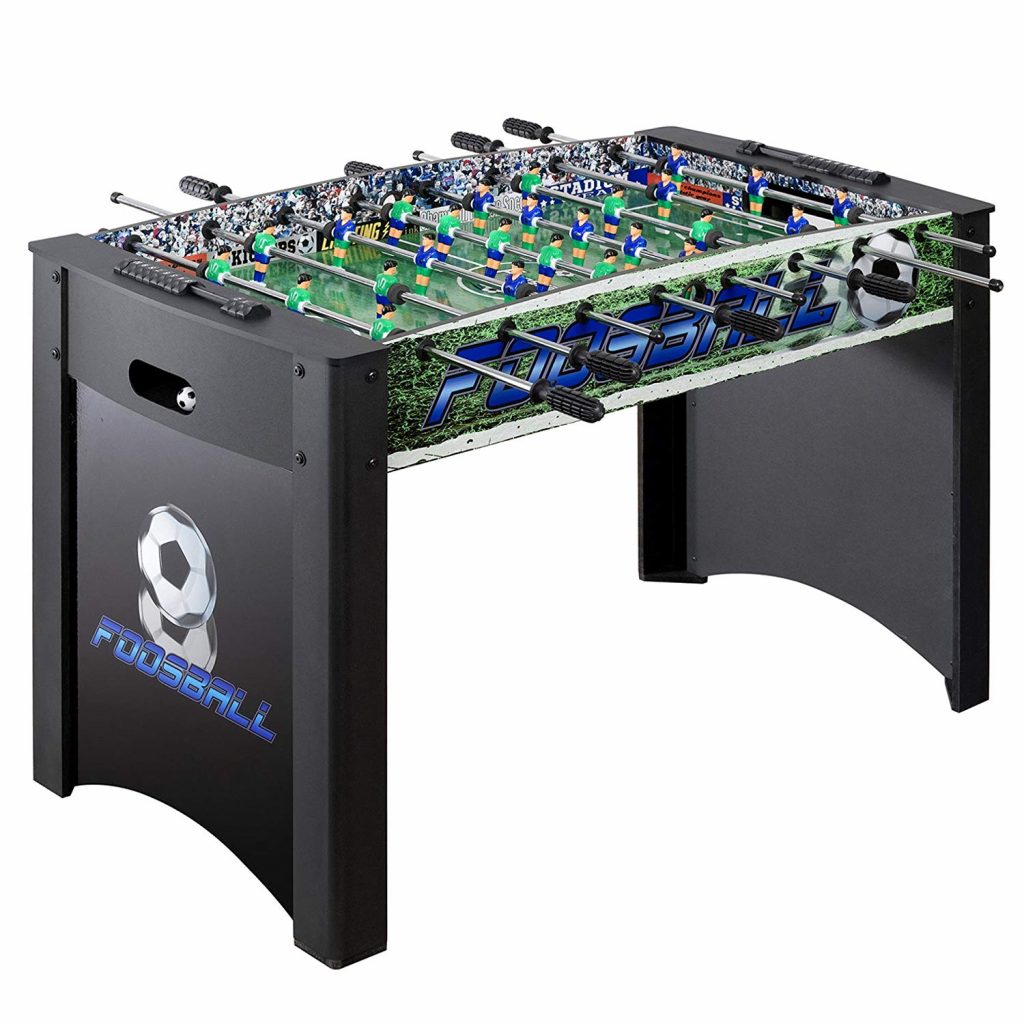
The package comes complete with wood handles, analog scoring units, and two 36mm foosballs — everything you need to start playing immediately. If you're building out a family game room in 2026 and want a table that satisfies adults and kids alike without requiring a commercial-grade budget, the Hathaway Primo 56-In is your table. It's also worth pairing with other game room staples — check out our best tabletop arcade guide if you want to round out the room.
Pros:
- Attractive wood grain finish looks polished in any game room setting
- Dimpled counterbalanced ABS players deliver real ball control
- E-Z Spin bearings and easy-grip handles for smooth, fatigue-free play
- Comes complete with scoring units and balls — ready to play immediately
Cons:
- MDF construction won't survive the same abuse as commercial steel-reinforced tables
- Some buyers report the assembly process takes longer than expected
What to Look For When Buying a Foosball Table
Before you hand over your credit card, there are a few key factors that separate a great foosball table purchase from a regrettable one. Here's what actually matters when you're comparing options across the range of tables covered in this guide — and in the broader table games category.
Build Quality and Cabinet Construction
The cabinet (the outer box of the table) determines how long your table lasts and how stable it feels during play. Entry-level tables use MDF (medium-density fiberboard) with varying degrees of reinforcement. Mid-range tables add steel cross-supports and thicker walls. Commercial tables like the Tornado T3000 and Shelti Pro Foos II use thick split cabinet designs engineered to survive years of daily high-impact use. For casual family play, a solid MDF cabinet with steel reinforcement is perfectly adequate. If you're planning serious, frequent competitive sessions, invest in the heavier commercial construction — you'll feel the difference immediately.
Rods: Solid vs. Hollow, Standard vs. Telescoping
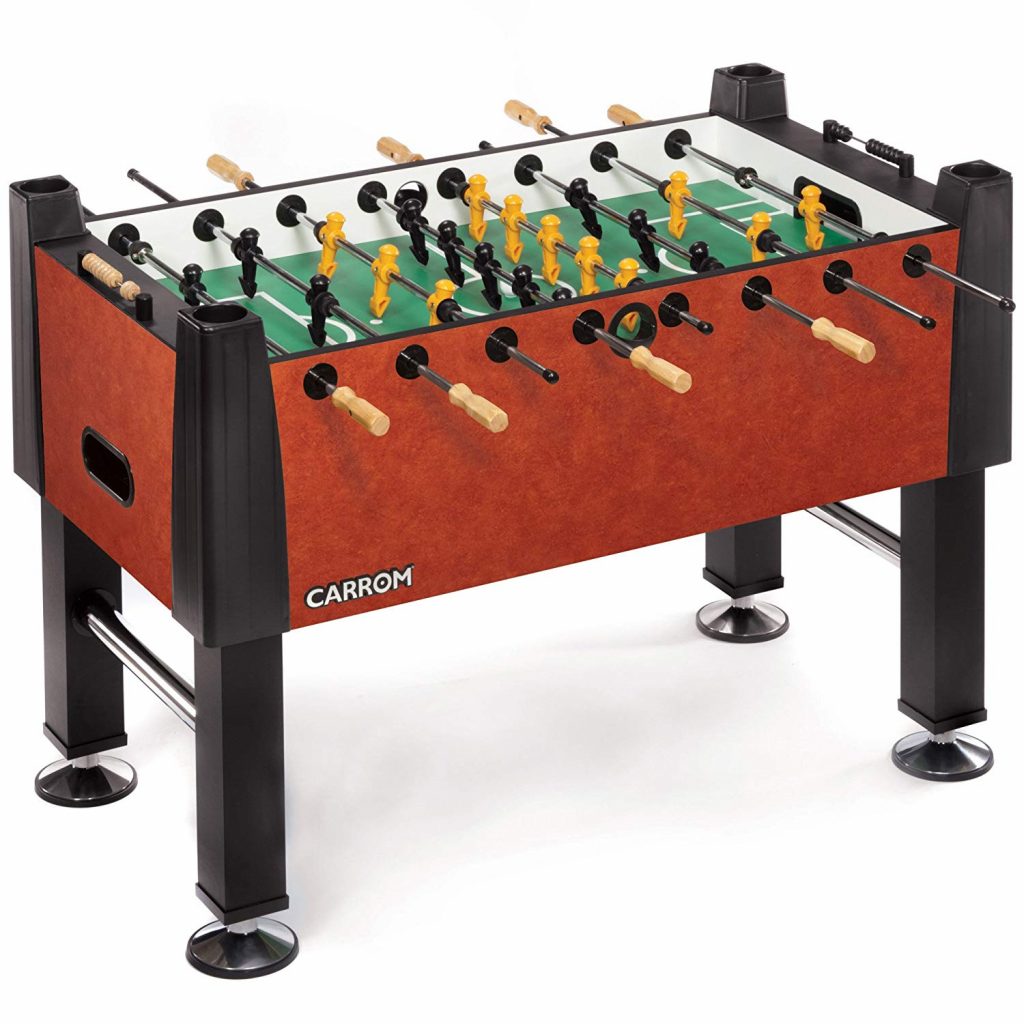
Rod quality is the single most important gameplay factor. Hollow steel rods are significantly lighter than solid rods and reduce wrist fatigue during long sessions — the Tornado T3000 uses this approach. Telescoping rods (like on the Garlando G-500) retract into the cabinet so nothing protrudes on either side, which is a genuine safety upgrade in homes with children. Standard rods protrude out the other side — that's fine for adults-only spaces but worth considering if kids will be playing. Whatever style you choose, rods should be chrome-plated or otherwise protected against rust and corrosion.
Counterbalanced Players vs. Standard Players
Counterbalanced players (also called balanced men) are weighted so they stay in whatever position you leave them in — parallel to the field, perpendicular, anywhere in between. Standard players flop down into the lane under gravity, which can deflect the ball unpredictably. For serious play, counterbalanced players are a requirement. For casual family play, standard players are fine and actually make the game slightly more chaotic and fun. Most mid-to-high-range tables in 2026 default to counterbalanced players, but always confirm before buying.
Size, Weight, and Room Planning
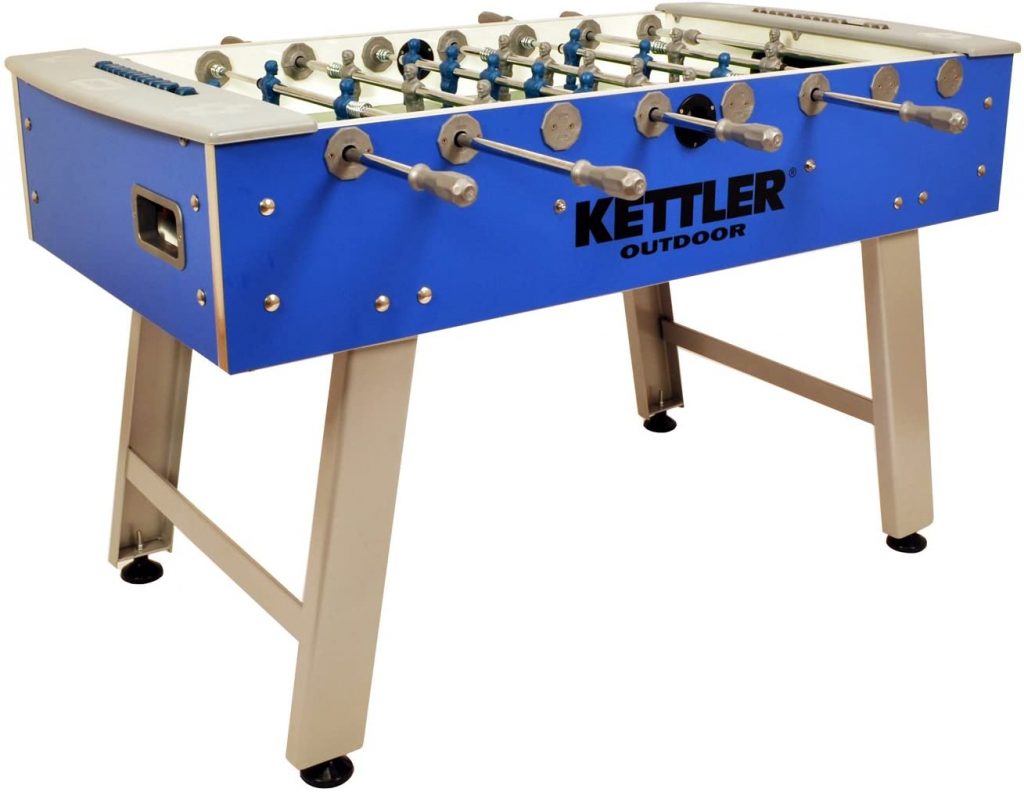
Regulation foosball tables are 56 inches long — most of the tables in this guide hit that mark. But the actual space you need around the table for comfortable play is considerably larger. Add at least 3 feet on each end for rod clearance and player movement. A full-size foosball table in a room where you can't step back comfortably is a frustrating experience. Measure your space before you buy. Weight is also a real consideration — the Tornado T3000 at 355 pounds is essentially permanent once placed. Mid-range tables in the 150–200 pound range are manageable with two people. The Fat Cat Rebel and Hathaway Primo are lighter still, making them easier to reposition if you rearrange the room.
Frequently Asked Questions
What is the standard size of a regulation foosball table?
A regulation foosball table is 56 inches long, 30 inches wide, and 36 inches tall. Most full-size home tables match these dimensions closely — including the Tornado T3000, Shelti Pro Foos II, Garlando G-500, KICK Triumph 55", and Hathaway Primo reviewed here. The GoSports and Fat Cat Rebel are slightly compact at 54 and 4.5 feet respectively, but both still play as full-size tables for adult use.
How much should I spend on a foosball table?
Budget roughly $300–$500 for a solid casual home table that will last several years of regular family use. If you want a table that will survive serious competitive play and heavy daily sessions, expect to spend $800–$1,500 or more for USA-made commercial-grade options like the Tornado T3000 or Shelti Pro Foos II. The Fat Cat Rebel sits below $300 and is the right call if you're testing whether your household will actually use the table before committing to more.
Are telescoping rod tables better for safety?
Yes, if you have children in the room. Standard rods protrude 12 or more inches out the side of the table at waist-to-chest height for a child — a genuine injury risk. Telescoping rods retract fully into the cabinet when the rod is pushed to one side, eliminating the protrusion entirely. The Garlando G-500 is the best option in this guide for households where that safety concern applies.
What does "counterbalanced" mean on foosball players?
Counterbalanced players are weighted internally so they remain in whatever position you leave them in rather than flopping downward under gravity. This is critical for competitive play because non-counterbalanced players can accidentally deflect the ball when they fall into the playing lane. All serious competition tables and most mid-to-high-range home tables feature counterbalanced men. The Tornado T3000, Shelti Pro Foos II, Hathaway Primo, and KICK Triumph all include them.
Can you play foosball alone?
You can practice solo by controlling both sides of the table — many serious players use solo practice to develop ball control, passing speed, and shot accuracy. It's not the same as playing against an opponent, but it's genuinely useful. If solo gaming appeals to you more broadly, our list of the best solo board games is worth a look for game room variety beyond foosball.
How do I maintain a foosball table to make it last longer?
Regular maintenance keeps your table playing smoothly for years. Apply silicone lubricant (not WD-40, which attracts dirt) to the rods every few months to keep them sliding freely. Wipe down the playing surface with a dry cloth after sessions to remove dust and debris. Check and tighten any loose bolts or leg levelers periodically. Store replacement balls on hand — they wear down over time. The Tornado T3000 even ships with silicone lubricant included because proper rod maintenance is that important at the competition level.
Buy on Walmart
- Tornado Tournament 3000 Foosball Table - Made in The USA - C — Walmart Link
- Garlando G-500 Indoor Foosball Table (Grey) — Walmart Link
- KICK Triumph 55" Foosball Table — Walmart Link
- GoSports 54 Inch Full Size Foosball Table - Oak Finish - Inc — Walmart Link
- Shelti Pro Foos II: Commercial Grade, Regulation-Size Foosba — Walmart Link
- Fat Cat Rebel 4.5 Foot Foosball Table, Soccer Table Game wit — Walmart Link
- Hathaway Primo 56-In Foosball Table for Family Game Room - W — Walmart Link
Buy on eBay
- Tornado Tournament 3000 Foosball Table - Made in The USA - C — eBay Link
- Garlando G-500 Indoor Foosball Table (Grey) — eBay Link
- KICK Triumph 55" Foosball Table — eBay Link
- GoSports 54 Inch Full Size Foosball Table - Oak Finish - Inc — eBay Link
- Shelti Pro Foos II: Commercial Grade, Regulation-Size Foosba — eBay Link
- Fat Cat Rebel 4.5 Foot Foosball Table, Soccer Table Game wit — eBay Link
- Hathaway Primo 56-In Foosball Table for Family Game Room - W — eBay Link
Key Takeaways
- The Tornado Tournament 3000 is the definitive best foosball table for competitive players in 2026 — nothing at this level of build quality comes close for serious home use.
- If safety is your top priority and you have children in the household, the Garlando G-500's telescoping rods eliminate the protruding-rod hazard that standard tables present.
- For a balance of looks, value, and family-friendly playability, the GoSports 54 Inch Oak Finish and Hathaway Primo 56-In both deliver great game room setups without a commercial-grade budget.
- The Fat Cat Rebel is the smart entry point if you're buying your first foosball table — solid build, easy assembly, and low enough cost that you can upgrade later without regret.


About Mike Jones
Mike Jones grew up in the golden age of arcade and home gaming — a childhood shaped by Atari classics like Pitfall, Frogger, and Kaboom that gave him a lifelong appreciation for games of all kinds. These days he covers the full breadth of tabletop and family gaming: board games, card games, yard games, table games, and game room setup, with a particular focus on finding the games that bring different groups together. At GamingWeekender, he covers game reviews, buying guides, and recommendations for families, friends, and hobbyists who take their leisure seriously.
You can get FREE Gifts. Or latest Free phones here.
Disable Ad block to reveal all the info. Once done, hit a button below