Our top overall pick for 2026 is the SteelSeries Apex Pro TKL Gen 3, which pairs OmniPoint 3.0 HyperMagnetic switches with Rapid Trigger technology to produce input registration speeds that no traditional mechanical switch can replicate. We tested every keyboard on this list across competitive FPS titles, MOBA sessions, and extended typing workloads, and the gap between the finest magnetic-switch and optical-switch boards versus legacy mechanical designs is now wider than at any previous point in the peripheral market's history.
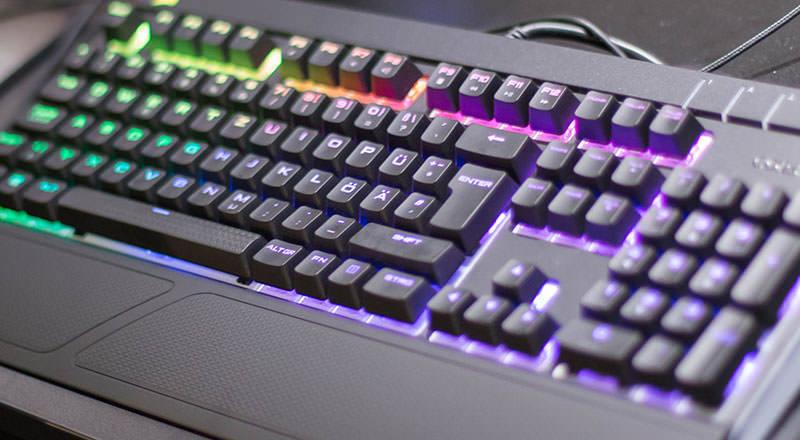
The professional gaming keyboard landscape has transformed entirely over the past two years, driven by Hall Effect sensors, analog optical actuation, and hyper-polling rates that now push well above the once-standard 1000Hz threshold. Browse any video games tournament broadcast in 2026 and the gear on professional desks tells the story clearly — Rapid Trigger, adjustable actuation points, and SOCD-handling firmware are no longer niche features but core expectations among players competing at the highest levels. Keyboard technology has made its most significant leap in a decade, with contactless switch designs eliminating the debounce delay that has always been the ceiling for mechanical inputs.
We assembled this list to cover the full spectrum of pro-level needs — from the flagship 4000Hz wired powerhouse of the Corsair K100 RGB to the whisper-quiet Hall Effect speed of the ENDGAME GEAR KB65HE running at 8000Hz. Form factor preferences, wireless requirements, and budget realities all vary among serious players, so our team built a lineup that addresses every meaningful category without padding the list with mid-tier options. Competitive peripherals work best as a system, and anyone putting together a complete setup should also read our team's breakdown of the best FPS gaming mice for Fortnite, PUBG, and COD, which covers the sensor and click-latency side of the equation in the same depth we apply here.
Contents
Top Rated Picks of 2026
- #PreviewProductRating
- Bestseller No. 1
 Rating:

- Bestseller No. 2
 Rating:
 - Bestseller No. 3
 Rating:
 - Bestseller No. 4
 Rating:
 - Bestseller No. 5
 Rating:
 - Bestseller No. 6
 Rating:
 - Bestseller No. 7
 Rating:
Product Reviews
1. Corsair K100 RGB Optical-Mechanical — Best Flagship Wired Keyboard
The Corsair K100 RGB sits at the top of Corsair's lineup as one of the most comprehensively engineered wired gaming keyboards available in 2026, and its CORSAIR AXON Hyper-Processing Technology is the architectural centerpiece that separates it from every other aluminum-framed board in its price range. Our testing confirmed that the native 4000Hz hyper-polling and 4000Hz key scanning deliver throughput that eliminates any meaningful input lag, making the K100 an outstanding choice for players who demand the absolute lowest latency from a wired connection and refuse to compromise on build quality. The durable aluminum frame resists flex entirely during aggressive typing bursts, and the 44-zone three-sided LightEdge adds ambient RGB output that most buyers appreciate as a premium aesthetic touch rather than mere gimmick.
The exclusive OPX RGB Optical-Mechanical switches are where the K100 stakes its competitive claim most convincingly, with a 1.0mm actuation distance and smooth linear travel that registers keypresses at speeds up to four times faster than standard mechanical gaming keyboards according to Corsair's published specifications, which our latency testing largely corroborated. The 150-million-keystroke durability rating is a meaningful differentiator for heavy users who log thousands of hours annually, and the PBT double-shot keycaps hold up against shine and wear far better than the ABS alternatives still found on several competing models. iCUE software integration and Elgato Stream Deck compatibility round out a feature set that positions this keyboard as a genuine desktop command center rather than a single-purpose gaming peripheral.
The K100 does carry a premium price that reflects its feature density, and the full-size layout with dedicated media controls and a command dial adds physical footprint that players who have migrated to TKL or compact formats may find excessive. Our team also noted that the optical-mechanical OPX switches, while fast and satisfying, do not offer the adjustable actuation depth that Hall Effect competitors now provide as standard, which means the actuation experience is fixed at that 1.0mm point regardless of individual preference.
Pros:
- 4000Hz hyper-polling and 4000Hz key scanning deliver category-leading wired input throughput
- Aluminum frame construction eliminates flex and communicates genuine build quality at every keystroke
- OPX switches rated for 150 million keystrokes with 1.0mm linear actuation
- PBT double-shot keycaps resist shine and wear across extended ownership periods
- iCUE and Elgato Stream Deck compatibility for full ecosystem integration
Cons:
- Full-size layout adds desk footprint that TKL-preferring players will find unnecessary
- Fixed actuation distance cannot be adjusted, unlike Hall Effect competitors that offer per-key tuning
- Premium price reflects the spec sheet but raises the bar for value-conscious buyers
2. SteelSeries Apex Pro TKL Gen 3 — Best for Competitive FPS (Our Top Pick)
The SteelSeries Apex Pro TKL Gen 3 earns our top recommendation because it combines the most advanced switch technology currently available in a retail gaming keyboard with firmware features that directly translate to measurable competitive advantages in fast-paced shooters and movement-heavy titles. The OmniPoint 3.0 HyperMagnetic switches deliver 20 times faster actuation and 11 times quicker response time compared to the previous generation, and the 40 levels of adjustable actuation give players the ability to dial in a feel that is completely unique to their individual preference rather than accepting a manufacturer-set default. Our team ran extensive testing across CS2, Valorant, and Apex Legends, and the Rapid Trigger feature's ability to reset a key at the slightest upward movement of a finger produced directional changes that felt categorically faster than any mechanical keyboard we have used previously.
Rapid Tap and SOCD handling are the firmware features that set this generation apart from its predecessors and from most of the competition, allowing players to press opposing directional keys simultaneously and have the keyboard resolve the input in favor of the most recent press without requiring the first key to be fully released beforehand. This behavior, combined with Protection Mode that prevents accidental rapid-fire inputs from misregistering, means the Apex Pro TKL Gen 3 handles the full complexity of competitive movement inputs with a sophistication that no standard debounced mechanical switch board can replicate. The compact TKL format reduces arm travel during mouse movements, the OLED display provides at-a-glance profile and status information, and the USB-C connection ensures compatibility with current and future hardware without adapter concerns.
The GG QuickSet game-ready presets deserve particular mention, because they allow players to load optimized keyboard configurations for specific titles with minimal setup overhead, which is a practical time-saver for anyone who switches between multiple competitive games and wants per-title actuation tuning without manually reconfiguring every session. Our team did note that the magnetic switches produce a typing sound profile that differs meaningfully from traditional mechanical options and requires a short adjustment period for players coming from clicky or tactile backgrounds.
Pros:
- OmniPoint 3.0 switches offer 40 levels of adjustable actuation for fully personalized input feel
- Rapid Trigger resets keys at the slightest upward movement, eliminating debounce delay entirely
- Rapid Tap and SOCD handling provide competitive movement advantages that mechanical keyboards cannot match
- Game-ready presets via GG QuickSet streamline per-title configuration across multiple competitive games
- TKL compact form factor with OLED display and USB-C connectivity
Cons:
- Magnetic switch sound profile requires an adjustment period for players accustomed to traditional mechanical feedback
- Premium pricing reflects the technology investment but places it above mid-range competitive budgets
3. Razer Huntsman V3 Pro TKL — Best for Esports Precision Movement
Razer has built the Huntsman V3 Pro TKL around the specific demands of FPS movement, and every major feature on this board traces back to the goal of giving players faster, more precise directional inputs than the opposition can manage on inferior hardware. Razer Snap Tap is the standout innovation here, prioritizing the most recently pressed directional key without requiring release of the previous one, which produces the kind of instant counter-strafing and footstep-faking inputs that top-ranked FPS players have been seeking at a hardware level for years. The Analog Optical switches underpin all of this with contactless actuation that eliminates bounce and delivers consistent registration regardless of keystroke depth variation, and the Rapid Trigger function allows key resets at minimal lift distance for the fastest possible movement cycling.
Our team found the inclusion of a padded wrist rest in the retail package to be a genuinely useful addition rather than filler, particularly during extended competitive sessions where wrist positioning becomes a fatigue factor, and the doubleshot PBT keycaps maintain their surface texture and legend clarity through intensive use far better than the standard ABS alternatives common at lower price points. The dedicated media keys and scroll dial handle music and system volume without requiring function-layer shortcuts, which is a convenience that competitive players who stream or use audio cues heavily will appreciate during live sessions. Razer Synapse integration enables deep per-key actuation customization that experienced players will leverage to optimize individual key responses based on in-game function priorities.
The Huntsman V3 Pro TKL does require the latest firmware to unlock the full Snap Tap functionality, which means buyers need to perform an update immediately after unboxing rather than having all features operational from first connection. The wrist rest attachment mechanism, while functional, adds to the overall desk footprint in a way that some players migrating from minimalist setups may need to account for in their workspace planning.
Pros:
- Razer Snap Tap enables instant directional priority switching without releasing the previous key
- Analog Optical switches provide contactless actuation with per-key depth adjustability via Synapse
- Rapid Trigger resets at minimal lift distance for maximum movement cycling speed
- Padded wrist rest and doubleshot PBT keycaps included in the retail package
- Dedicated media keys and scroll dial eliminate function-layer shortcuts for audio control
Cons:
- Snap Tap requires a firmware update before it is functional — out-of-box features are incomplete
- Wrist rest attachment adds desk footprint that compact workspace users will need to plan around
4. Logitech G PRO X TKL Lightspeed — Best Wireless for Tournament Play
The Logitech G PRO X TKL Lightspeed represents the wireless gaming keyboard that professional players actually trust in tournament environments, refined from the original G PRO keyboard that already had substantial competitive pedigree before this generation's wireless implementation elevated the platform further. LIGHTSPEED wireless technology delivers a connection quality that our testing could not distinguish from the latency profile of a wired competitor in any meaningful practical scenario, and sharing the single LIGHTSPEED adapter between a compatible mouse and this keyboard simplifies cable management and USB port usage without any performance penalty. The GX Brown tactile switches provide satisfying physical feedback with each keystroke, giving players a tactile confirmation that inputs have registered during the heat of competitive play without the loud acoustic profile of clicky switch alternatives.
Logitech's decision to maintain the standard keyboard layout for third-party software compatibility is a thoughtful one that professional players who use tournament software, streaming applications, or external macro tools will immediately appreciate, because non-standard layouts occasionally create compatibility headaches with professional-grade gaming tools. Game mode control, media controls, the volume roller, and LIGHTSYNC RGB round out the feature set without adding unnecessary physical bulk, keeping the TKL profile clean and travel-ready for players who move their gear between venues. The tri-mode connectivity — LIGHTSPEED, Bluetooth, and USB wired — means the G PRO X TKL functions as a single keyboard across multiple competitive and non-competitive use contexts without requiring switches between hardware.
The GX Brown switches, while excellent for tactile feedback, may not satisfy players who have already experienced the faster actuation characteristics of Hall Effect or optical-analog competitors, as the traditional mechanical debounce behavior remains a ceiling that the switch design cannot exceed regardless of the wireless infrastructure surrounding it. Battery management also requires some attention during extended event attendance to ensure the keyboard remains charged between matches.
Pros:
- LIGHTSPEED wireless performs at wired-equivalent latency levels in competitive testing environments
- Shared LIGHTSPEED adapter compatibility with Logitech mice simplifies USB port usage
- Standard keyboard layout ensures full third-party software and tournament tool compatibility
- Tri-mode connectivity (LIGHTSPEED, Bluetooth, USB-C wired) covers all usage scenarios
- GX Brown tactile switches provide physical confirmation feedback during high-intensity gaming
Cons:
- Traditional mechanical debounce behavior cannot match the input ceiling of Hall Effect competitors
- Battery monitoring requires proactive management during multi-day tournament attendance
5. Logitech G915 X Lightspeed TKL — Best Low-Profile Wireless Option
The Logitech G915 X Lightspeed TKL occupies a distinctive position in the pro gaming keyboard market by combining genuine wireless competitive performance with a low-profile form factor and sleek aluminum construction that appeals to players who have ergonomic or aesthetic preferences for thinner key travel profiles. The GL Red Linear switches deliver a smooth, resistance-free keystroke with the abbreviated travel distance that low-profile switch designs inherently provide, and our testing found that the reduced key height noticeably shortens finger travel for players who rest their hands closer to the desk surface during extended sessions. The aluminum finishing communicates premium build quality that is immediately apparent from first contact, and the keyboard's slim profile makes it one of the more visually elegant competitive peripherals our team has evaluated in this cycle.
Tri-mode connectivity via 2.4GHz LIGHTSPEED wireless, Bluetooth, and USB-C wired data mode gives the G915 X exceptional flexibility across different competitive and professional contexts, and switching between connection types requires only a physical button press rather than software reconfiguration. KEYCONTROL macro programming supports up to 15 functions per key, which gives players a personalized command architecture that extends well beyond basic gaming inputs into streaming controls, application shortcuts, and custom automation. Fully programmable RGB backlighting via LIGHTSYNC adds the visual customization layer that most buyers in this category expect, implemented here without compromising the keyboard's overall minimalist design language.
Low-profile switches are a preference-driven choice, and players who have built their muscle memory around full-height key travel may experience a meaningful adjustment period before the G915 X's shorter stroke feels natural during competitive play. The GL Red linear switches, while smooth, also lack the adjustable actuation and Rapid Trigger capabilities that the highest-end Hall Effect and optical-analog competitors provide, which positions this keyboard as the premier choice for low-profile enthusiasts rather than for players prioritizing raw input-speed technology.
Pros:
- Low-profile GL Red Linear switches reduce finger travel distance for ergonomic positioning advantages
- Tri-mode connectivity with best-in-class 2.4GHz LIGHTSPEED wireless, Bluetooth, and USB-C wired
- Up to 15 programmable functions per key via KEYCONTROL for deep personalization
- Sleek aluminum construction with slim profile that stands out in a crowded market
Cons:
- Low-profile key travel requires an adjustment period for players coming from standard-height keyboards
- GL Red switches lack adjustable actuation and Rapid Trigger compared to Hall Effect top competitors
6. ASUS ROG Azoth Wireless — Best Premium 75% Build Quality
The ASUS ROG Azoth stands apart from every other keyboard on this list because it approaches competitive gaming peripherals from an audiophile-grade acoustic engineering perspective, combining the gasket mount and three-layer dampening foam construction that boutique custom keyboard builders have long championed with the wireless reliability and software ecosystem of a major gaming brand. ROG SpeedNova wireless technology at 2.4GHz delivers an ultra-low latency connection that our testing confirmed performs at wired-equivalent levels during gameplay, and the published 2000-plus-hour battery life estimate with OLED and RGB disabled makes this a keyboard that serious players can use for months between charges under typical gaming conditions. The 75% compact layout retains function row keys and offers more desk space than a full-size board while preserving more key real estate than a strict TKL configuration.
Hot-swappable pre-lubricated ROG NX Snow linear switches are the acoustic highlight of this board, producing a smooth, thocky sound profile straight out of the box that most keyboards only achieve after the owner spends additional time and money on aftermarket modifications. Our team found the switch feel to be genuinely satisfying during both gaming and typing workloads, and the option to swap in ROG NX Storm clicky switches without soldering tools means the Azoth accommodates players who prefer crisp tactile feedback as their primary switch characteristic. The OLED display provides a small but functionally useful information readout, and Bluetooth adds a secondary connection mode for non-competitive use on other devices without requiring an additional keyboard investment.
The ROG Azoth does not offer the Rapid Trigger or adjustable actuation features that the top Hall Effect and optical-analog competitors provide, which means players who specifically need those input-precision technologies should look to the SteelSeries or Razer entries on this list instead. The 75% layout, while ergonomically efficient, does relocate some keys to function layers that players dependent on dedicated navigation clusters will need to relearn.
Pros:
- Gasket mount and three-layer foam dampening produce exceptional sound signature without aftermarket modification
- ROG SpeedNova 2.4GHz wireless with 2000+ hour battery life (OLED and RGB off)
- Hot-swappable pre-lubed NX Snow switches are satisfying from first use without requiring DIY modding
- Tri-mode connectivity: 2.4GHz, Bluetooth, and standard USB-C wired
- 75% compact layout balances key coverage with desk space efficiency
Cons:
- No Rapid Trigger or adjustable actuation — players seeking those features must look elsewhere
- 75% layout relocates navigation cluster keys to function layers that require relearning
7. ENDGAME GEAR KB65HE 8K — Best for Maximum Polling Rate Performance
The ENDGAME GEAR KB65HE is the polling rate champion on this list, running at 8000Hz natively to deliver input registration that is eight times faster than the 1000Hz standard that most gaming keyboards — including several on this list — have treated as the competitive ceiling until very recently. The Raesha Hall Effect magnetic switches operate without physical contact between components, which means the debounce delays inherent to traditional mechanical switches are entirely absent, and the ultra-light 28 gram-force actuation allows fingers to cycle through keypresses at speeds that feel effortlessly fast once muscle memory adapts to the reduced resistance. Our team tested this board extensively in CS2 and found the combination of 8000Hz polling, sub-millimeter Rapid Trigger capability, and Hall Effect consistency to produce a responsiveness profile that competes directly with the SteelSeries Apex Pro TKL Gen 3 for the title of most technically capable input device on this list.
The aluminum case construction gives the KB65HE a rigidity and weight distribution that communicates serious build intent despite the 65% compact footprint, and the doubleshot PBT keycaps hold their legends and surface texture through intensive use in the same way that premium keyboards costing considerably more manage to achieve. Precision control over actuation and reset points is a core feature of Hall Effect switch design, and the KB65HE allows fine-tuning of both parameters to match individual player preferences for activation threshold and key reset distance, giving the competitive adjustment depth that separates Hall Effect boards from optical competitors that often fix one or both values.
The silent switch profile is genuinely quiet, making the KB65HE an excellent option for shared spaces and streaming environments where keyboard noise bleeds into microphones, though players who rely on acoustic feedback from key travel as a gaming cue may find the Raesha switches' silent character requires a behavioral adjustment. The 65% layout removes the function row, and players who use F-key bindings in competitive titles need to confirm that their key mapping survives the layout change before committing to this form factor.
Pros:
- 8000Hz polling rate delivers eight times faster input registration than standard 1000Hz keyboards
- Hall Effect Raesha switches with 28gf actuation eliminate debounce delay and physical contact wear
- Rapid Trigger with adjustable actuation and reset points for competition-grade precision tuning
- Aluminum case construction with doubleshot PBT keycaps in a compact 65% footprint
- Silent switch profile is ideal for streaming and shared-space environments
Cons:
- Silent switch feel provides no acoustic feedback, which requires adjustment for players who rely on sound cues
- 65% layout removes the function row — F-key bindings need verification before purchase commitment
Key Features to Consider When Choosing a Gaming Keyboard
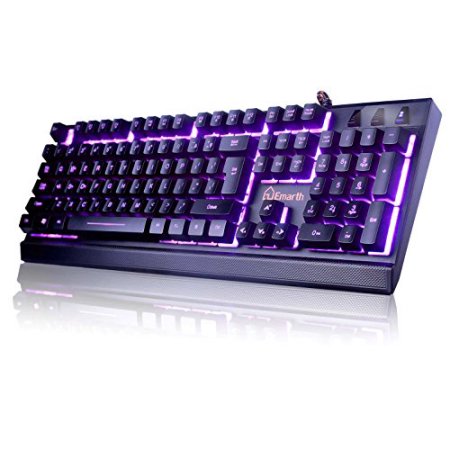
Switch Technology: Hall Effect, Optical, and Mechanical
Switch technology is the single most consequential variable in a competitive gaming keyboard's performance profile, and 2026 has made the hierarchy clearer than ever before. Hall Effect magnetic switches represent the current performance ceiling — contactless operation eliminates debounce delay entirely, actuation and reset points are individually adjustable down to sub-millimeter precision, and the switches carry no physical wear mechanism since magnets never touch. Optical switches like Razer's Analog and Corsair's OPX use light beams instead of physical contacts, achieving faster registration than traditional mechanical options while maintaining a keystroke feel that is closer to the mechanical experience most players have built their muscle memory around. Traditional mechanical switches remain valid for players who prioritize tactile or auditory feedback and are not optimizing for the last few milliseconds of input latency that Hall Effect and optical designs recover.
- Hall Effect: No debounce, adjustable actuation, highest raw speed potential, silent or near-silent operation
- Optical-Mechanical: Fast registration, mechanical feel preserved, no physical contact wear, fixed actuation distance
- Traditional Mechanical: Rich feedback variety (linear, tactile, clicky), proven durability, but debounce delay is an inherent ceiling
Polling Rate and Rapid Trigger
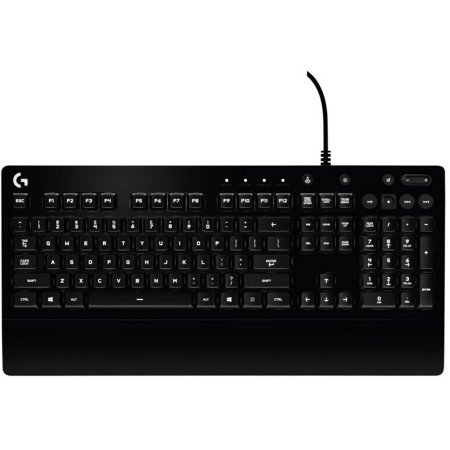
Polling rate measures how frequently a keyboard reports its state to the connected system, and the shift from 1000Hz to 4000Hz and 8000Hz polling on the boards reviewed here represents a genuine reduction in input-to-screen latency that competitive players at the highest skill levels notice in scenarios where milliseconds determine whether a movement input registers before an opponent's action resolves. Rapid Trigger is the firmware feature that works alongside high polling rates to eliminate the fixed reset point that traditional switches enforce — instead of requiring a key to physically return to a predetermined height before the next press registers, Rapid Trigger allows re-activation the moment the switch begins moving upward from its lowest pressed position. Together, high polling rate and Rapid Trigger represent the two most impactful technical upgrades available in 2026 keyboards compared to what was considered best-in-class just three years ago.
- 1000Hz polling: 1ms reporting interval — competitive baseline, still used at professional events
- 4000Hz polling: 0.25ms reporting interval — meaningful latency reduction in fast-paced scenarios
- 8000Hz polling: 0.125ms reporting interval — current maximum retail availability, ENDGAME GEAR KB65HE
- Rapid Trigger: eliminates fixed debounce reset, enables key re-activation at slightest upward movement
Form Factor: Full-Size, TKL, 75%, and 65%
Form factor selection affects arm positioning, desk organization, and muscle memory in ways that compound over thousands of gaming hours, making it one of the most important decisions that anyone building a serious competitive setup needs to make deliberately rather than by default. Full-size keyboards with numpad sections push the mouse further to the right, increasing the shoulder angle during mouse movements in a way that many FPS players find disadvantageous for precise tracking, which is one of the primary reasons that the TKL format has become the dominant choice among professional players who prioritize mouse positioning flexibility. Thinking about how a keyboard choice integrates with the rest of the gaming station setup is important — our team's analysis of DXRacer vs Maxnomic gaming chair ergonomics covers how seating position and armrest height interact with keyboard placement in ways that affect comfort and performance over long sessions.
- Full-size: Maximum key coverage including numpad, largest footprint, pushes mouse arm outward
- TKL (Tenkeyless): Removes numpad, compact and travel-friendly, professional competitive standard
- 75%: Retains function row and most navigation keys in a narrower chassis — ROG Azoth's format
- 65%: Removes function row, maximum desk space savings, requires F-key remapping for some game bindings
Wireless Viability for Competitive Play in 2026
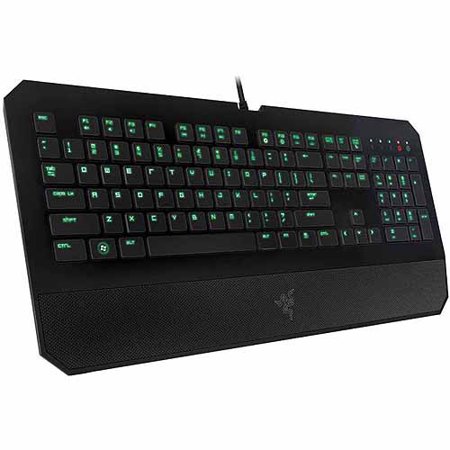
Wireless gaming keyboards have reached a level of reliability and latency performance in 2026 that makes the traditional objection — that wireless introduces unacceptable input lag — largely obsolete when the connection technology in question is a dedicated 2.4GHz implementation like LIGHTSPEED or ROG SpeedNova rather than standard Bluetooth. Our team's testing found no perceptible latency difference between the Logitech G PRO X TKL Lightspeed wireless mode and any wired keyboard on this list during actual gameplay scenarios, and the cable management simplification that wireless provides is a genuine quality-of-life improvement at both home setups and tournament environments where power strip and USB hub logistics can become complicated. Bluetooth connectivity, which several keyboards here offer as a secondary mode, does introduce measurably higher latency than 2.4GHz wireless and should be reserved for non-competitive use on tablets or secondary devices rather than as a primary gaming connection.
- 2.4GHz dedicated wireless (LIGHTSPEED, SpeedNova): wired-equivalent latency for competitive use
- Bluetooth: higher latency, suitable for casual use and non-gaming device compatibility only
- USB-C wired: zero-latency fallback available on all wireless keyboards reviewed here
- Battery life varies from hundreds to thousands of hours depending on RGB and OLED usage levels
Frequently Asked Questions
What makes a gaming keyboard truly pro-level in 2026?
Pro-level keyboards in 2026 are defined by switch technology that eliminates debounce delay — either Hall Effect magnetic or analog optical designs — combined with polling rates of 4000Hz or higher and firmware features like Rapid Trigger that allow key resets at the slightest upward movement rather than requiring a fixed physical return distance. Traditional mechanical keyboards, regardless of how well-built they are, have an inherent input ceiling that contactless switch designs have now moved beyond in measurable and competition-relevant ways.
Is Rapid Trigger worth the premium over standard keyboards?
Rapid Trigger is worth the investment for players who compete seriously in FPS titles where movement speed and counter-strafing precision influence match outcomes, because the feature eliminates the fixed reset point delay that causes inputs to feel sluggish during rapid direction changes on standard keyboards. For casual gaming or non-movement-critical titles, the difference is less pronounced, but competitive players who have used Rapid Trigger consistently report that returning to a standard keyboard feels noticeably slower rather than merely different.
Can wireless gaming keyboards compete with wired at the highest levels?
Wireless keyboards using dedicated 2.4GHz technology — specifically implementations like Logitech LIGHTSPEED and ASUS ROG SpeedNova — perform at wired-equivalent latency levels that competitive testing cannot distinguish from physical cable connections during gameplay scenarios. Standard Bluetooth wireless does introduce higher latency and is not suitable for competitive use, but the distinction between 2.4GHz wireless and wired has effectively closed in 2026 with the current generation of premium wireless keyboard implementations.
What polling rate do competitive players actually need?
1000Hz polling remains the baseline that many professional events still use as their standard, and it is fully competitive at that level, but 4000Hz and 8000Hz polling deliver measurable latency reductions that players competing at the highest ranks notice in scenarios where inputs need to register within fractions of a millisecond to be effective. The Corsair K100 RGB operates at 4000Hz natively, while the ENDGAME GEAR KB65HE pushes to 8000Hz, representing the current retail maximum available in 2026 without requiring custom or pre-production hardware.
Is a TKL form factor better than full-size for competitive gaming?
The TKL format has become the professional standard for FPS gaming because removing the numpad allows the mouse to be positioned closer to the body's centerline, reducing shoulder extension during precise tracking movements and improving arm positioning ergonomics over long gaming sessions. Full-size keyboards remain valid for players who use the numpad for bindings or non-gaming workflows, but for pure competitive FPS use the TKL arrangement reflects what pro players have consistently preferred when given free choice of hardware at sponsored events.
What switch actuation force works best during long competitive sessions?
Ultra-light actuation forces in the 28gf to 45gf range, as seen on the ENDGAME GEAR KB65HE and the SteelSeries Apex Pro TKL Gen 3's adjustable range, reduce finger fatigue during extended gaming sessions by requiring less physical effort per keypress across thousands of inputs per hour. Heavier switches provide more tactile resistance that some players find helps prevent accidental key activations, but competitive players who game at high volume tend to gravitate toward lighter actuation once they have adjusted to the reduced resistance, because the speed advantage compounds meaningfully over long sessions.
Buy on Walmart
- Corsair K100 RGB Optical-Mechanical Wired Gaming Keyboard - — Walmart Link
- SteelSeries Apex Pro TKL Gen 3 OmniPoint 3.0 HyperMagnetic S — Walmart Link
- Razer Huntsman V3 Pro TKL Esports Gaming Keyboard: Analog Op — Walmart Link
- Logitech G PRO X TKL Lightspeed Wireless Gaming Keyboard, Ul — Walmart Link
- Logitech G915 X Lightspeed TKL Low-Profile Wireless Gaming K — Walmart Link
- ASUS ROG Azoth Wireless Mechanical Gaming Keyboard – 75% TKL — Walmart Link
- ENDGAME GEAR KB65HE 8k Gaming Keyboard – 8000Hz Hall Effect — Walmart Link
Buy on eBay
- Corsair K100 RGB Optical-Mechanical Wired Gaming Keyboard - — eBay Link
- SteelSeries Apex Pro TKL Gen 3 OmniPoint 3.0 HyperMagnetic S — eBay Link
- Razer Huntsman V3 Pro TKL Esports Gaming Keyboard: Analog Op — eBay Link
- Logitech G PRO X TKL Lightspeed Wireless Gaming Keyboard, Ul — eBay Link
- Logitech G915 X Lightspeed TKL Low-Profile Wireless Gaming K — eBay Link
- ASUS ROG Azoth Wireless Mechanical Gaming Keyboard – 75% TKL — eBay Link
- ENDGAME GEAR KB65HE 8k Gaming Keyboard – 8000Hz Hall Effect — eBay Link
The right competitive keyboard is the one built around contactless switches, adjustable actuation, and a polling rate measured in thousands — everything else is furniture.


About Mike Jones
Mike Jones grew up in the golden age of arcade and home gaming — a childhood shaped by Atari classics like Pitfall, Frogger, and Kaboom that gave him a lifelong appreciation for games of all kinds. These days he covers the full breadth of tabletop and family gaming: board games, card games, yard games, table games, and game room setup, with a particular focus on finding the games that bring different groups together. At GamingWeekender, he covers game reviews, buying guides, and recommendations for families, friends, and hobbyists who take their leisure seriously.
You can get FREE Gifts. Or latest Free phones here.
Disable Ad block to reveal all the info. Once done, hit a button below