The global board game market surpassed $13.4 billion in revenue in 2025, and strategy titles now represent the fastest-growing segment of that market — a clear signal that players are increasingly hungry for games that reward planning, adaptability, and long-term thinking over raw luck. If you've been exploring the board games category recently, you already know the options are staggering, and box art rarely tells you whether a game actually delivers the depth it promises. This top 20 breakdown is built on real table time, not publisher marketing.

Strategy board games occupy a uniquely rewarding space in tabletop gaming — they're the titles you come back to dozens of times and still find new angles to explore. From the resource-trading tension of Catan to the galaxy-wide political warfare of Twilight Imperium, the genre stretches across an enormous range of complexity, playtime, and player count. What every entry on this list shares is a core design truth: every decision carries real consequences, and mastery comes only through repeated engagement. Legends like Gloomhaven proved that production quality and mechanical depth can coexist at the highest level, setting a benchmark the entire hobby now measures itself against.
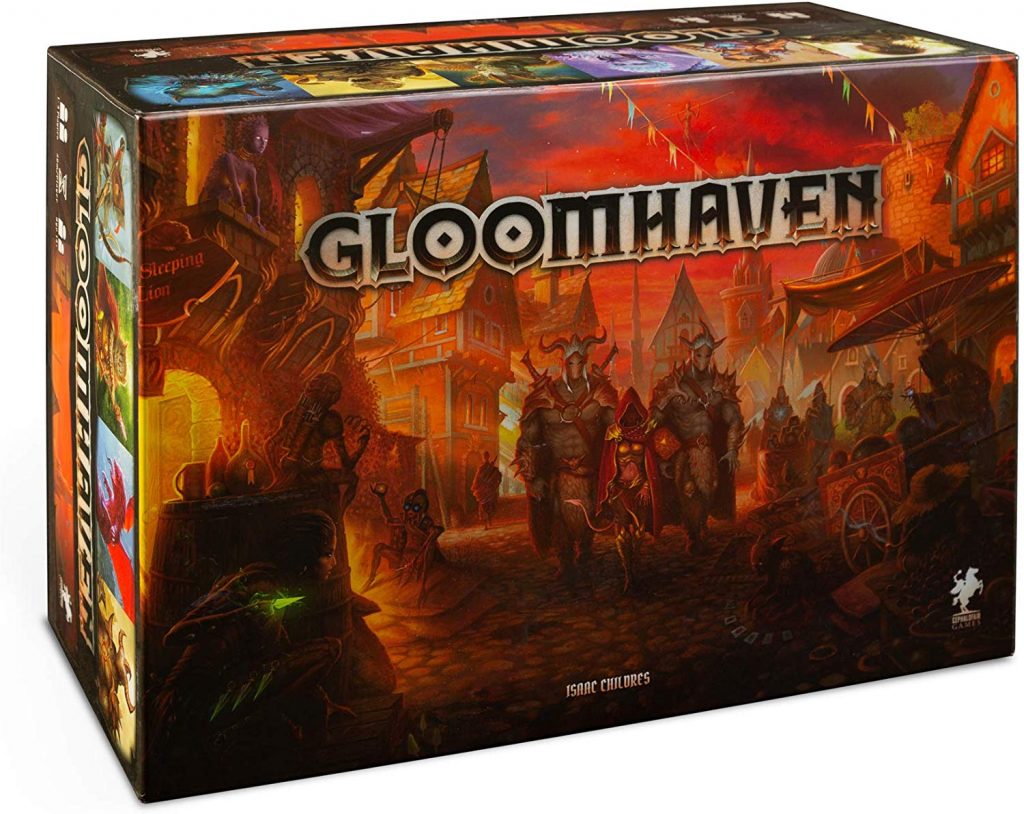
Our selections cover everything from approachable gateway games suitable for family game nights to dense, expert-level titles that will consume entire weekends. We've evaluated each game on component quality, rulebook accessibility, scalability across player counts, and long-term replay value — because a game that bores you after three plays is never a good investment regardless of its critical reputation. The seven in-depth reviews below represent the strongest commercially available picks heading into 2026, and the broader top 20 context ensures you understand exactly where each one fits in the wider landscape. If you're also looking for companion entertainment between game nights, our roundup of the best murder mystery dinner games covers an entirely different style of social challenge worth exploring.
Contents
Standout Models in 2026
- #PreviewProductRating
- Bestseller No. 1
 Rating:

- Bestseller No. 2
 Rating:
 - Bestseller No. 3
 Rating:
 - Bestseller No. 4
 Rating:
 - Bestseller No. 5
 Rating:
 - Bestseller No. 6
 Rating:
 - Bestseller No. 7
 Rating:
Product Reviews
1. CATAN Board Game (6th Edition) — Best Gateway Strategy Game
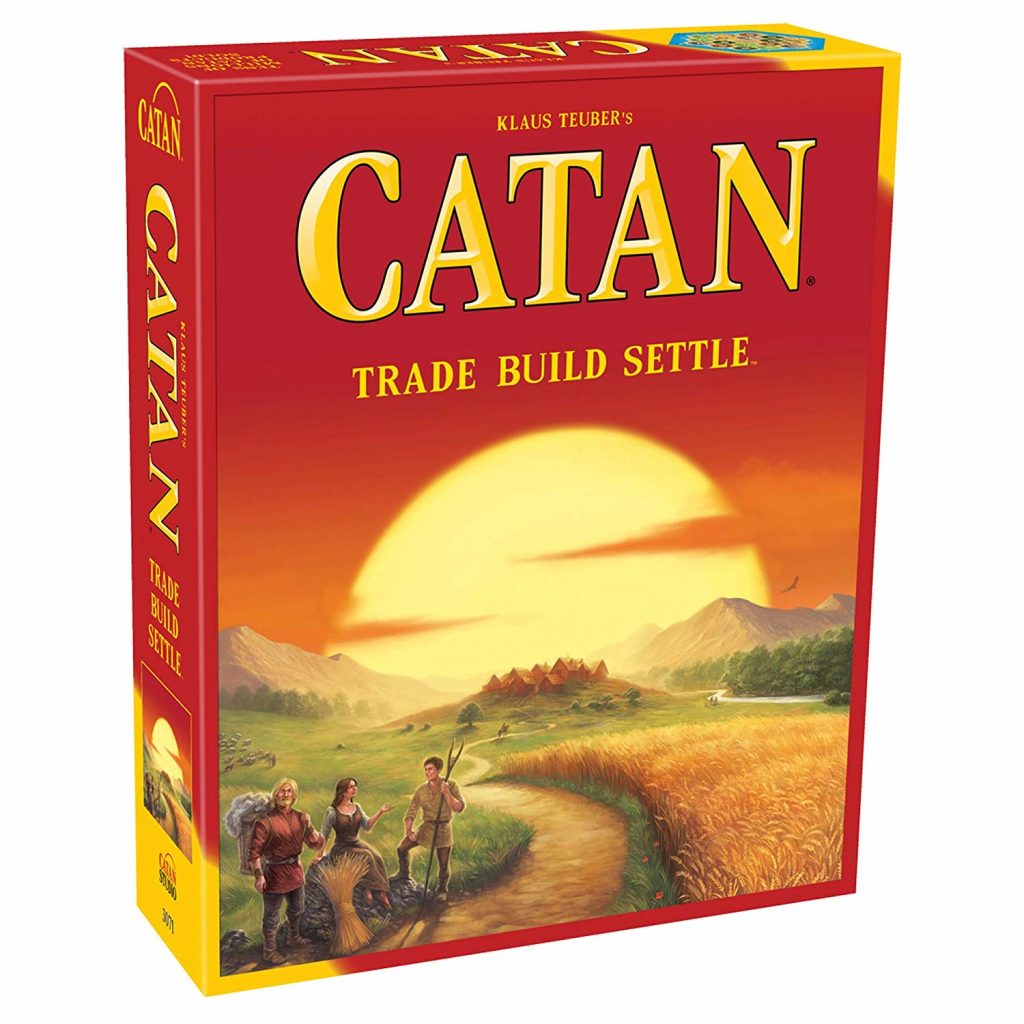
The 6th Edition of Catan arrives in 2026 with refined components and updated card stock that noticeably improves on earlier printings, while preserving the exact mechanical DNA that made this game a cultural phenomenon. You settle the island of Catan by collecting five resources — brick, wood, wheat, ore, and sheep — and spending them to build roads, settlements, and cities in a race to ten victory points. The hex-tile modular board ensures that no two games unfold identically, and the robber mechanic creates just enough targeted interaction to keep every player genuinely engaged even during opponents' turns.
What separates Catan from most games at this price point is its ability to function simultaneously as a genuine introduction to modern board gaming and as a satisfying competitive experience for veterans playing with newcomers. Trading is the engine that drives everything — negotiating deals, bluffing about your resource needs, and cutting off opponents from key ports creates a social layer that pure euros rarely match. The 60–90 minute playtime is honest, and the 3–4 player sweet spot means you'll almost always have the right number of people at the table. The 6th Edition's updated rulebook is also meaningfully clearer than previous printings.
Catan is the game that introduced millions of people to modern tabletop strategy, and the 6th Edition is the cleanest, most accessible version of that experience to date. If you want a game that your non-gamer friends will actually play willingly and that will still challenge experienced players, this is the obvious starting point in 2026.
Pros:
- Modular board delivers genuine replayability across hundreds of sessions
- Trading mechanic creates natural social engagement and negotiation depth
- Updated 6th Edition components and rulebook are a clear improvement over earlier printings
- 60–90 minute playtime is accessible without feeling shallow
Cons:
- Player elimination through resource blocking can frustrate newer players
- Experienced groups may find the depth ceiling lower than mid-weight euros
2. Ticket to Ride (2025 Refresh) — Best Family Strategy Game
The 2025 refresh of Ticket to Ride brings a visually upgraded North American map, refreshed card components, and miniature trains that feel genuinely premium in hand — the production improvements are immediately noticeable when you open the box. Your goal is to collect colored train cards, claim routes across the continent, and complete destination tickets that connect specific cities for bonus points. The tension comes from watching opponents claim routes you need while you race to complete your network before the end-game trigger fires. Route blocking is subtle but devastating when executed well, and spotting the optimal path before your opponents do is deeply satisfying.
Ticket to Ride's core strength is its accessibility curve — the rules take under fifteen minutes to explain, yet experienced players find genuine strategic depth in route selection, hand management, and reading opponent intentions. The 2–5 player range works well at every count, though the game tightens most dramatically at four and five players where route competition becomes fierce and the board fills up faster than newcomers expect. The 30–60 minute playtime makes it one of the most practical options in the strategy game space for groups who don't want to commit an entire evening to a single title.
For any household looking for a game that works equally well with children aged 8 and up and with competitive adult players, Ticket to Ride in its 2025 refresh form is the single most versatile pick in this entire category. The refreshed components justify an upgrade even if you already own a previous edition.
Pros:
- Fastest rules teach of any mid-complexity strategy game in this list
- 2025 refresh brings meaningfully better components and visual clarity
- Scales naturally from 2 to 5 players without rule adjustments
- 30–60 minutes makes it highly practical for casual gaming sessions
Cons:
- Experienced strategy gamers will hit the complexity ceiling relatively quickly
- Luck in destination ticket draws can occasionally create lopsided starting positions
3. Pandemic (Base Game) — Best Cooperative Strategy Game
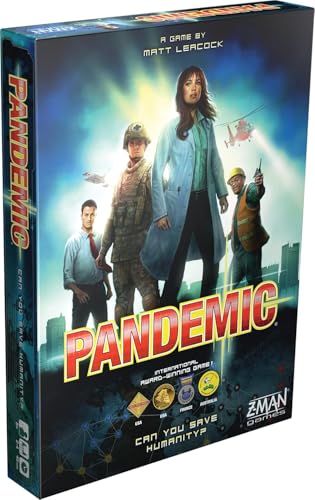
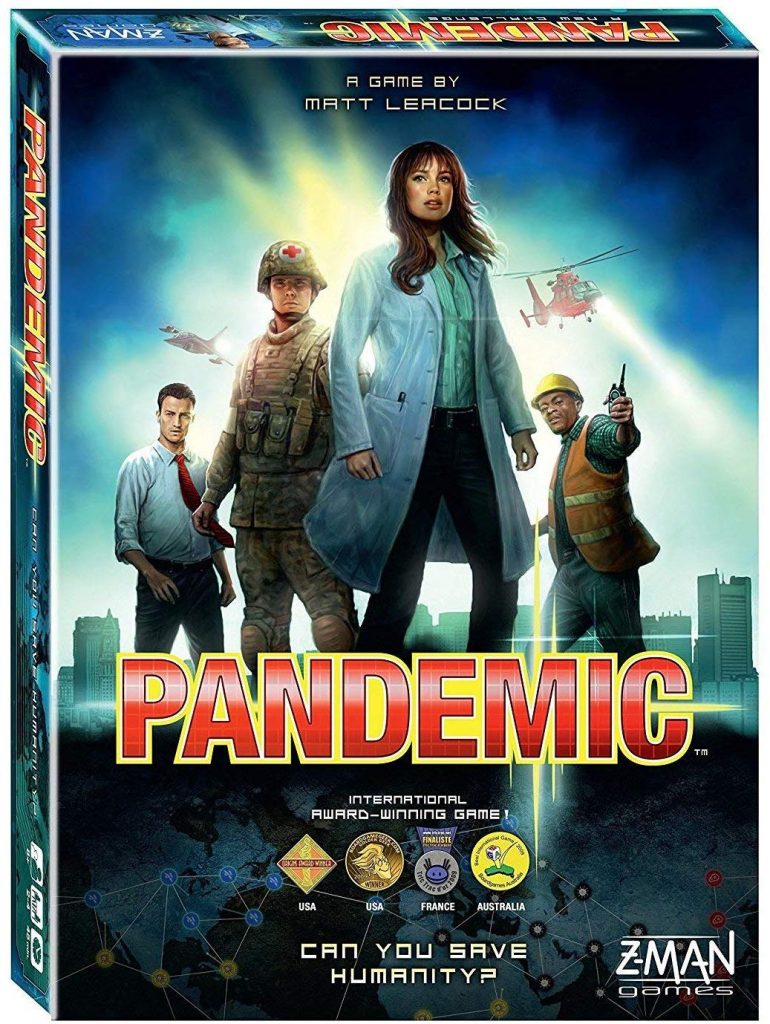
Pandemic puts you and up to three teammates in the roles of specialist disease-fighters racing to discover cures for four simultaneous global outbreaks before the epidemic deck overwhelms the board. Each role brings unique abilities — the Medic removes disease cubes efficiently, the Scientist cures faster, the Researcher shares cards readily — and the game demands that your group plays to these strengths deliberately rather than pursuing individual agendas. The cooperative pressure is relentless and authentic; you genuinely win or lose together, and the feeling of barely containing a chain of outbreaks in the final two turns is among the most tension-packed experiences in tabletop gaming.
What makes Pandemic enduringly excellent rather than merely popular is its difficulty scaling. The standard game ships with five epidemic cards for a moderate challenge, but you can add more to create a brutally difficult puzzle that experienced groups will still fail regularly. The 45-minute playtime is consistent and honest, and the relatively compact footprint means it works on any kitchen table without specialized furniture. The base game is complete and satisfying on its own, though expansions like In the Lab and On the Brink add substantial mechanical variety for groups that want to extend their experience significantly.
For players who want a strategy game that eliminates the interpersonal conflict of competitive designs while preserving high-stakes decision-making, Pandemic is the definitive recommendation. It works at two players and scales cleanly to four, making it one of the most flexible cooperative experiences available in 2026.
Pros:
- True cooperative design eliminates player conflict while preserving strategic depth
- Scalable difficulty through epidemic card count suits beginners through experts
- 45-minute playtime is consistent and family-friendly
- Extensive expansion ecosystem for long-term engagement
Cons:
- Alpha-player problem can emerge in groups where one player dominates decisions
- Randomness in card draws occasionally creates unwinnable early states
4. Scythe — Best Mid-Heavy Engine Builder
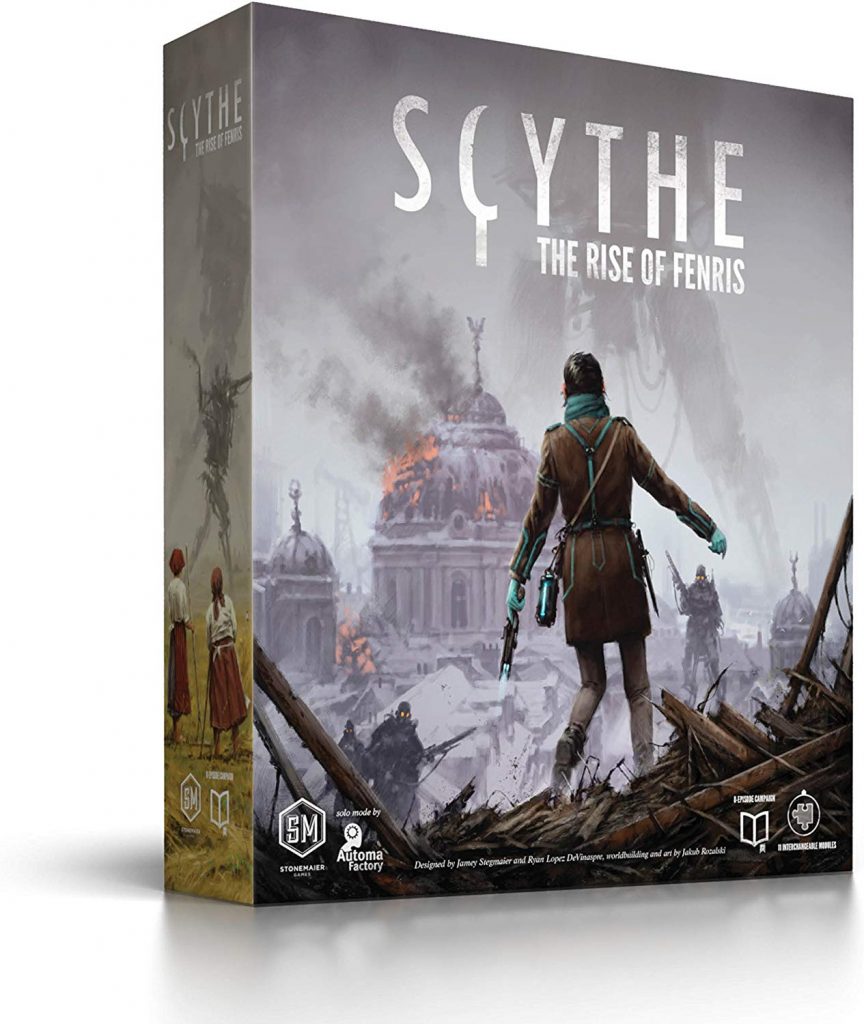
Scythe drops you into an alternate-history 1920s Eastern Europe where diesel-powered mechs, agrarian economies, and political ambition collide in one of the most visually striking games ever produced at this price point. You select one of five asymmetric factions — each with its own starting position, abilities, and player board — and build an economic engine that fuels territorial expansion, combat, and the completion of personal objectives. The asymmetry is the game's defining mechanic; the Saxony faction plays nothing like the Nordic Kingdoms, and this distinction ensures that your hundredth game still presents strategic problems your first session never raised.
What separates Scythe from most area control games is how it handles conflict: combat is possible but never mandatory, and the player who triggers the most battles often loses because the game rewards efficiency and engine quality over aggression. The action-selection system — where you alternate between two sections of your player board, each providing a top and bottom action — creates a deeply satisfying rhythm that new players grasp within twenty minutes but that experienced players continue to optimize across dozens of sessions. The component quality is exceptional, with thick cardboard, detailed plastic mechs, and Jakub Różalski's signature artwork across every element.
Scythe plays 1–5 players and includes a capable automa system for solo play, making it one of the most versatile heavy games available in 2026. If you want a game that looks extraordinary on the table, rewards strategic thinking over aggression, and stays fresh across years of play, this is the title to invest in.
Pros:
- Five asymmetric factions deliver genuinely different strategic experiences
- Exceptional component quality — among the best in class at this price
- Robust solo mode via the automa system
- Action-selection system is intuitive to learn and deep to master
Cons:
- 115-minute average playtime is a significant commitment for casual groups
- Combat-averse design frustrates players who expect military aggression to dominate
5. Twilight Imperium: 4th Edition — Best Epic Multiplayer Experience
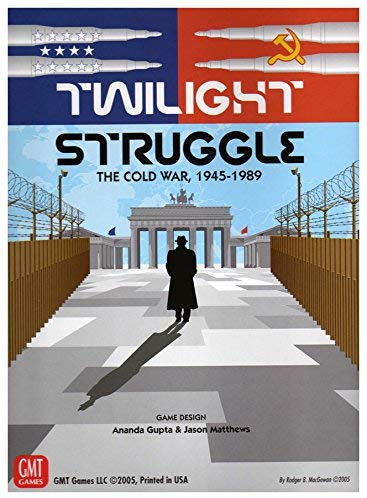
Twilight Imperium 4th Edition is not a game you play casually — it is an event, a commitment, and for the right group of players, one of the most transcendent gaming experiences the hobby has ever produced. You command one of seventeen civilizations competing for control of the galactic capital Mecatol Rex through warfare, trade, political maneuvering, and technology development across a session that routinely runs four to eight hours. No two sessions share the same galaxy layout, the same political agenda deck, or the same faction combination — the structural variety is effectively inexhaustible. The 4th Edition represents a complete mechanical refinement over its predecessor, with streamlined combat, a reworked strategy card system, and faction abilities balanced for genuine competitive play.
The political phase is where Twilight Imperium earns its legendary status — players vote on galactic laws using their influence tokens, and the resulting legislation can reshape the entire game economy in a single round. Temporary alliances form and dissolve based on immediate necessity, promises are made with no enforcement mechanism, and the player who reads the table most accurately rather than fields the most military force typically wins. According to Wikipedia's entry on Twilight Imperium, the series has maintained its reputation as one of the most complex strategy games in existence since its original 1997 release, and the 4th Edition fully justifies that reputation.
Twilight Imperium is a once-in-a-generation gaming achievement and the uncontested peak of the epic strategy game category. If you have a dedicated group of 3–6 players who can commit to a full day, no game in existence delivers a comparable experience in 2026.
Pros:
- Seventeen distinct factions ensure structural variety across unlimited sessions
- Political phase creates emergent diplomacy and alliance dynamics unmatched in the genre
- 4th Edition refinements resolve most mechanical issues from prior editions
- Premium component production matches the game's legendary reputation
Cons:
- 4–8 hour playtime is a genuine barrier for most gaming groups
- Rulebook complexity requires a dedicated teacher and patient newcomers
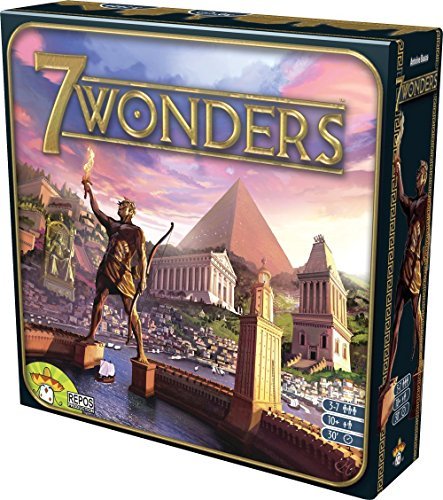
6. Root — Best Asymmetric Strategy Game
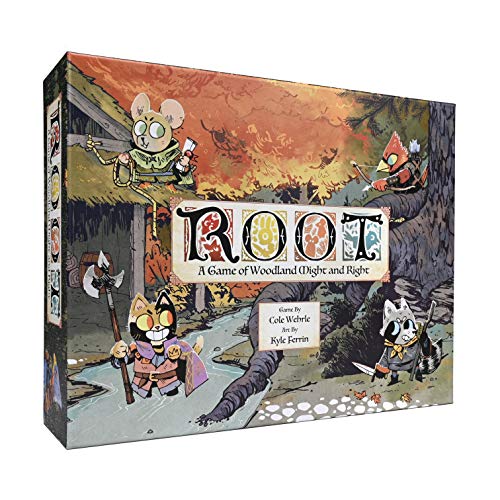
Root is one of the most conceptually ambitious designs in modern board gaming — each faction not only plays differently but operates under entirely different victory conditions and mechanical systems, meaning every player at the table is effectively playing a different game simultaneously. The Marquise de Cat builds industrial infrastructure across the woodland map, the Eyrie Dynasty executes a rigidly programmed decree that spirals toward collapse without careful management, and the Woodland Alliance quietly cultivates sympathy tokens that explode into revolutionary uprisings at critical moments. The asymmetry creates genuine interdependence — no single faction can win without understanding and responding to what every other faction is doing at all times.
Leder Games' production quality matches the ambition of the design, with distinctive faction artwork, sturdy punchboard components, and a board that remains visually clean despite the mechanical complexity layered across it. Root plays 2–4 players in the base game, and the Clockwork expansion adds automated bots that let you play any faction against AI opponents — crucial for exploring factions before playing them against humans. The learning curve is genuinely steep for first-time players, and we recommend watching faction-specific tutorial videos before your first session to avoid the common experience of a faction performing wildly below expectation in game one.
Root is not the game for every group, but for players who want a strategy experience that rewards deep study and adapts endlessly to the specific factions in play, it delivers something no other game in this list can replicate. Your mastery curve here is measured in months, not sessions.
Pros:
- Deep faction asymmetry creates unique strategic dynamics in every session
- Clockwork expansion adds capable AI opponents for lower player counts
- Exceptional visual design and component quality from Leder Games
- Long-term mastery reward is among the highest in the genre
Cons:
- Steep faction-specific learning curve punishes cold-start play sessions
- Balance requires experienced players in all faction roles — newcomers can be crushed
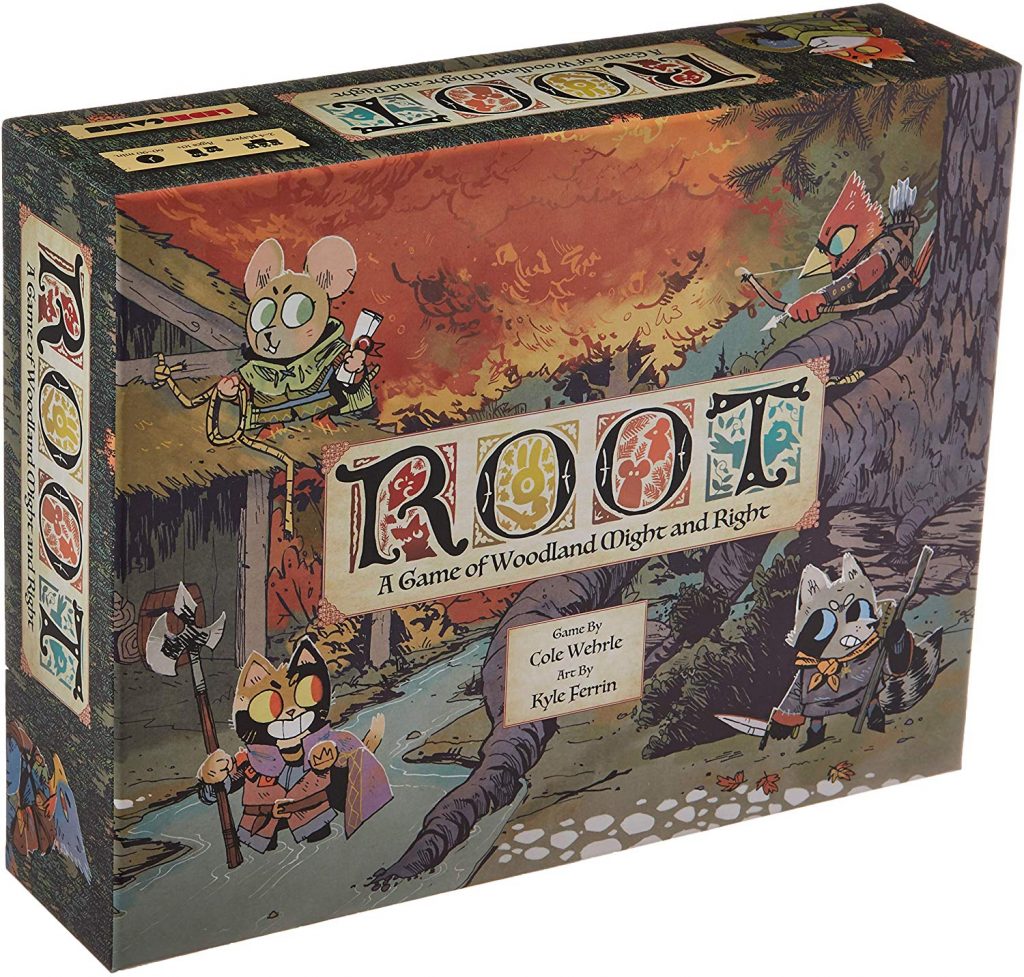
7. Brass: Birmingham — Best Economic Strategy Game
Brass: Birmingham sits at the very top of BoardGameGeek's all-time rankings, and that position is not a fluke of internet voting — it's a reflection of a design that executes its economic vision with near-perfect mechanical precision. Set during England's Industrial Revolution in Birmingham and surrounding counties, you build industries across two eras, develop canal and railway networks, and respond to market fluctuations across coal, iron, cotton, manufactured goods, and merchant locations. Every industry tile you build must ultimately be consumed by someone — either you or an opponent — to score, which creates a web of interdependence that makes competition feel cooperative and vice versa across different moments in the same game.
The two-era structure is the game's most elegant design decision: the Canal Era ends with the board cleared of all network connections, and the Railway Era begins with you rebuilding your network under more expensive but more powerful conditions. Technologies and industries carry over, meaning your Canal Era decisions directly constrain and enable your Railway Era options in ways that reward players who plan multiple steps ahead. The 2–4 player scaling is genuinely excellent — the 2-player game is specifically rule-tuned for balance, and the 4-player game achieves a market-pressure tension that feels authentically chaotic in the best possible sense.
Brass: Birmingham is the game for players who want the deepest purely economic strategy experience available on the market in 2026. It demands more of you than any other title on this list in terms of forward planning, but the intellectual satisfaction of an efficiently constructed industrial network is without parallel in the hobby.
Pros:
- Ranked among the top board games of all time — the reputation is fully earned
- Two-era structure creates long-term strategic arcs across a single session
- Market interdependence generates emergent tension without direct conflict mechanics
- 2-player rules are specifically tuned for balance rather than adapted from the base ruleset
Cons:
- High complexity ceiling creates a steep initial barrier for new eurogame players
- Session length of 60–120 minutes varies significantly by player experience level
Choosing the Right Strategy Board Game: A Buying Guide
Picking the right strategy board game requires honest assessment of your group's experience level, available time, and tolerance for complexity — a game that thrills one household will frustrate another. The following criteria will help you match a title to your actual situation rather than the idealized gaming session you imagine.
Player Count and Group Dynamics
Your regular player count is the single most important factor in selecting a strategy game, because almost every title on this list plays meaningfully differently at different counts. Brass: Birmingham is specifically engineered for tight 2-player competition, while Twilight Imperium becomes a different experience entirely at 6 players versus 3. Match the game's stated sweet spot to your actual group size — a game designed for 4 that you'll always play at 2 is rarely a satisfying investment.
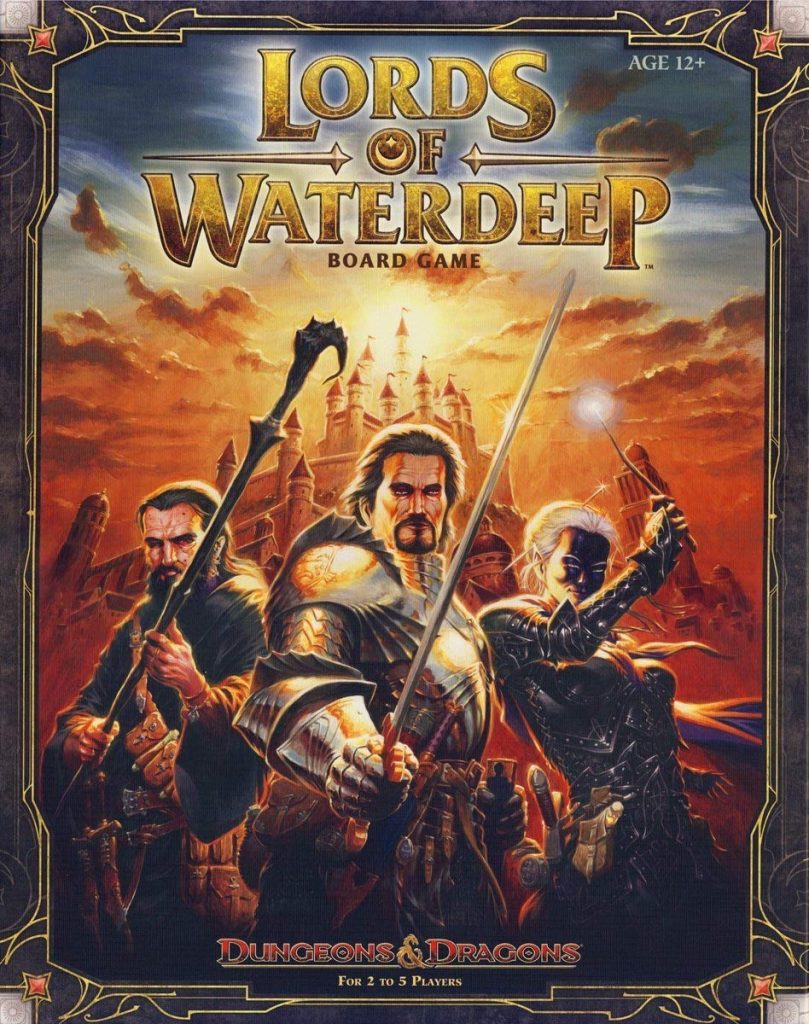
Group dynamics matter as much as raw numbers. Competitive groups who enjoy direct conflict thrive with area control games like Root and Twilight Imperium, while groups that prefer collaborative problem-solving should prioritize cooperative designs like Pandemic. If your group regularly splinters between experienced and new players, gateway-friendly designs like Catan and Ticket to Ride let everyone participate meaningfully from game one. Our guide to the best 2-player board games covers specifically optimized head-to-head options if two-player sessions are your primary format.
Complexity, Playtime, and Learning Investment
Complexity in strategy games exists on a genuine spectrum, and most publishers' recommended age ratings dramatically understate what a game actually demands from new players. Ticket to Ride at ages 8+ is accurate; Twilight Imperium at ages 14+ requires significantly more strategic patience than that age suggestion implies. Before purchasing a heavier title, assess whether your group has the appetite to invest two or three learning sessions before the game delivers its full experience — because most heavyweight strategy games require that runway before they truly open up.
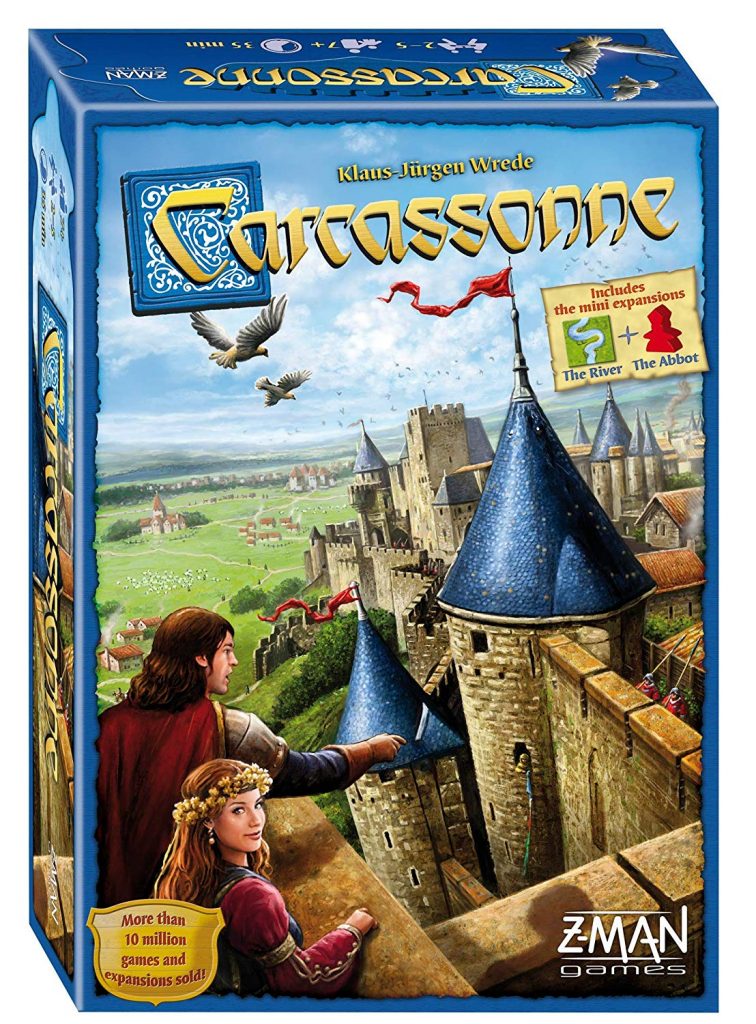
Playtime advertised on boxes is often optimistic. Budget 50% more time than the box suggests for your first two sessions of any mid-weight or heavy strategy game. Catan's 60–90 minutes is honest after a few sessions; a fresh group will routinely hit two hours in their first game. Root's box says 90 minutes but first-time sessions regularly reach three hours while players learn faction-specific rules. The advertised time assumes a group that already knows the game thoroughly.
Competitive vs Cooperative vs Asymmetric Design
The three primary structural categories of strategy games each serve distinct player preferences, and confusing them is the most common cause of buyer's remorse in this hobby. Competitive symmetric games — where every player starts from an equal position — include Ticket to Ride and Catan, and they work best with groups who enjoy direct but friendly competition. Cooperative games like Pandemic place all players against the game system itself, which eliminates interpersonal conflict but requires players who communicate openly and accept shared decision-making rather than competing for control of the strategy.
Asymmetric games like Root and Twilight Imperium sit in a third category where different players genuinely operate under different rules, creating a form of competition that rewards specialization and adaptation simultaneously. This style generates the highest ceiling for long-term engagement but also the steepest barrier to entry — you need a player willing to invest in learning every faction's mechanics, not just your own. If your group enjoys social intrigue alongside mechanical depth, titles in the asymmetric space deliver experiences that no other game structure can replicate. For groups who want tabletop competition with less strategic overhead, dice games offer a lighter but still engaging alternative for game night variety.
Engine Building, Area Control, and Economic Mechanics
Understanding the primary mechanical category of a strategy game helps you predict whether it will suit your group before you ever read a single review. Engine-building games — where you construct an increasingly efficient sequence of actions over the course of a session — include Scythe and Brass: Birmingham, and they reward players who enjoy long-term optimization over moment-to-moment tactical decisions. Area control games — where territorial dominance is the primary competitive currency — include Root and Twilight Imperium, and they tend to generate more direct interpersonal conflict and table tension.
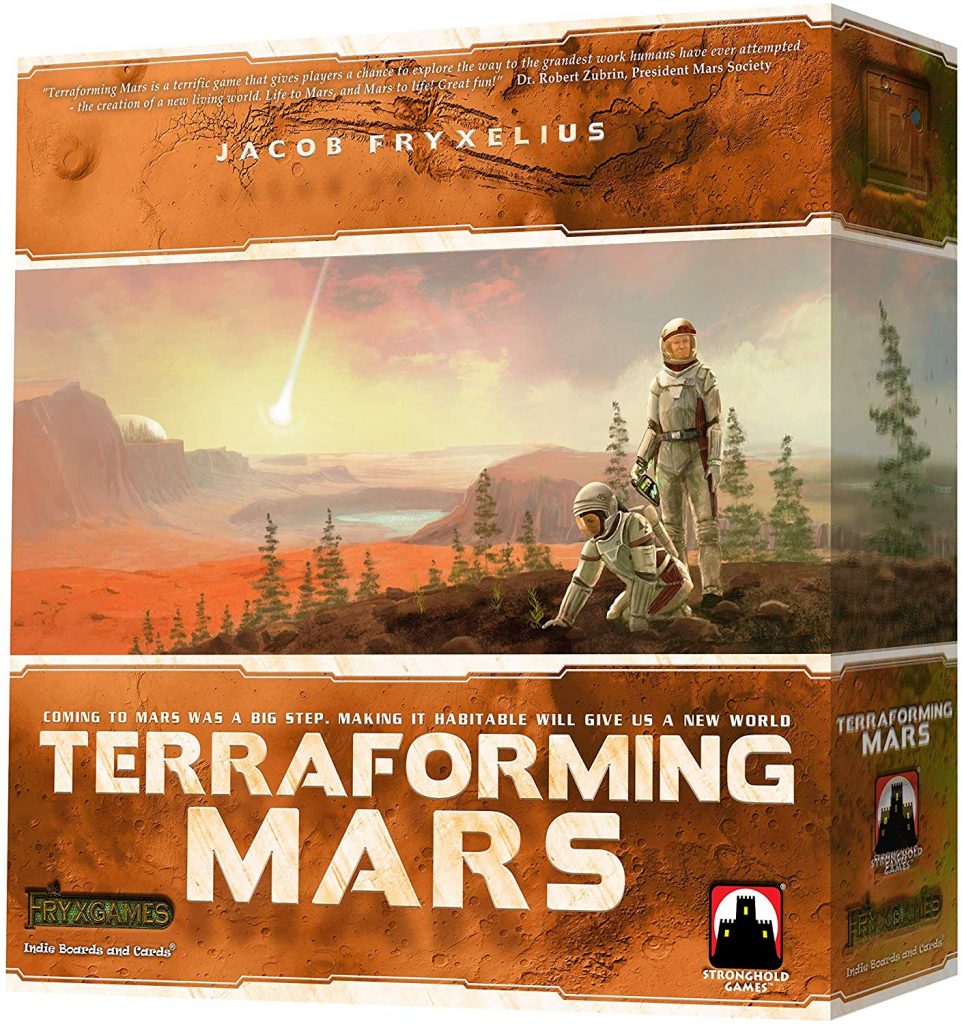
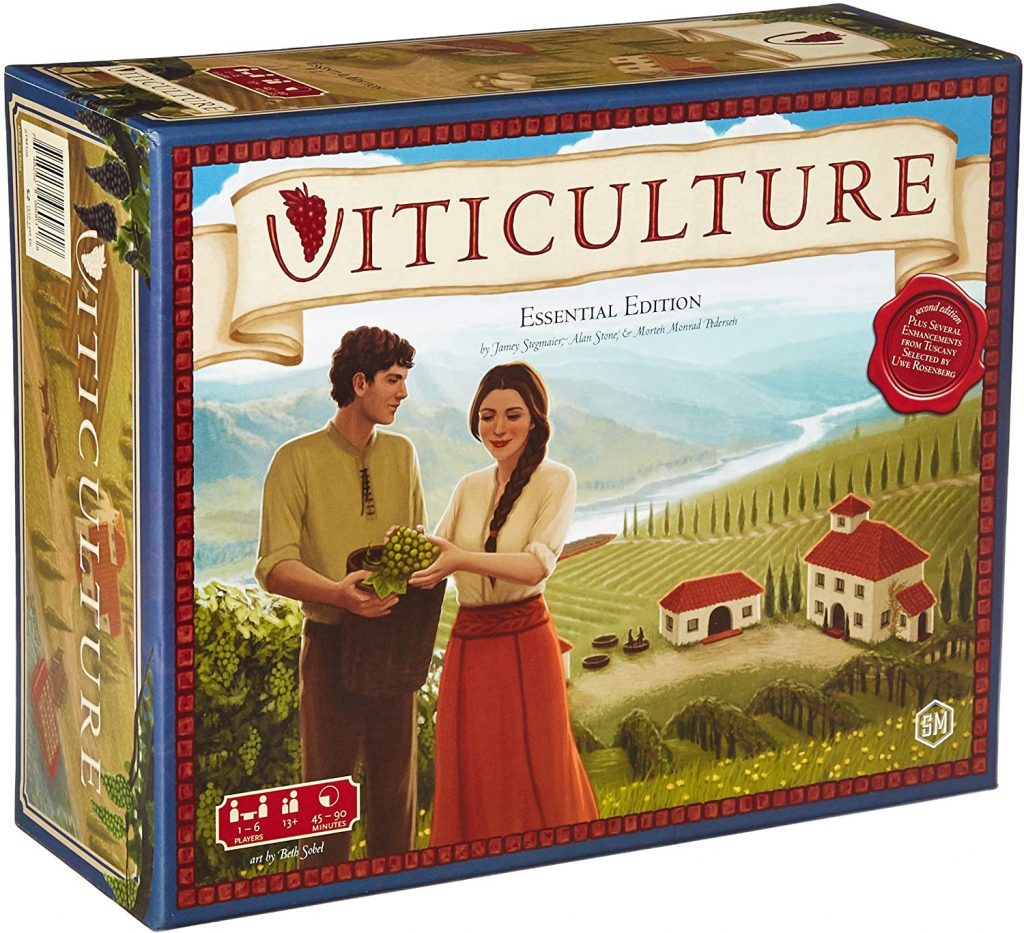
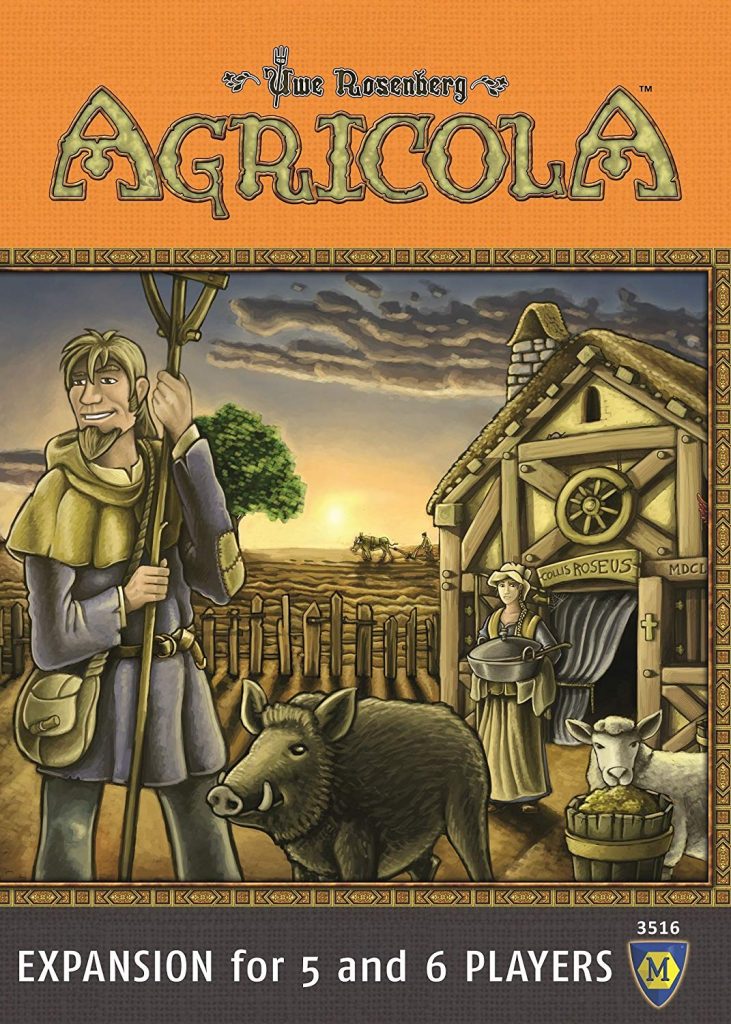
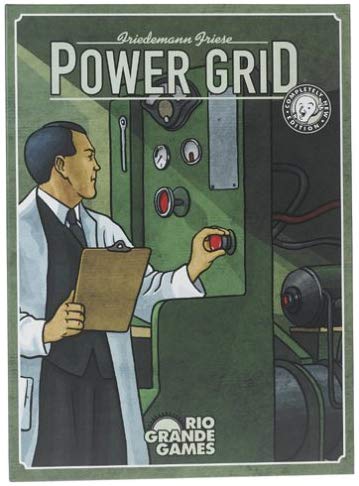
Worker placement — a mechanic shared by Agricola, Viticulture, and Lords of Waterdeep — occupies a middle ground where you deploy tokens to claim action spaces before opponents can, creating meaningful tension without open conflict. Economic games like Brass: Birmingham and Power Grid operate through market forces rather than combat, rewarding players who understand timing and resource chains over those who simply expand most aggressively. Knowing which of these mechanical families energizes your group is the most reliable predictor of long-term satisfaction with any strategy game purchase.
Thematic Depth, Production Quality, and Expansion Potential
Strategy games exist on a spectrum from highly abstract — where theme is essentially wallpaper over the mechanics — to deeply thematic, where the narrative setting is inseparable from how the mechanics feel in play. Root's woodland factions feel thematically distinct in ways that meaningfully alter the emotional texture of each game session. Brass: Birmingham's Industrial Revolution setting gives its economic mechanics genuine historical resonance that enriches rather than distracts from the game system. If theme matters to your group, the games in this list that deliver the strongest integration of narrative and mechanics are Root, Twilight Imperium, and Scythe.
Expansion ecosystems are worth evaluating before your initial purchase, because the games with the richest expansions — Pandemic, Scythe, Root, and Catan — offer dramatically extended lifespans compared to standalone titles. Component quality directly correlates with long-term enjoyment; games with thin cardboard tokens, cheap plastic, or poorly printed artwork degrade noticeably over dozens of sessions, while titles like Scythe and Root hold up to years of heavy play. For the right gaming group, expansion investment is one of the most cost-efficient ways to extend enjoyment from a single core purchase across hundreds of additional sessions. If you're looking to rotate between strategy games and lighter tabletop entertainment options, our roundup of adult card games covers excellent options for game nights that don't demand a multi-hour commitment.
Frequently Asked Questions
What is the best strategy board game for beginners in 2026?
Catan (6th Edition) is the strongest starting point for most groups new to modern strategy gaming, because it teaches core concepts — resource management, network building, and player interaction — within a ruleset you can explain in under fifteen minutes. Ticket to Ride (2025 Refresh) is an even lighter alternative if your group includes younger players or those with very limited board game experience. Both titles scale well enough to remain engaging once your group builds experience and starts exploring heavier designs.
How long do strategy board games typically take to play?
Playtime varies enormously across the category, and published estimates on boxes typically assume experienced players who already know the rules. Gateway games like Ticket to Ride run 30–60 minutes, mid-weight games like Catan and Pandemic run 60–90 minutes, heavy games like Scythe and Brass: Birmingham run 90–120 minutes, and epic titles like Twilight Imperium routinely run 4–8 hours. For your first several sessions of any mid-to-heavy game, budget at least 50% more time than the box suggests.
What's the difference between cooperative and competitive strategy games?
Competitive strategy games place players against each other — you win by outmaneuvering, outbuilding, or outlasting your opponents directly. Cooperative games like Pandemic put all players on the same team against the game system itself, where you share information openly and win or lose together as a group. Asymmetric games like Root and Twilight Imperium blend elements of both by giving each player unique mechanics and victory conditions, creating competitive dynamics that feel unlike either pure cooperative or symmetric competitive designs.
Are heavier strategy games worth the investment for casual gaming groups?
Heavyweight strategy games like Twilight Imperium and Brass: Birmingham deliver exceptional value for dedicated gaming groups who will play them repeatedly over years, but they're poor investments for casual groups who play irregularly or who resist learning complex rules. The honest answer is that a game you play twenty times over two years justifies any price point, while a game you play twice and shelve represents poor value regardless of its critical reputation. Start with a mid-weight game that your group finishes enthusiastically — that appetite for more is the signal to move toward heavier titles.
Which strategy board game has the best replay value?
Root and Twilight Imperium deliver the highest structural replay value through faction asymmetry and modular setup, ensuring that no two sessions share the same strategic landscape. Scythe's combination of five factions and five player boards creates 25 possible faction-board pairings in the base game alone, and this number expands substantially with expansions. For economic games, Brass: Birmingham's replay value is driven by the emergent dynamics of market competition rather than structural variety — the same rules create different experiences because players themselves vary.
Can strategy board games be played with just two players?
Yes, and several titles on this list are specifically excellent at two players. Brass: Birmingham includes rules specifically tuned for the two-player format rather than simply removing a player from a design built for more. Catan and Ticket to Ride both play at two with minor rule adjustments, though their competitive dynamics are richer at higher player counts. Scythe's automa solo system also provides a competent two-player experience where your opponent is an automated rival. For more options specifically optimized for head-to-head play, our roundup of the best 2-player board games covers the strongest options in that specific format.
Buy on Walmart
- CATAN Board Game (6th Edition) Trade, Build & Settle in the — Walmart Link
- Asmodee Ticket to Ride Board Game (2025 Refresh) - A Cross-C — Walmart Link
- Asmodee Pandemic Board Game (Base Game) - A Cooperative Batt — Walmart Link
- Stonemaier Games: Scythe (Base Game) by Jamey Stegmaier | an — Walmart Link
- Asmodee Twilight Imperium: 4th Edition Board Game - Epic Gal — Walmart Link
- Root: A Game of Woodland Might and Right | Asymmetric Strate — Walmart Link
- Roxley Games Brass: Birmingham – Critically Acclaimed Econom — Walmart Link
Buy on eBay
- CATAN Board Game (6th Edition) Trade, Build & Settle in the — eBay Link
- Asmodee Ticket to Ride Board Game (2025 Refresh) - A Cross-C — eBay Link
- Asmodee Pandemic Board Game (Base Game) - A Cooperative Batt — eBay Link
- Stonemaier Games: Scythe (Base Game) by Jamey Stegmaier | an — eBay Link
- Asmodee Twilight Imperium: 4th Edition Board Game - Epic Gal — eBay Link
- Root: A Game of Woodland Might and Right | Asymmetric Strate — eBay Link
- Roxley Games Brass: Birmingham – Critically Acclaimed Econom — eBay Link
Final Thoughts
The right strategy board game for your shelf in 2026 comes down to honest answers about who you play with, how much time you have, and how deeply you want to invest in learning a system — so pick up Catan or Ticket to Ride if you're building a group's confidence, grab Scythe or Brass: Birmingham if experienced players want a serious mechanical challenge, and commit to Root or Twilight Imperium when your group is ready for something that will define your game nights for years. Every title on this list rewards the investment you make in it, and the best way to find your next obsession is simply to start playing and follow where your curiosity leads.


About Mike Jones
Mike Jones grew up in the golden age of arcade and home gaming — a childhood shaped by Atari classics like Pitfall, Frogger, and Kaboom that gave him a lifelong appreciation for games of all kinds. These days he covers the full breadth of tabletop and family gaming: board games, card games, yard games, table games, and game room setup, with a particular focus on finding the games that bring different groups together. At GamingWeekender, he covers game reviews, buying guides, and recommendations for families, friends, and hobbyists who take their leisure seriously.
You can get FREE Gifts. Or latest Free phones here.
Disable Ad block to reveal all the info. Once done, hit a button below