The first time you grip those handles at a foosball table, the whole thing feels like pure chaos. Rods spinning everywhere, the ball ricocheting off plastic players, and your opponent already scoring while you're still figuring out which rod controls which guys. Learning the basic foosball game rules is the fastest way to turn that confusion into a genuinely competitive game. Whether you're setting up a table in your game room or stepping up to one at the local bar, this guide covers everything — scoring, serving, legal shots, dead balls, and the differences between casual and competitive play. Foosball is one of the most popular table games around, and once you understand the rules, you'll wonder how you ever played without them.
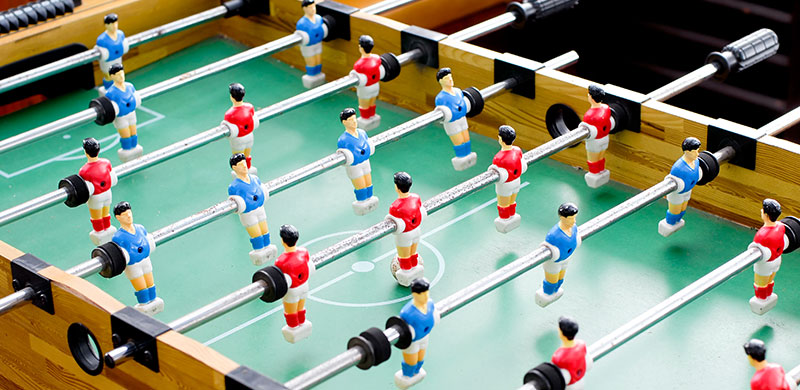
Foosball has been refined through decades of competitive play into a sport with a surprisingly detailed ruleset. According to the Wikipedia overview of table football, the game is governed internationally by organizations like the ITSF (International Table Soccer Federation), which sets the standards used in sanctioned tournaments worldwide. That level of standardization exists for a good reason — clear rules produce better, fairer games at every level.
At its core, foosball is a two- to four-player game played on a table fitted with eight rows of miniature players mounted on rotating rods. Your goal is simple: shoot the ball into your opponent's goal more times than they shoot it into yours. But the details of how you score, serve, handle dead balls, and move your rods legally are what separate someone who casually pushes rods around from a player who genuinely knows the game.
Contents
Basic Foosball Game Rules: Core Gameplay Every Player Should Know
Before anything else, you need to understand the fundamental structure of the game. The basic foosball game rules aren't complicated, but they do require consistency — everyone at the table needs to agree on the same ruleset before the first serve. Get this foundation right and everything else flows naturally.
The Objective and Scoring
The objective is to score more goals than your opponent before the game ends. Here's how standard scoring works:
- A goal counts when the ball fully crosses the goal line and enters the goal box.
- If the ball bounces back out of the goal after fully entering, the goal still counts — it's a goal the moment it crosses the line.
- If you accidentally score on your own goal, your opponent gets the point. No exceptions.
- A goal scored as the result of a clearly illegal shot does not count.
- Most casual games are played to 5 points. Official tournament games are typically best-of-five sets, each set played to 5 goals.
Knowing exactly when a goal is valid — and when it isn't — prevents a lot of arguments mid-match.
Serving the Ball
Serving correctly matters more than most beginners realize. The procedure seems simple, but skipping any part of it creates problems. Follow these steps every time:
- Drop the ball through the serving hole on the side of the table, or place it at the 5-bar on tables without a side hole.
- Let the ball come to a complete stop before putting it in play — or announce "ready" to your opponent before touching it.
- At the start of a game, determine who serves first with a coin flip or rock-paper-scissors.
- After a goal, the team that was scored against gets to serve the next ball.
- If a served ball immediately goes into a goal without any player touching it, re-serve — that point does not count.
Many casual players skip the "let it come to rest" rule, but getting into the habit now pays off the moment you play in any organized setting.
Legal and Illegal Moves
This is where most arguments happen. Here's a clear breakdown of what you can and can't do during play.
Legal moves include:
- Moving rods laterally (side to side) within the table's range
- Rotating rods to kick, pass, or block
- Pinning the ball against the side wall with a player figure
- Passing the ball between your own rods before shooting
Illegal moves include:
- Spinning — rotating a rod more than 360 degrees before or after striking the ball
- Jarring or lifting the table to influence ball movement
- Reaching into the playing field to touch or reposition the ball
- Distracting your opponent with excessive noise, sudden movement, or gestures during an active shot
- Holding the ball on one rod for longer than the possession time limit (10–15 seconds in tournament play)
If an illegal shot results in a goal, the point is voided and the opposing team gets possession. If it doesn't result in a goal, the opposing team chooses: take possession where the ball stopped, or re-serve from the original position.
Understanding the Foosball Table and Equipment
The rules of foosball are tied directly to the physical design of the table. Knowing your equipment helps you interpret the rules correctly — and gives you a real tactical edge once the game is in motion.
Standard Table Layout
A regulation foosball table has eight rods, four controlled by each side in a two-player game. Here's how the rods are arranged, from your goal outward:
| Rod Position | Player Figures | Primary Function | Possession Time Limit |
|---|---|---|---|
| Goalkeeper (1-bar) | 1 player | Defend your goal | 15 seconds |
| Defense (2-bar) | 2 players | Secondary defense, clear balls | 15 seconds |
| Midfield (5-bar) | 5 players | Control and pass from center | 10 seconds |
| Attack (3-bar) | 3 players | Primary shooting rod | 15 seconds |
The 3-bar (attack rod) is where the majority of goals originate. The 5-bar is where possession battles are won and lost. Understanding this layout tells you which rod to prioritize defensively — and which one to move to first when you win the ball.
The Ball and Playing Conditions
Not all foosball tables use the same type of ball, and the ball does affect how the rules play out in practice. Here's what to know:
- Smooth hard plastic balls are standard — fast and predictable on most table surfaces.
- Textured or cork balls are slower and provide more control, commonly found on entry-level tables.
- Tournament play uses balls approved by the governing body — ITSF events specify approved balls for Tornado and Roberto Sport tables depending on the event format.
- Use whichever ball matches your playing surface for the most consistent gameplay experience.
- A worn, cracked, or misshapen ball should be replaced immediately — it creates unpredictable bounces that make fair play nearly impossible.
Keeping your table in good working order directly impacts how cleanly the rules play out in every game. Read our full guide on foosball table maintenance and care to make sure your equipment is always competition-ready.
Casual Play vs. Competitive Tournament Standards
The basic foosball game rules exist on a spectrum. What you enforce during a casual game in your basement looks different from what gets called in a sanctioned ITSF tournament. Understanding that spectrum helps you adapt your play to any context without confusion.
Playing for Fun at Home
For casual home play, most people follow a simplified version of the rules. Here's what that typically looks like:
- Games played to 5 or 7 points — first to the target wins
- Spinning often goes uncalled, though it's still a bad habit to develop
- No strict possession time limits on any rod
- Dead balls are replayed from wherever they stopped, without a formal restart procedure
- Score disputes get resolved by mutual agreement or a replay point
Even in casual play, agreeing on the rules before the first serve saves you from mid-game arguments. It takes 30 seconds and prevents a lot of frustration. State the basics — scoring target, spinning rule, and how you handle dead balls — before you start.
Tournament-Level Rules
If you enter an organized league or tournament, the ruleset becomes significantly more detailed. Key differences from casual play include:
- Possession time limits: 10 seconds on the 5-bar, 15 seconds on any other rod — enforced strictly
- Spinning earns a warning on the first offense; repeat violations cost you possession or a point
- Matches run best-of-five sets, each set to 5 goals
- Players must call "distraction" immediately if their opponent interferes — you cannot claim it after the shot is taken
- A certified referee may oversee the match and issue binding rulings on all contested plays
- Jarring the table — even accidentally — is a foul that results in possession loss
Learning these tournament rules now gives you a head start if competitive play is ever on your radar. The same discipline applies across table sports — if you've looked into air hockey rules, you'll recognize a similar gap between how casual players and competitive players approach the same game.
Common Foosball Rule Myths, Debunked
Bad foosball habits get passed down in game rooms and basements everywhere. These myths persist because nobody corrects them in casual settings — but they hurt your game and create friction the moment you play against someone who actually knows the rules.
Myth: Spinning Is a Legal Move
This is the most persistent myth in foosball. Spinning — rotating a rod more than 360 degrees before or after contact with the ball — is illegal under every official ruleset, including ITSF tournament regulations. Full stop.
Why does the myth survive? Because it's rarely enforced in casual settings, and because it can generate fast, flashy-looking shots. But spinning removes skill from the equation, gives an unfair mechanical advantage, and puts unnecessary stress on the rod bearings. If you want to develop real foosball ability, train yourself to never do it — even when nobody is calling it.
Myth: Dead Ball Rules Are Optional
A dead ball occurs when the ball comes to rest in a position where no player figure on the table can reach it. Many casual players just shake or jar the table to dislodge it — which is itself an illegal move. The correct procedure is straightforward:
- Stop play immediately and acknowledge the dead ball.
- If the ball is in the midfield zone, re-serve from the serving hole or 5-bar position.
- If it's in the defensive zone between the 5-bar and a goal, the nearest defending team puts it back in play from their 2-bar rod.
- Both players confirm they're ready before resuming play.
Skipping this procedure might seem harmless, but it creates inconsistency and advantages whoever acts first on a dead ball. Use the correct restart every time and it becomes second nature.
Myth: Whoever Scores Always Serves Next
The actual rule: the team that was scored against gets to serve the next ball — not the team that scored. This is the opposite of what many casual players assume, and it trips up newcomers constantly.
The logic is sound: awarding possession to the trailing team after a goal prevents dominant players from snowballing unchallenged. It keeps matches competitive. This rule is worth enforcing even in casual home games because it creates better, more balanced play from the very first match.
Handling Rule Disputes at the Table
Even when everyone knows the rules, disputes happen. The way you handle them determines whether a competitive game stays fun or turns into an argument. Here's how to manage the most common situations cleanly.
Ball Out of Play
When the ball leaves the table entirely, follow these steps:
- Play stops immediately — both players release their rods.
- If the ball goes over a side wall, the defensive team re-serves from their 2-bar or goalie rod.
- If the ball clears the end wall behind a goal without entering the goal, the defending team re-serves.
- In tournament play, continuing to move rods after the ball leaves the table is a distraction violation — stop as soon as the ball exits.
- The re-serving team has 10 seconds to put the ball back in play once possession is established.
Distraction and Interference
Distraction rules protect fair play and competitive integrity. You cannot make sudden movements, loud noises, or gestures intended to break your opponent's concentration during an active shot. Here's how distraction calls work in practice:
- Moving your rods on your own side of the table during opponent possession is legal — within reason and without exaggerated motion.
- Slamming rods loudly, shouting near your opponent's turn, or waving hands in their sightline is a distraction violation.
- You must call distraction immediately — before the next serve or you forfeit the right to make the call.
- On a valid call, your opponent either re-serves or grants you possession, depending on the situation at the time of the violation.
When the Score Is Disputed
Score disputes are best handled through prevention, not resolution after the fact. Here's what works:
- Designate a scorekeeper before the game starts — even in casual settings, one person tracking is better than two people guessing.
- Both players verbally confirm the score out loud after each goal before the next ball is served.
- In organized play, a referee maintains the official score; all objections must be raised before the next serve or they're waived.
- In casual games where a dispute can't be resolved, replaying the contested point is the standard fair resolution — don't let a scorekeeping argument end an otherwise great match.
Frequently Asked Questions
What are the basic foosball game rules for beginners?
The five essentials: shoot the ball into your opponent's goal to score, first to 5 points wins a set, the scored-against team serves the next ball, spinning is illegal, and you can't touch or jar the table to move the ball. Those rules cover the majority of situations you'll encounter in casual play and give you a solid foundation for everything more advanced.
Is spinning legal in foosball?
No. Spinning — rotating a rod more than 360 degrees before or after contact with the ball — is illegal under all official foosball rules, including ITSF tournament regulations. In casual settings it often goes uncalled, but building the habit of never spinning makes you a significantly better and more disciplined player over time.
How do you serve the ball in foosball?
Drop the ball through the serving hole on the side of the table, or place it at the 5-bar on tables without a side hole. Let it come to a complete rest before putting it in play, or announce "ready" to your opponent before touching it. After a goal, the team that was scored against — not the team that scored — serves the next ball.
What happens when the ball leaves the table?
Play stops immediately and both players release their rods. If the ball goes over a side wall, the defensive team re-serves from their 2-bar or goalie rod. If it clears the end wall behind a goal without entering, the defending team re-serves. In tournament play, continuing to move rods after the ball exits the field is a distraction violation.
How long can you hold the ball on one rod?
In official tournament play, you have 10 seconds of possession on the 5-bar and 15 seconds on any other rod. Exceeding the limit transfers possession to your opponent. In casual play this rule is rarely enforced, but it exists to encourage continuous, dynamic gameplay rather than stalling — a principle worth understanding regardless of your competition level.
What is a dead ball in foosball?
A dead ball occurs when the ball comes to rest in a position no player figure on the table can reach. The correct response is to stop play and restart with a proper re-serve — not to shake or jar the table, which is an illegal move. The team nearest the dead ball typically gets to restart from their closest defensive rod.
Final Thoughts
You now have everything you need to play foosball the right way — from the core scoring and serving rules to legal shot mechanics, dead ball procedures, and how to handle disputes without killing the mood at the table. Start by locking in the fundamentals: no spinning, the scored-against team serves, and verbal score confirmation after every goal. Apply them consistently in your next few games and they'll become instinct. The rules aren't restrictions — they're what make the game worth playing.


About Mike Jones
Mike Jones grew up in the golden age of arcade and home gaming — a childhood shaped by Atari classics like Pitfall, Frogger, and Kaboom that gave him a lifelong appreciation for games of all kinds. These days he covers the full breadth of tabletop and family gaming: board games, card games, yard games, table games, and game room setup, with a particular focus on finding the games that bring different groups together. At GamingWeekender, he covers game reviews, buying guides, and recommendations for families, friends, and hobbyists who take their leisure seriously.
You can get FREE Gifts. Or latest Free phones here.
Disable Ad block to reveal all the info. Once done, hit a button below