You're standing in the game aisle, staring at a wall of colorful boxes, and you have absolutely no idea which one is going to keep everyone at the table instead of sneaking back to their phones. Your kids are pulling in one direction, your partner wants something they can actually win, and your visiting relatives have never touched a strategy game in their lives. It's a familiar problem, and it doesn't have any single right answer — but it does have a lot of good ones.
Board games have made a remarkable comeback over the last decade, and in 2026 the options are better than ever. Whether you're looking for something a six-year-old can grasp, a game that holds up for competitive adults, or a pick that bridges the gap between both groups, there's genuinely something out there for you. Research published on Wikipedia's board game overview notes that modern tabletop games span hundreds of mechanics and styles, which means the hardest part is just narrowing it down to the right fit for your household. If you want more general options for your game room setup, the board games section here has a lot of useful starting points.
Below you'll find seven solid picks for family game night in 2026, covering everything from deep resource-management games to fast card games you can finish before dessert goes cold. Each one has been evaluated on ease of learning, replay value, how well it handles mixed age groups, and whether it tends to end in laughter or tears. You can also check out our piece on science-backed benefits of playing games together if you want more motivation to clear that kitchen table tonight — and if you're building out a proper game space at home, essential home game room equipment is worth a read too.

Contents
- Best Choices for 2026
- Our Hands-On Reviews
- CATAN Board Game (6th Edition) — Best for Strategy Lovers
- Ticket to Ride (2025 Refresh) — Best for New Gamers
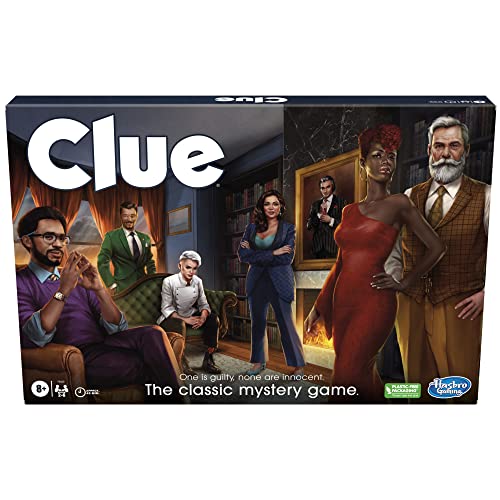
- Clue Board Game (Reimagined) — Best for Mystery Fans
- Monopoly Board Game — Best for Classic Family Fun
- Exploding Kittens Original Edition — Best for Quick Play
- Sushi Go Party! — Best for Large Groups
- Dixit Board Game — Best for Creative Thinkers
- Choosing the Right Board Game: A Buying Guide
- FAQs
- Final Thoughts
Best Choices for 2026
- #PreviewProductRating
- Bestseller No. 1
 Rating:

- Bestseller No. 2
 Rating:
 - Bestseller No. 3
 Rating:
 - Bestseller No. 4
 Rating:
 - Bestseller No. 5
 Rating:
 - Bestseller No. 6
 Rating:
 - Bestseller No. 7
 Rating:
Our Hands-On Reviews
1. CATAN Board Game (6th Edition) — Best for Strategy Lovers
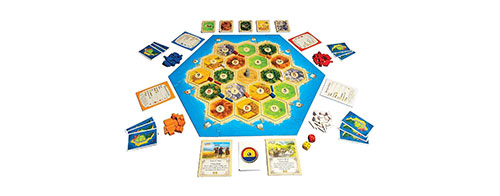
CATAN has been the gateway drug to modern board gaming for almost thirty years, and the 6th Edition keeps the formula that made it a household name while tightening up a few rough edges. You're settling the island of Catan by collecting resources — brick, wood, wheat, ore, and sheep — and using them to build roads, settlements, and cities in a race to ten victory points. The modular hex-tile board means every session starts with a different map, which keeps things from feeling stale even after dozens of plays. The recommended age is 10 and up, and that holds reasonably well — younger kids can follow along, but the trading and blocking strategies tend to frustrate children under eight.
What makes CATAN work for family night is the negotiation layer. You're constantly trading with other players, which means even someone who's losing on the board can influence the outcome through sharp dealing. That said, the game runs 60–90 minutes and involves a real learning curve for total newcomers — the first session almost always involves a fair amount of rulebook flipping. Player count is 3–4 in the base game, which works perfectly for most households, though expansions can push that higher. If you want a game that rewards thinking a couple of moves ahead and still keeps everyone talking, CATAN remains one of the most reliable choices on the market in 2026.
The 6th Edition includes updated component quality with thicker cardboard hexes, and the revised rulebook is clearer than earlier versions. The box organizes pieces well enough that setup doesn't eat into your evening, which is a practical improvement fans have been asking for a long time.
Pros:
- Modular board creates a fresh layout every game, boosting replay value significantly
- Trading mechanic keeps all players engaged even when it's not their turn
- Scales smoothly from casual to competitive depending on how seriously your group plays
- Updated 6th Edition components feel durable and well-organized
Cons:
- First-time players typically need a full practice session before the strategy clicks
- The robber mechanic (a game piece that blocks resource collection) can frustrate younger or newer players who get targeted repeatedly
- Base game caps at 4 players — you'll need an expansion if your group runs larger
2. Ticket to Ride (2025 Refresh) — Best for New Gamers
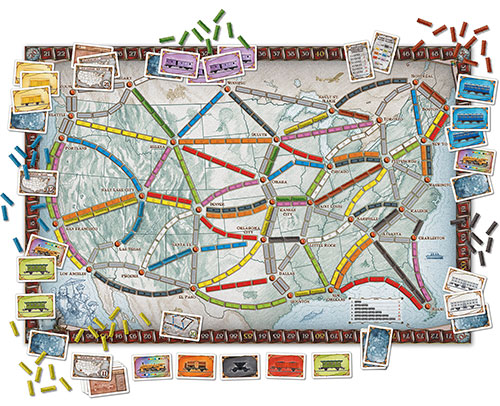
Ticket to Ride is the game you reach for when half your group has never played a modern board game before. The core idea is beautifully simple: collect colored train cards, use them to claim routes on a map of North America, and complete secret destination tickets (routes between two cities) for points. You can teach the rules in about ten minutes, which is genuinely rare for a game with this much strategic depth. The 2025 refresh updates the visual design and components without touching what already works, and the result is one of the most accessible games on this list for a wide age range — the recommended age starts at 8, and most children that age can play independently after one demo round.
Where Ticket to Ride earns its reputation is in how naturally tension builds without anyone having to explain that they're supposed to feel stressed. When another player claims a route you needed, you feel it immediately, and you have to adapt your whole plan on the fly. That kind of reactive strategy keeps adults engaged while staying approachable enough that kids don't shut down when things go sideways. Games run 30–60 minutes, which is a practical sweet spot for a family session — long enough to feel satisfying, short enough that you can play twice if the evening runs long.
The 2025 Refresh includes the iconic giant map of the North American train network, and the miniature trains for each player remain a tactile highlight of the experience. Component quality has always been a strong point for this title, and the latest edition maintains that standard.
Pros:
- One of the easiest modern board games to teach to complete newcomers
- Supports 2–5 players with no noticeable drop in quality across different counts
- Giant map and miniature train pieces add genuine visual appeal to the table
- 30–60 minute play time fits into a real family evening without taking over the night
Cons:
- Experienced gamers may find the strategy ceiling lower than CATAN or Dixit after many plays
- The North America map is the only one included — regional expansions sold separately
3. Clue Board Game (Reimagined) — Best for Mystery Fans
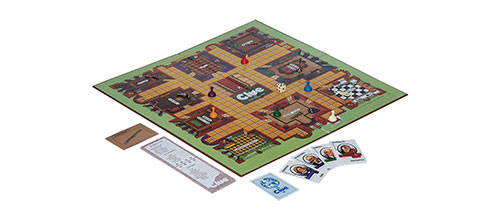
The reimagined Clue keeps the bones of the classic murder mystery game that generations of families already know while giving the whole thing a richer, more dramatic coat of paint. You're still racing to figure out who killed the victim, where the crime happened, and which weapon was involved — but the characters now have backstories and secrets that add a layer of narrative flavor the original version never had. Playing as Miss Scarlett, Colonel Mustard, or Professor Plum now feels like inhabiting a character rather than just moving a token, and the glamorous Tudor Mansion setting makes the deduction process feel genuinely atmospheric. Recommended for ages 8 and up, and that's an accurate rating — the deduction mechanic is easy enough for most third-graders, but interesting enough to keep adults sharp.
From a mechanical standpoint, this is still the deduction game you remember. You move between rooms, gather clues by ruling out suspects and weapons, and try to make your accusation before anyone else does. The process of elimination is satisfying in a way that doesn't require any prior gaming experience, which makes Clue one of the more universally accessible picks on this list. Where it falls slightly short is in replayability — once you've played a dozen times, the core loop can feel a bit routine compared to more variable games like CATAN. But for occasional family nights where you want something everyone already knows how to approach, it's hard to beat.
The reimagined edition handles 2–6 players, which gives it one of the widest player-count ranges on this list, and games run at a reasonable pace that rarely drags past the one-hour mark.
Pros:
- Familiar rules mean almost no learning curve for families who've played before
- Supports up to 6 players, making it a strong choice for larger gatherings
- Reimagined characters and setting add more narrative depth than the original
- Deduction mechanic works well across a wide range of ages and experience levels
Cons:
- Core loop can feel repetitive for players who have put in a lot of hours with the classic version
- Less strategic depth than CATAN or Ticket to Ride for groups that prefer layered decision-making
4. Monopoly Board Game — Best for Classic Family Fun
Monopoly is the game that basically invented family game night as a concept in the United States, and this updated edition makes a genuine effort to address the complaints that have followed it for decades. The most practical upgrade is the Banker's storage tray — a sleek organizer with a lid that keeps the money, Title Deed cards, houses, and hotels from spilling across the table every time someone bumps an elbow. The larger tokens are also a welcome change, making pieces easier to distinguish at a glance and noticeably harder to knock over. The core gameplay is unchanged: buy properties, charge rent, build houses and hotels, and be the last one standing with money when everyone else goes broke.
You probably already know the arguments for and against Monopoly, so let's be direct: this is a great game for groups that enjoy the social theater of deal-making, trash talk, and dramatic bankruptcies, but a poor fit for anyone who wants something that wraps up in under an hour. Games genuinely can run two to four hours depending on player count and how aggressively everyone plays, and that runtime has ended more than a few family evenings on a sour note. If your household plays it in good spirits and doesn't take the wheeling-and-dealing too seriously, it's still one of the most universally recognized games on earth and that shared familiarity has real value.
Recommended for ages 8 and up, and the rules are simple enough that a well-coached seven-year-old can hold their own. The fresh modern look of this edition also gives the board a cleaner visual feel than older versions, which helps when you're setting it up for guests who haven't played in years.
Pros:
- New storage tray with lid solves the perennial component-organization problem
- Universally recognized rules mean zero teaching time for most families
- Larger tokens are easier to handle and much harder to lose
- Supports 2–6 players and works reasonably well across all counts
Cons:
- Can run 2–4 hours, which is a serious commitment for a weeknight game session
- Luck-heavy early game (dice rolls for movement) can frustrate players who prefer more control
- Once a player falls behind significantly, catching up is genuinely difficult and the endgame can drag
5. Exploding Kittens Original Edition — Best for Quick Play
Exploding Kittens is one of the most successfully funded tabletop games in history, and its staying power comes down to a single design achievement: it's genuinely funny and genuinely tense at the same time. The premise is absurdist — draw cards until someone pulls an Exploding Kitten, and use action cards to avoid or redirect it toward your opponents. The entire rule set fits in your head within two minutes, which makes this the strongest pick on this list if your group includes people who normally resist board games. Games run about 15 minutes, which means you can squeeze in two or three rounds in the time it would take to set up CATAN.
What makes Exploding Kittens work across different ages is that it doesn't reward deep planning so much as smart situational reactions. When you're holding a Defuse card (the counter to the Exploding Kitten) and you're watching a friend draw their way toward disaster, the tension is palpable regardless of whether you're 9 or 45. Designed for 2–5 players ages 7 and up, it hits that sweet spot where younger kids don't get left behind and adults don't feel like they're playing down. The compact card format also makes it genuinely portable — this is a game you can throw in a backpack for a camping trip or a restaurant visit with the kids.
The only real limitation is the player cap of 5 and the luck dependency — you can play well and still lose because of a bad draw. But for what it's designed to do, which is deliver a fast, chaotic, laugh-out-loud 15 minutes at any table, it delivers every single time.
Pros:
- 15-minute play time makes it easy to fit into any schedule or use as a warm-up game
- Rules are simple enough to learn while shuffling the deck for the first time
- Compact card format packs easily for travel, camping, or restaurant play
- Reliably funny — the card art alone generates reactions from new players
Cons:
- High luck factor means skilled players can't consistently outperform lucky ones
- Caps at 5 players in the original edition — larger groups need the party pack
6. Sushi Go Party! — Best for Large Groups
Sushi Go Party is the upgraded version of the original Sushi Go, and the "Party" edition earns that label by expanding the player count, the menu of available cards, and the amount of chaos you can generate with a single hand. The core mechanic is card drafting — you pick one card from your hand and pass the rest to the player beside you, building combinations of sushi dishes that score points in different ways. It's one of the few games on this list where larger groups actually improve the experience rather than making it slower, because the card-passing rhythm stays snappy regardless of how many people are at the table. Recommended for ages 8 and up, and that's a comfortable floor — the icons on the cards do most of the explanatory work, so language barriers aren't an obstacle either.
What sets the Party edition apart from the original is the configurable menu system. You choose which cards are included before each game using a cardboard menu board, which means you can customize the complexity level to match your group, introduce new cards gradually for younger players, and keep experienced players on their toes with different scoring combinations each session. That customization also dramatically extends replay value beyond what the compact box would suggest. Games run about 20–30 minutes for most groups, sitting comfortably between the instant gratification of Exploding Kittens and the deeper commitment of CATAN.
If you're regularly hosting game nights with 6, 7, or 8 people and want a game that scales gracefully to that size without turning into a logistical headache, Sushi Go Party is probably your best option on this list.
Pros:
- Handles up to 8 players while keeping the pace quick and engaging throughout
- Configurable menu system adds meaningful replay value to every session
- Card-drafting mechanic is fast to learn and rewarding to optimize over multiple plays
- Visual card design works across language barriers and lower reading levels
Cons:
- Smaller box size means the card components can feel fiddly during setup and cleanup
- Scoring combinations can be hard to track for first-timers until the card types become familiar
7. Dixit Board Game (2021 Refresh) — Best for Creative Thinkers
Dixit is unlike anything else on this list, and that's both its greatest strength and the reason it won't be the right pick for every family. The game is built around beautifully illustrated dream-like cards. Each round, one player acts as the storyteller and gives a word, phrase, sound, or sentence that hints at one of the cards in their hand. Everyone else secretly picks a card from their own hand that they think fits the clue, and then all the cards are shuffled and laid face up while players vote on which one they think was the storyteller's original. The scoring system rewards clues that are neither too obvious nor too cryptic, which means your imagination and your understanding of how the other players think are the two most important tools at the table.
This is the game to reach for when you want something that generates genuine conversation and laughter without a single moment of competitive tension. It works beautifully across age gaps because the illustrated cards communicate without words, and a creative ten-year-old can give clues that stump adults. The 2021 Refresh improved the voting components with ambidextrous dials that are easier to handle than the original tokens, and the new scoring board makes tracking points cleaner. Up to 8 players are supported, and the 30-minute play time keeps it from overstaying its welcome. If your group includes people who resist "game nights" because they don't want to feel competitively outmatched, Dixit is often the game that converts them.
The main limitation is that Dixit requires players to engage with the creative premise. Groups that prefer rules-heavy, points-driven games may find the open-ended scoring feel unsatisfying at first, though most warm up to it within a round or two.
Pros:
- Stunning card illustrations spark creativity and conversation regardless of gaming experience
- Supports up to 8 players with no slowdown in the core rhythm
- Works across wide age gaps — imagination matters more than strategy knowledge
- Improved 2021 components make voting and scoring smoother than ever
Cons:
- Players who resist creative or subjective games may feel uncomfortable with the open-ended format at first
- Replayability depends somewhat on expanding the card pool over time — expansion packs are available but add cost
Choosing the Right Board Game for Family Night: A Buying Guide
Before you buy, it helps to think honestly about who's going to be sitting at the table and what kind of experience you're actually trying to create. The seven games above cover a wide range of styles, ages, and time commitments, and picking the wrong one for your group is the most common reason a new game ends up on a shelf after two plays. Here are the factors worth thinking through before you commit.
Age Range and Cognitive Accessibility
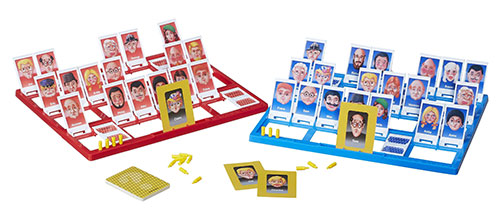
The age recommendations on game boxes are generally reliable, but they're measuring different things. Games like Ticket to Ride and Clue rate at 8+ because the rules are simple enough for most eight-year-olds to follow independently. CATAN rates at 10+ because the strategy layer requires planning ahead in a way that genuinely challenges younger children. Exploding Kittens and Sushi Go Party both rate at 7–8 and are honest about it — the rules really are that accessible. Dixit is technically rated 8+ but often works with younger children because the creative clue-giving format doesn't require reading comprehension or strategic thinking in the traditional sense.
If your household spans a wide age range — say, a seven-year-old and a couple of adults — your best bets from this list are Ticket to Ride, Sushi Go Party, and Dixit. All three have simple enough mechanics that younger players can participate meaningfully without constantly needing help from an adult.
Play Time and Session Fit
This is probably the most underrated buying factor for family games. A 90-minute game requires a level of commitment that a busy weeknight often can't support, while a 15-minute game might leave your group wanting more. Think realistically about when you play: after dinner on school nights, weekend afternoons, holiday gatherings with relatives who might drift in and out. Here's roughly how the games on this list break down:
- Under 20 minutes: Exploding Kittens (15 min)
- 20–35 minutes: Sushi Go Party (20–30 min), Dixit (30 min)
- 30–60 minutes: Ticket to Ride (30–60 min), Clue (45–60 min)
- 60–90 minutes: CATAN (60–90 min)
- 60 minutes or more (potentially much more): Monopoly (60–240+ min)
If you're hosting a dedicated game night where the whole point is to spend 2–3 hours playing, CATAN and Monopoly both have a place. If you're trying to fill 45 minutes before bedtime or between other activities, Ticket to Ride and Clue are your most reliable options in that time range.
Player Count and Group Dynamics
Player count matters more than most people realize when buying a board game. A game rated for 2–4 players that you want to play with 6 people simply won't work without house rules or expansions. Before you buy, count heads honestly — both for your typical game night and for your biggest expected gathering. Sushi Go Party and Dixit both handle up to 8 players without any expansions, making them the most flexible options for larger families or mixed-group holidays. Clue tops out at 6, which covers most situations. CATAN's base game caps at 4, which can leave someone sitting out if you have 5 adults in the room.
Group dynamic is the other half of this equation. Some families have one or two competitive players who want to win, surrounded by others who just want to laugh and spend time together. Games with heavy player-versus-player mechanics — like the robber in CATAN or the property trading in Monopoly — can create friction in these groups. Dixit and Sushi Go Party both sidestep this issue because the competitive element never feels personal. For games similar to what you'd find at a party gathering, our roundup of fun dinner table party games covers some additional options worth considering.
Strategy Depth and Replay Value
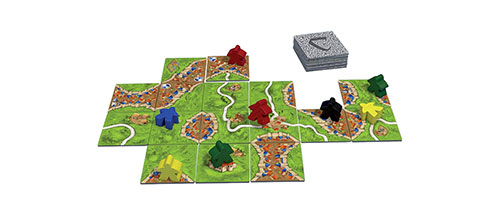
If you're buying a game that will live on your shelf for years, replay value matters. Games with variable setups — like CATAN's modular board — or configurable card pools — like Sushi Go Party's menu system — tend to stay fresh much longer than games with fixed components. Clue and Monopoly, by contrast, are largely the same experience every time you play them, which is either a feature or a bug depending on how your group feels about that consistency.
Strategy depth is the other consideration here. Games like CATAN reward players who think several moves ahead, which means the experience gets meaningfully better as you understand the game more deeply. Games like Exploding Kittens have a lower ceiling — you can still improve by learning when to play which action cards, but the skill gap between a new player and an experienced one is much smaller. For households with kids who are developing their planning and decision-making skills, games in the Ticket to Ride or CATAN range offer more long-term growth than luck-heavy alternatives.
FAQs
What is the best board game for a family with kids of mixed ages?
Ticket to Ride and Sushi Go Party are strong choices for mixed-age groups because both have simple rules that children around 8 years old can follow independently, while offering enough strategic choice to keep adults engaged. Dixit also works well across age gaps since it relies on creativity rather than reading ability or prior gaming knowledge, and younger children can often surprise adults with clever clues.
How long does a typical family board game session take?
Play time varies significantly by game. Exploding Kittens finishes in about 15 minutes, Sushi Go Party and Dixit run 20–30 minutes, Ticket to Ride and Clue typically take 30–60 minutes, and CATAN runs 60–90 minutes in most sessions. Monopoly is the outlier — it can run anywhere from one hour to several hours depending on how aggressively players pursue the endgame. Planning your game night around a realistic time window will help you pick the right option for your evening.
Are any of these games good for just two players?
Most of the games on this list technically support two players, but some play significantly better with more people. Ticket to Ride and CATAN both work reasonably well at two players, though Ticket to Ride's route-blocking tension is less pronounced with fewer people. Clue functions at two players using modified rules. Exploding Kittens is playable at two but the social chaos that makes it fun is reduced. Dixit and Sushi Go Party are both better with three or more players and genuinely shine at 4–6.
What board game is easiest to learn for someone who never plays games?
Exploding Kittens has the shortest rule set and the fastest learning curve — you can explain the entire game before you finish shuffling the deck. Ticket to Ride is the next most accessible and is consistently recommended as the best gateway game for people who grew up only playing classic games like Monopoly. Sushi Go Party and Clue are also relatively quick to teach, especially for people who have some board game experience.
Are board games actually good for kids' development?
Yes, there's meaningful research supporting this. Board games develop planning, decision-making, pattern recognition, turn-taking, and social skills in children. Strategy games like CATAN and Ticket to Ride specifically strengthen forward-thinking and resource management skills. Our piece on the science-backed benefits of playing games covers this topic in more depth if you're interested in the evidence behind it. Even games with a strong luck element, like Exploding Kittens, teach children to handle winning and losing gracefully in a low-stakes environment.
Is Monopoly still worth buying in 2026?
It depends entirely on your household. If your family already enjoys Monopoly and you want an updated edition with better component organization, the new version with the Banker's storage tray and larger tokens is a genuine improvement over older sets. If you've never owned Monopoly and are considering it as a first modern board game purchase, you'll probably get more consistent use out of Ticket to Ride or CATAN, which offer a better balance of strategy and session length for most families. Monopoly's long play time remains its biggest practical limitation for regular use.
Buy on Walmart
- CATAN Board Game (6th Edition) Trade, Build & Settle in the — Walmart Link
- Asmodee Ticket to Ride Board Game (2025 Refresh) - A Cross-C — Walmart Link
- Clue Board Game for Ages 8 and Up, Reimagined Clue Game for — Walmart Link
- Monopoly Board Game | Classic Game with Storage Tray and Lar — Walmart Link
- Exploding Kittens Original Edition - 2-5 Players - Ages 7+ - — Walmart Link
- Sushi Go Party! - The Deluxe Pick & Pass Card Game by Gamewr — Walmart Link
- Asmodee Dixit Board Game (2021 Refresh) - The Award-Winning — Walmart Link
Buy on eBay
- CATAN Board Game (6th Edition) Trade, Build & Settle in the — eBay Link
- Asmodee Ticket to Ride Board Game (2025 Refresh) - A Cross-C — eBay Link
- Clue Board Game for Ages 8 and Up, Reimagined Clue Game for — eBay Link
- Monopoly Board Game | Classic Game with Storage Tray and Lar — eBay Link
- Exploding Kittens Original Edition - 2-5 Players - Ages 7+ - — eBay Link
- Sushi Go Party! - The Deluxe Pick & Pass Card Game by Gamewr — eBay Link
- Asmodee Dixit Board Game (2021 Refresh) - The Award-Winning — eBay Link
Final Thoughts
The right board game for your family comes down to who's at the table, how much time you have, and whether you want to think hard or just laugh together — and every game on this list does at least one of those things really well. Browse the full board games collection for even more options across different styles and age groups, pick one that matches your next game night, and get it on the table — the only way to know which one becomes your household favorite is to play it.


About Mike Jones
Mike Jones grew up in the golden age of arcade and home gaming — a childhood shaped by Atari classics like Pitfall, Frogger, and Kaboom that gave him a lifelong appreciation for games of all kinds. These days he covers the full breadth of tabletop and family gaming: board games, card games, yard games, table games, and game room setup, with a particular focus on finding the games that bring different groups together. At GamingWeekender, he covers game reviews, buying guides, and recommendations for families, friends, and hobbyists who take their leisure seriously.
You can get FREE Gifts. Or latest Free phones here.
Disable Ad block to reveal all the info. Once done, hit a button below