The first time I sat down for a real game of backgammon, I got demolished in about twelve minutes. My opponent barely hesitated before each move while I sat there second-guessing every checker. I chalked it up to luck. It wasn't. Learning how to play backgammon properly — not just pushing pieces around aimlessly — changed everything. This guide gives you the rules, the gear, the smart habits, and the strategy that turns a frustrating beginner experience into consistent, satisfying wins.
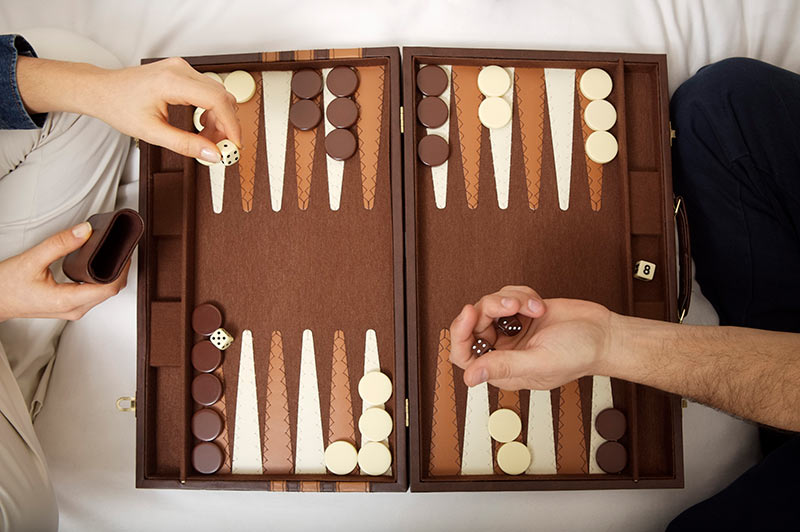
Backgammon sits comfortably among the most beloved board games ever played, with a competitive history spanning thousands of years. According to Wikipedia, the game's earliest ancestors appeared in ancient Mesopotamia — yet today it thrives in game rooms, online platforms, and international tournaments. The reasons aren't hard to see.
The dice keep things interesting for everyone, but they don't decide who wins in the long run. Smart positioning, calculated risk, and a few key principles do. Read through this guide once and you'll already be a smarter player. Practice what's here and you'll start winning consistently.
Contents
- How to Play Backgammon: Get Up and Running Fast
- What You Need to Start Playing
- The Core Rules That Shape Every Game
- How Beginners Think vs. How Experienced Players Think
- Backgammon Myths That Are Costing You Games
- Practical Tips to Win More Often
- Long-Term Thinking: Building a Winning Game Plan
- Frequently Asked Questions
- Next Steps
How to Play Backgammon: Get Up and Running Fast
The Object of the Game
Each player controls 15 checkers (also called men or pieces) on a board divided into four quadrants of six narrow triangles each, called points. Your goal is straightforward: move all 15 of your checkers into your home board, then bear them all off the board before your opponent does the same. The first player to bear off every checker wins the game.
Both players move in opposite directions. You move your checkers from your opponent's home board, through the outer boards, and into your own home board. Two dice determine how far you move each turn, and you can split the numbers between two different checkers or stack both on one if it's legal.
Your First Few Moves
To start, each player rolls one die. The higher number goes first, using both dice for that opening turn. From there you alternate. Four rules govern every turn:
- You must use both dice if it's legally possible to do so.
- If only one number can be played, you must play the higher one.
- Doubles give you four moves instead of two — each die counts twice.
- You can't land on a point already held by two or more of your opponent's checkers.
What You Need to Start Playing
Understanding the Board
The backgammon board has 24 narrow triangles called points, numbered 1 through 24 from each player's perspective. Your home board covers points 1–6. Your outer board covers points 7–12. Your opponent's setup mirrors yours on the other side. Running down the center is the bar — hit checkers land here and must re-enter play before anything else can move.
The standard starting setup is the same in every game: two checkers on your 24-point, five on your 13-point, three on your 8-point, and five on your 6-point. Memorize this arrangement early so you can focus on strategy rather than setup.
Choosing the Right Set
You don't need an expensive set to enjoy backgammon. A basic felt-lined travel set costs under $30 and handles everything you need while learning. When you're ready to upgrade, look for:
- A firm, flat playing surface — soft boards make movement awkward.
- Well-balanced dice and a dice cup for fair rolls.
- A doubling cube included — you'll want it as your game grows.
- Magnetic travel boards for outdoor or café sessions.
A quality leather or wood case set also makes a great centerpiece for a dedicated game space. If you're building out a room for multiple games, check out this guide on how to set up a family game room — it covers layout, storage, and game selection all in one place.
The Core Rules That Shape Every Game
Moving, Hitting, and Entering
A point with only one checker is called a blot, and it's exposed. If your opponent rolls and lands on your blot, that checker gets hit and placed on the bar. While any of your checkers sit on the bar, you must re-enter them before making any other move. You re-enter by rolling a number matching an open point in your opponent's home board.
Two or more checkers on a single point "make" that point — your opponent can't land there. Build six consecutive made points in a row and you've created a prime, which is one of the most powerful structures in the entire game. Checkers trapped behind a prime have nowhere to go until it breaks.
Bearing Off to Win
Once all 15 of your checkers have reached your home board (points 1–6), you can begin bearing off. Roll the dice and remove checkers from matching points. If you roll higher than any occupied point, bear off from the highest occupied point. If a checker gets hit during this phase, it must complete the full journey back around the board before you can continue bearing off.
| Term | What It Means | Why It Matters |
|---|---|---|
| Blot | A single checker on a point | Vulnerable — opponent can hit it and send it to the bar |
| Made Point | Two or more of your checkers on one point | Safe — opponent cannot land there |
| Prime | Six consecutive made points in a row | Creates an impassable wall that traps your opponent |
| The Bar | The center divider of the board | Hit checkers wait here until re-entered |
| Bearing Off | Removing checkers from your home board | The final race — first to finish wins |
| Gammon | Win before opponent bears off any checker | Doubles the stakes in match play |
| Backgammon | Win while opponent has a checker on the bar or in your home board | Worth triple — rare but decisive |
How Beginners Think vs. How Experienced Players Think
Common Beginner Habits
Most beginners play reactively. They move whatever checker seems convenient without thinking about the structure they're building. They leave blots in dangerous positions, race forward without securing points, and treat the doubling cube like decoration. These habits feel natural in the moment — and they're exactly what experienced players exploit.
- Running back checkers too fast without making anchor points
- Leaving blots scattered late in the game when they're most punishing
- Ignoring the pip count, so they don't know if they're ahead or behind in the race
- Accepting or refusing doubles based on gut feeling instead of position
What Experienced Players Do Differently
Experienced players think in terms of probability and board structure. Before moving, they ask: "What's the best use of these numbers given what my opponent can do next turn?" They build points deliberately, time their attacks, and always know roughly where they stand in the pip race.
Pro tip: Before touching a checker, ask yourself whether it's safer staying put or moving — one exposed blot in the wrong spot can hand the game to your opponent even when you're clearly ahead on the board.
The core mindset shift is from "moving pieces" to "building and defending structure." Much like learning gin rummy, the best backgammon players develop an instinct for reading the whole board — not just their own position, but where their opponent is weakest and where they're most dangerous.
Backgammon Myths That Are Costing You Games
Myth: It's Mostly Luck
This is the most common excuse and the most damaging belief to hold onto. Yes, dice introduce randomness — but backgammon is a skill game at its core. Better players win more often over any meaningful sample of games. The dice are the same for both sides. What separates winners is what they do with the numbers they roll.
Think of it like poker. The cards are random, but decisions made in response to them determine who profits over time. Understanding how to play backgammon well means embracing the randomness as a factor you manage — not a force that controls you.
More Myths Worth Dropping
- Myth: Running fast always wins. A well-timed prime can trap a racing opponent and flip a losing position into a decisive win.
- Myth: The doubling cube is only for advanced players. Learning basic cube decisions early prevents costly mistakes that beginners make constantly.
- Myth: Always hit your opponent's blots. Hitting can be the right call — but leaving your own checker exposed to do it often creates more risk than reward.
- Myth: The best opening is to run your back checkers. Most strong players prioritize making key points over running — structure beats speed in the early game.
Practical Tips to Win More Often
Opening Move Priorities
The opening sets the tone for everything that follows. Here are the highest-value plays for common opening rolls:
- 6-1: Make your 7-point (bar point). Most players consider this the single best opening move in the game.
- 3-1: Make your 5-point. The 5-point is the most valuable real estate on the board — own it early if you can.
- 4-2: Make your 4-point. Solid early structure with low risk.
- 6-5: Run a back checker all the way to safety — one of the few openings where running immediately makes sense.
- 5-3: Make your 3-point. Less powerful than the 5-point, but it still builds home board strength.
Notice the pattern: whenever you can make a point without leaving blots, do it. Structure wins games. Lone checkers lose them.
Mid-Game Pressure Tactics
In the mid-game, three main strategies emerge based on the current board position. A running game means you race to bear off — use this when you're clearly ahead in the pip count. A priming game means you build consecutive made points to trap your opponent's back checkers. A blitz means you attack aggressively, keeping your opponent on the bar and building your home board simultaneously.
Read the board honestly and choose your approach based on the position — not habit. The same spatial awareness and control thinking applies across many games. If you enjoy that kind of strategic positioning, the guide on table shuffleboard shows how similar principles play out in a completely different game format.
Long-Term Thinking: Building a Winning Game Plan
The Pip Count and Why It Matters
The pip count is the total number of pips each player needs to move all their checkers home and off the board. Knowing your pip count tells you whether you're winning or losing the race — and that single piece of information determines whether you should play safe and run or stay back and fight for position.
You don't need perfect mental math. Estimating within 5–10 pips is enough to make smarter decisions. Most backgammon apps show the pip count automatically. Use that as a crutch while you're learning, then practice counting in real games until it becomes second nature. Players who track the count consistently outperform those who guess.
Using the Doubling Cube
The doubling cube is numbered 2, 4, 8, 16, 32, and 64. Before rolling on your turn, you can offer to double the stakes. Your opponent accepts (and takes control of the cube) or declines (and concedes the game at the current value). Managing the cube is one of the clearest markers of an experienced player.
The basic framework: offer a double when you're clearly ahead and your opponent still has a realistic path to winning. Decline when your winning chances drop below roughly 25%. Accept when the game still has enough value to justify continuing. It sounds complicated at first, but it clicks quickly with practice — and it transforms how you think about every game position, not just the moments when the cube is live.
Frequently Asked Questions
How long does a typical game of backgammon take?
A single game usually runs 15 to 30 minutes once both players know the rules well. Match play — where you compete to reach a set point total — takes longer depending on the target score. Games move quickly once the opening mechanics feel automatic.
Can backgammon be played with more than two people?
Standard backgammon is a two-player game. For larger groups, you can run a bracket-style tournament or use chouette rules, where one player (called the "box") plays against a team of two or more people who consult on moves together.
What's the difference between a gammon and a backgammon?
A gammon happens when you bear off all your checkers before your opponent bears off any — it's worth double the stakes. A backgammon is rarer and more decisive: you win while your opponent still has a checker on the bar or in your home board, and it's worth triple.
Should beginners use the doubling cube right away?
Not necessarily. Most beginners benefit from skipping the cube until the core movement rules feel comfortable. When you're ready, start by simply practicing when you'd offer a double — you don't need real stakes to develop cube instincts.
What's the fastest way to improve at backgammon on your own?
Play against a computer on a backgammon app that shows the pip count and highlights strong moves. GNU Backgammon is free, strong, and widely used by serious players. Review positions you're unsure about rather than just playing quickly — deliberate practice builds skill much faster than volume alone.
Do I need to memorize opening moves to play well?
You don't need to know every possible opening roll, but memorizing the best responses to the most common ones — especially 3-1, 6-1, and 4-2 — gives you a real structural advantage from the very first move. A simple reference chart covers everything you need to start.
Next Steps
- Set up a board from scratch using the standard arrangement — two on the 24-point, five on the 13-point, three on the 8-point, five on the 6-point — until you can do it without checking.
- Download GNU Backgammon (free) or a backgammon app and play 10 games against the computer at medium difficulty to get comfortable with basic movement and the bearing-off phase.
- Memorize the best responses to the five most common opening rolls (3-1, 6-1, 4-2, 6-5, and 5-3) before worrying about any other opening theory.
- Practice counting your pip total at the start and middle of each game until tracking the race equity becomes a habit rather than a chore.
- After winning five games confidently, introduce the doubling cube — focus first on recognizing positions strong enough to offer a double, then learn when to accept or decline one.


About Mike Jones
Mike Jones grew up in the golden age of arcade and home gaming — a childhood shaped by Atari classics like Pitfall, Frogger, and Kaboom that gave him a lifelong appreciation for games of all kinds. These days he covers the full breadth of tabletop and family gaming: board games, card games, yard games, table games, and game room setup, with a particular focus on finding the games that bring different groups together. At GamingWeekender, he covers game reviews, buying guides, and recommendations for families, friends, and hobbyists who take their leisure seriously.
You can get FREE Gifts. Or latest Free phones here.
Disable Ad block to reveal all the info. Once done, hit a button below